Category Archives: Uncategorized

Artificial Intelligence Gets a Bold, Scary, Feminist Spin in ‘Ex Machina’

Ex Machina
Four stars (out of four)
R (graphic nudity, language, sexual references, some violence)
108 minutes

From Asimov, to “Blade Runner,” to “The Terminator,” makers of science-fiction have long been obsessed with the concept of artificial intelligence and what such a technological development would portend for the human race.

Evolution? Extinction? A combination of both?

In keeping with this storied tradition, A.I. beings good and evil are front and center on the big screen this summer.

In “Avengers: Age of Ultron,” Tony Stark spawns the ultimate peacekeeping program, only to see his creation go haywire and try to wipe out the planet via makeshift meteor.

In July, “Terminator Genisys” reboots the now classic James Cameron thriller about an apocalypse sparked by machines bent on either killing or protecting humans.

Neither of these films, however, serve up a vision of artificial intelligence as chilling, clever or convincing as “Ex Machina,” the impressive debut film of writer-director Alex Garland.

Garland’s A.I. isn’t the typical stuff of Hollywood sci-fi, masterminding mass destruction by robot army, monologuing and generally blowing stuff up.

No, the artificial brain at the controls of “Ex Machina” is more insidious, wielding its mastery of the human mind as a weapon. It is skilled in the power of manipulation and that’s all the power it needs.

Garland is no slouch when it comes to sci-fi. Best known for authoring the novel “The Beach,” he penned Danny Boyle’s “Sunshine” and “28 Days Later,” wrote the “Dredd” remake and adapted Kazuo Ishiguro’s “Never Let Me Go” for the screen.

“Ex Machina” wears the suffocating shroud of hushed dread that adorns his previous work, but it elevates the filmmaker’s already strong pedigree to another level. It is the sharpest, most original effort of his career so far.

Garland’s direction is refreshingly lean and sleek, wasting no time in establishing an intriguing premise and a setting that drips with atmosphere.

Caleb (Domhnall Gleeson), a programmer for a Google-like search engine, learns he’s been selected as the winner of a mysterious contest. His prize is a week at the remote home of his wealthy employer, Nathan Bateman (Oscar Isaac).

As he delightedly arrives by helicopter to Nathan’s vast, stunning mountain estate, the audience shares his awkward position of ignorance and apprehension. What kind of man lives here, amidst the surreal majesty of glaciers, waterfalls and pines, in a compound of the pristine, minimalist architecture you only ever see in movies, a cold, glorious monument of glass, stone and long, dimly-lit corridors?

We’re soon introduced to Caleb’s host, who manages to make his guest — and us — feel simultaneously welcome and deeply uncomfortable as he ushers the young programmer around the eerily unpopulated outpost that will serve as his home for the next seven days.

Nathan isn’t what Caleb or we expected. Part Steve Jobs, part frat boy, he’s actually, if you’ll pardon the expression, kind of a tool. He drinks heavily, says “dude” a lot and displays confounding mood swings. He invites his guest to be a part of his latest research project, but only after signing a daunting nondisclosure agreement.

When Caleb balks at this arrangement, Nathan reveals he’s made an unprecedented breakthrough in the field of artificial intelligence. He’d like his eager, young employee to participate in the Turing test, designed to determine whether an A.I. creation exhibits behavior indistinguishable from human intelligence.

So begin Caleb’s “sessions” with Ava (Alicia Vikander), a strikingly beautiful, uncannily lifelike humanoid who has never ventured beyond the confines of her glass-walled room.

Caleb is immediately astounded by her abilities, but when it comes to discussing the science behind this man-made woman, Nathan proves strangely evasive. He’d rather talk about how Caleb “feels” about Ava, but defining the answer to that question proves frustratingly slippery.

Soon other questions arise, like what’s up with the frequent power outages that strike Nathan’s seemingly impregnable mountain stronghold? Why aren’t there any lab technicians or staff in residence? What’s with the key cards that at once grant and restrict Caleb’s access to the facility?

What does Ava think of Caleb? Who’s really being tested here? And who is Nathan’s oddly compliant, sushi-making sexpot of a personal assistant, really?

From the beginning, “Ex Machina” ravels and unravels its mysteries with the unsettling, unbearable tension of a finely crafted horror movie. Garland is skilled at keeping the viewer in a constant state of uneasiness, using every resource at his disposal.

This includes the film’s marvelous production design, which blends the organic and the artificial in ways that echo the film’s theme of humanity vs. technology — the Juvet Landscape Hotel in Norway provides the jaw-dropping backdrop for Nathan’s mad scientific endeavors — as well as the visual effects and sound design.

With her cherubic face, curvaceous mesh body and vaguely eerie whirrings, Ava is at once alluring and dismaying, and completely believable as the revolutionary discovery Caleb proclaims her to be. Much of the credit for this belongs to Vikander, who captures Ava’s precise, graceful movements and formal, soothing speech patterns while masking her intentions.

Gleeson and Isaac — who will appear together again later this year in “Star Wars: Episode VII — The Force Awakens” — engage in an entertaining, ever shifting game of one-upmanship with all the intensity and intimacy of a stage play.

Gleeson’s unassuming likability goes a long way toward disarming the moviegoer, while Isaac injects a bit of weird humor into his character’s darkness.

What I was most surprised by and love the most about “Ex Machina” is its refreshing, incredibly shrewd feminist spin. This is a film that has unexpected and profound things to say about the female mind and body and the way some men see them.

The unpredictable, profoundly satisfying finale turns cliche Hollywood romantic tropes on their head and makes a bold statement about the objectification of women.

And it’s the first time in a long time that the possibility of artificial intelligence actually scared me.

If you dare, go to ava-sessions.com, where you can interact with Ava. She’ll even draw your portrait. 

Photo: http://www.hdwallpapers.in
‘Avengers: Age of Ultron’ Full of Fun Surprises

Avengers: Age of Ultron
Three stars (out of four)
PG-13 (intense sequences of sci-fi action, violence and destruction; suggestive comments)
141 minutes

Thor, Captain America and Iron Man may be the flashiest, most popular Avengers but they’re also, arguably, the least compelling members of Marvel’s superhero collective.

Thor (Chris Hemsworth) has fabulous hair, a big hammer and wrestles with Shakespearean family drama.

Captain America (Chris Evans) is decent and square and also kinda sad that everyone he ever knew and loved is now dead.

Iron Man, aka Tony Stark, is Steve Jobs with better hair, nicer clothes, more charm and an obsession with technology that is both an asset and an Achilles heel.

These guys are great and all, but they’ve each starred in at least two solo movies apiece. By now, we know pretty much everything there is to know about them.

So it’s an unexpected pleasure that “Avengers 2: Age of Ultron” devotes its attention to characters who spent a lot of time lingering in the background in 2002’s “Avengers.”

At last, we discover everything we’ve ever wanted to know about Hawkeye (Jeremy Renner), the stoic archer who skulked through the “Avengers” in a Loki-induced trance.

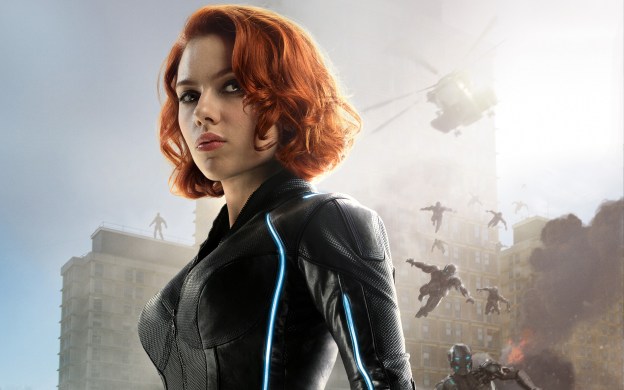
We also find out just what is going on between him and lethal assassin Black Widow (Scarlett Johansson), who piqued our curiosity with the tiny gold arrow she wore around her neck in “Captain America: The Winter Soldier.”

The relationship isn’t quite what we expected and that’s half the fun of “Age of Ultron.” The movie brims with enjoyable little surprises, from cameo appearances by minor characters to clever winks to previous Marvel outings.

The Hulk finds romance. Black Widow gets to be vulnerable as well as spectacularly lethal. Maria Hill actually cracks a few jokes (only natural considering she’s played by funny-girl Cobie Smulders).

Jarvis the computer, who has always been one of Iron Man’s most sharply sketched personalities, thanks to Paul Bettany’s tart voice work, undergoes a delightful evolution.

If the Marvel movie franchise has become an almost impossibly tangled web, director Joss Whedon is a nimble spider, spinning off dozens of new plot threads, wrapping up neat, little moments for a vast ensemble of characters, deftly interweaving CGI spectacle and satisfying emotion. This is movie-making on an unprecedented, gargantuan scale. It’s no wonder the guy needs a break.

When it comes to theme, “Age of Ultron” doesn’t break much new ground. United, the Avengers stand. Divided … well, not so much.

The glories of the team’s combined might are illustrated in a prologue that sees the superheroes working in perfect harmony as they ambush a Hydra base in the snowy woods of the fictional Eastern European nation of Sokovia.

Our band of heroes emerge victorious with a new toy for Stark (Robert Downey Jr.) to play with, containing one of the infamous infinity stones that Marvel villains are always after. They also acquire a pair of new enemies, eerily gifted Sokovian twins played by Emily Olsen and Aaron Taylor-Johnson.

When Tony starts poking into the infinity stone’s properties, back at the shiny S.H.I.E.L.D lab — or at least the corrupted organization formerly known as S.H.I.E.L.D — he discovers alien technology perfectly suited to realizing his pet project: an artificial intelligence program powerful enough to enforce world peace.

Without bothering to consult the other Avengers, Stark talks the skeptical Bruce Banner (Mark Ruffalo) into helping him create the super program known as Ultron. Apparently, these guys have never seen “The Terminator,” because the being they spawn is a malevolent, red-eyed robot who misinterprets his mission to disastrous effect.

Once again, the Avengers begin to doubt each other, especially as Olsen’s Scarlet Witch — a welcome new female presence in the testosterone-filled Marvel landscape — unleashes her witchy powers of mind control upon them, causing them to relive painful pasts and envision future fears.

Leading the clash of consciences are Stark and The Cap, whose dueling philosophies on power and peace put them deeply at odds. (Could this be the beginning of a certain Civil War?)

At this point, the Marvel universe has become so complicated — spanning multiple galaxies, planets, dimensions and eras — that plot almost ceases to be relevant.

While I enjoyed nearly every minute of “Age of Ultron,” I felt at times as if my grasp on the whole thing was slipping. Who could say exactly what was happening at any given moment?

I don’t think it’s just me and my sometimes foggy, sleep-deprived brain, either. My theory is that, at this point, only the Marvel script supervisors know precisely what is going on.

Still, there’s a familiarity that anchors us.

Elements of “Beauty and the Beast” can be found in the movie’s unlikely central romance, even if the coupling comes out of left field.

There are shades of the “Frankenstein” myth in Ultron, who proves to be one of Marvel’s more fascinating baddies, thanks to James Spader’s acerbic vocalization.

As lofty, and perhaps unachievable, as its ambitions are, it isn’t the money-shot action sequences that ground “Age of Ultron.”

The film is at its headiest and most thrilling when it puts the mayhem on pause for the sake of intimate interactions between its god-like heroes — trading war stories at a party, licking their wounds after retreating to a remote farmhouse.

The Avengers are most endearing when they are most human.


Looking Forward to ‘Avengers 2’? Support Your Local Comic Book Shop

Black Widow, Hawkeye, Nick Fury. Even Iron Man and Thor. There was a time when most people had never heard of them.

They’re household names now, thanks to Hollywood’s insatiable appetite for comic book movies. Audiences can’t get enough of them, and stories that were once the sole domain of kids reading under the covers by flashlight and nerds hoarding slim, colorful volumes in boxes under the bed have become entertainment for the masses.

This summer will be a major one for comic book aficionados with three anticipated adaptations headed for the big screen. The season kicks off Friday with “Avengers: Age of Ultron,” sequel to “The Avengers,” the third highest grossing movie of all time.

Late summer will usher in “Ant-Man” (in theaters July 17), starring Paul Rudd as the insect-sized superhero, and a reboot of Marvel’s “Fantastic Four” (Aug. 7).

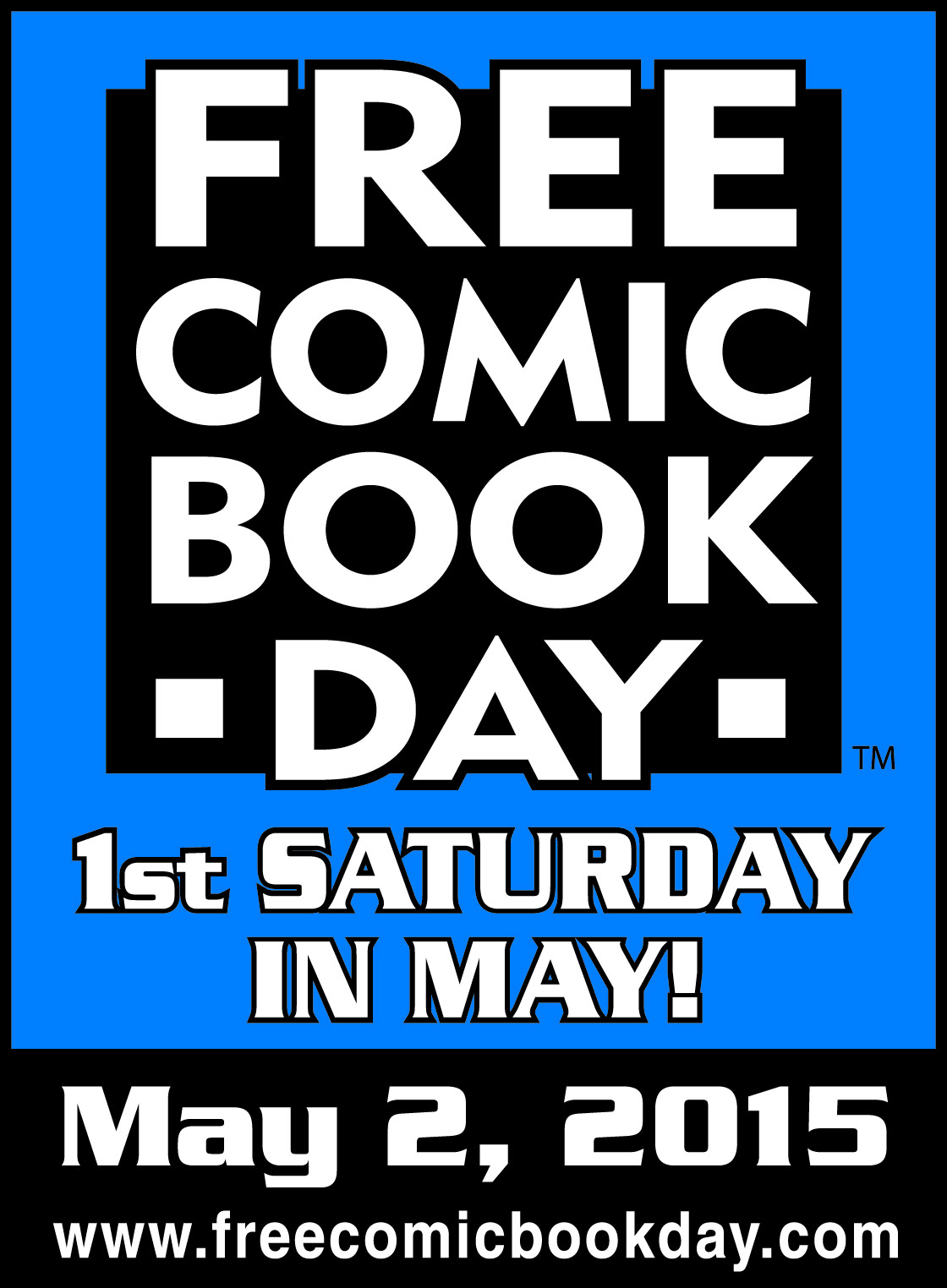
It’s fitting that 24 hours after the debut of “Age of Ultron,” shops around the country will observe Free Comic Book Day, a celebration of the genre that gave us The Hulk, Captain America, Thor, Iron Man and other memorable characters in the film franchise.

Launched in 2002 by Diamond Comic Distributors and a panel of industry retailers, publishers and suppliers, Free Comic Book Day is held annually the first Saturday in May.

116109_706164_25

The goal of the event is to introduce readers unfamiliar with comic books to this unique literary format and their local independent comic book shop.

“Each (shop) is unique in its community, with a style and personality all its own,” according to www.freecomicbookday.com.

I’ve never been much of a comic book reader. I remember thumbing through my older brothers’ issues of Archie and Superman, but I never really got hooked on the genre. Still, with my love of fantasy, reading and stories, I’ve always felt a kinship with comic book enthusiasts. The comic book store is one of my favorite places to hang out.

As an entertainment reporter, I frequented one Lancaster shop — Bases Cards and Comics — for more than a decade. I first visited the store in 2000. It was the year of “X-Men,” when comic book movies became more than just kids stuff, and I was looking for quotes from fans who were already familiar with the mutant heroes.

The readers browsing at the shop that Wednesday morning were eager to talk about why they loved the X-Men. I found them to be warm, engaging and surprisingly articulate with good things to say about the history and social relevance of the Marvel series.

Bases quickly became my go-to spot for dozens of stories, an invaluable resource for research and gathering quotes and opinions about whatever comic book movie du jour Hollywood was about to unleash. Winding my way among the brightly colored racks, I’d pounce on unsuspecting browsers in hopes of scoring an interview.

The shop also happened to be — and still is — a great place to spend time in, full of interesting, friendly and eccentric personalities. Owners Rob and Janice and manager James Preston are three of the most fun, welcoming people I’ve met. I have fond memories of chatting with them and their intelligent, opinionated customers about everything from Spider-Man, to the Man of Steel, to The Dark Knight, to San Diego Comic-Con, to Star Wars vs. Star Trek.

If you’ve never visited your local comic book shop, I urge you to give it a try on Saturday. At best, you’ll discover a thrilling new series or rekindle your passion for a childhood favorite. Maybe you’ll meet some potential new friends with common interests.

At worst, you’ll leave with a handful of free comics.

STK666507

Aside from Bases, Lancaster is home to two comic book shops. Battlegrounds carries a small selection of volumes, but specializes largely in tabletop gaming. My friends tell me that Horizon Comics offers great prices and selection.

Each shop will have its own policy to determine how many comics you’ll receive on Free Comic Book Day, but you’re guaranteed at least one, as long as supplies last.

Among the titles to be handed out are Doctor Who, Pokemon, Avengers, Transformers, Avatar, Street Fighter, Teen Titans Go!, The Tick and Teenage Mutant Ninja Turtles.

To find a participating comic book store near you, visit www.freecomicbookday.com.

Photos: http://www.freecomicbookday.com, http://www.comicbookmovie.com

Is Warner Bros. Taking the Woman Out of ‘Wonder Woman’?

The Hollywood Reporter broke the news yesterday that Michelle MacLaren, director of Warner Bros.’ “Wonder Woman” movie, has exited the project.

According to a statement, MacLaren quit because of the mysterious “creative differences” so often cited as an explanation for director-studio splits.

BB-S5-Michelle-MacLaren-590 (1)Now, I know it’s probably too early to step up on my feminist soapbox. After all, we don’t really know what happened here. “Creative differences” could mean any number of things, from “she didn’t get along with the producers,” to “she was difficult to work with,” to “we just didn’t like her.”

There are rumors the studio was uncomfortable with MacLaren’s vision for the Amazon princess’ first solo film, which included a 1920s setting and maybe a tiger sidekick. Perhaps the director’s television background didn’t prepare her to oversee a potential blockbuster, though her credits include such formidable series as “Game of Thrones” and “Breaking Bad.”

Whatever the reason, which we’ll probably never fully know, MacLaren’s exit raises all sorts of red flags. I can’t help but wonder if the Hollywood boys club, not to mention the boys club of comic books, has chewed up and spit out yet another victim.

MacLaren would have been one of the first women to direct a major comic book movie, no small achievement. USA Today notes that Lexi Alexander helmed 2008’s “Punisher: War Zone,” but “Wonder Woman” is a movie of greater scale and bigger box office potential.

Just as there are few women in creative positions in the comic book world, there aren’t many to be found in the world of comic book movies either. There are woman producers, but they are seriously outnumbered by their male colleagues. Offhand, I can think of only one woman writer of comic book movies — the capable, crimson-haired Jane Goldman, co-writer of “Kick-Ass,” “X-Men: First Class” and “Kingsman: The Secret Service.”

Marvel came close to breaking new ground when “Monster” director Patty Jenkins was set to oversee the sequel to “Thor.” Jenkins bowed out due to — guess what? — creative differences, making way for Alan Taylor to inherit the mess that was “Thor: The Dark World.”

Of course, Hollyywood is notoriously male-centric when it comes to virtually every film ever made, not just comic book movies. There are only a handful of female directors who are household names, including Angelina Jolie, Kathryn Bigelow and Sofia Coppola.

Bigelow made history in 2010 when she became the first woman to win a directing Oscar. It took that long for a female filmmaker to claim the honor. Just this year, the Academy infamously snubbed “Selma” director Ava DuVernay in favor of a couple of male directors whose work was arguably less compelling.

I’m not going to argue that it is Warner Bros.’ sole responsibility to change the status quo. The studio isn’t obligated to appoint a woman as the cinematic guardian of “Wonder Woman.” It would be a nice gesture, though.

It’s difficult to ignore the fact that Diana’s debut in “Batman vs. Superman: Dawn of Justice” — due in theaters next year — was entrusted to Zack Snyder, a guy whose idea of girl power is embodied in the objectified, video-game-shallow heroines of “Sucker Punch.”

Even so, I’m sure there are plenty of men who could sensitively and effectively tell the warrior princess’ story. One of them is Joss Whedon, whose name has been floated as the perfect replacement for MacLaren.

Whedon, who was involved in an earlier, doomed Wonder Woman project, recently announced his intention to take a break from Marvel. He presumably needs a rest after wrestling the impending “Avengers: Age of Ultron” into shape. The timing of this news sent the rumor mills swirling with the theory that perhaps a move to DC is in the director’s future. Such a crossover seems unlikely but stranger things have happened.

Whedon is celebrated for writing nuanced, powerful, three-dimensional female characters, from Buffy the Vampire Slayer to “Much Ado About Nothing’s” Beatrice. I’m sure he’d do a wonderful job with “Wonder Woman,” but I’d be disappointed if he was named director.

Entrusting MacLaren with the keys to Diana’s kingdom was a step toward inviting women to contribute significantly to a genre woefully short on meaningful, memorable heroines. The director’s experience on series packed with strong female characters boded well for the film.

There’s always a chance Warner Bros. could bring another woman onto the project — although, by my observation, women who walk off a film are inevitably replaced by someone from Hollywood’s massive pool of male directors.

(I can’t help but think of Brenda Chapman, the ousted director of Disney’s “Brave,” or Catherine Hardwicke, who was replaced by Chris Weitz for the second “Twilight” movie.)

Once again, the studio is under no obligation to hire a woman to helm “Wonder Woman,” but somehow, it feels right.

At top, “Wonder Woman” star Gal Gadot, photo: mic.com. Above, director Michelle MacLaren, photo: blogs.amctv.com.


Are WonderCon Glory Days Already in the Past?

It was a weekend of hellfire and brimstone, and geeks on parade.

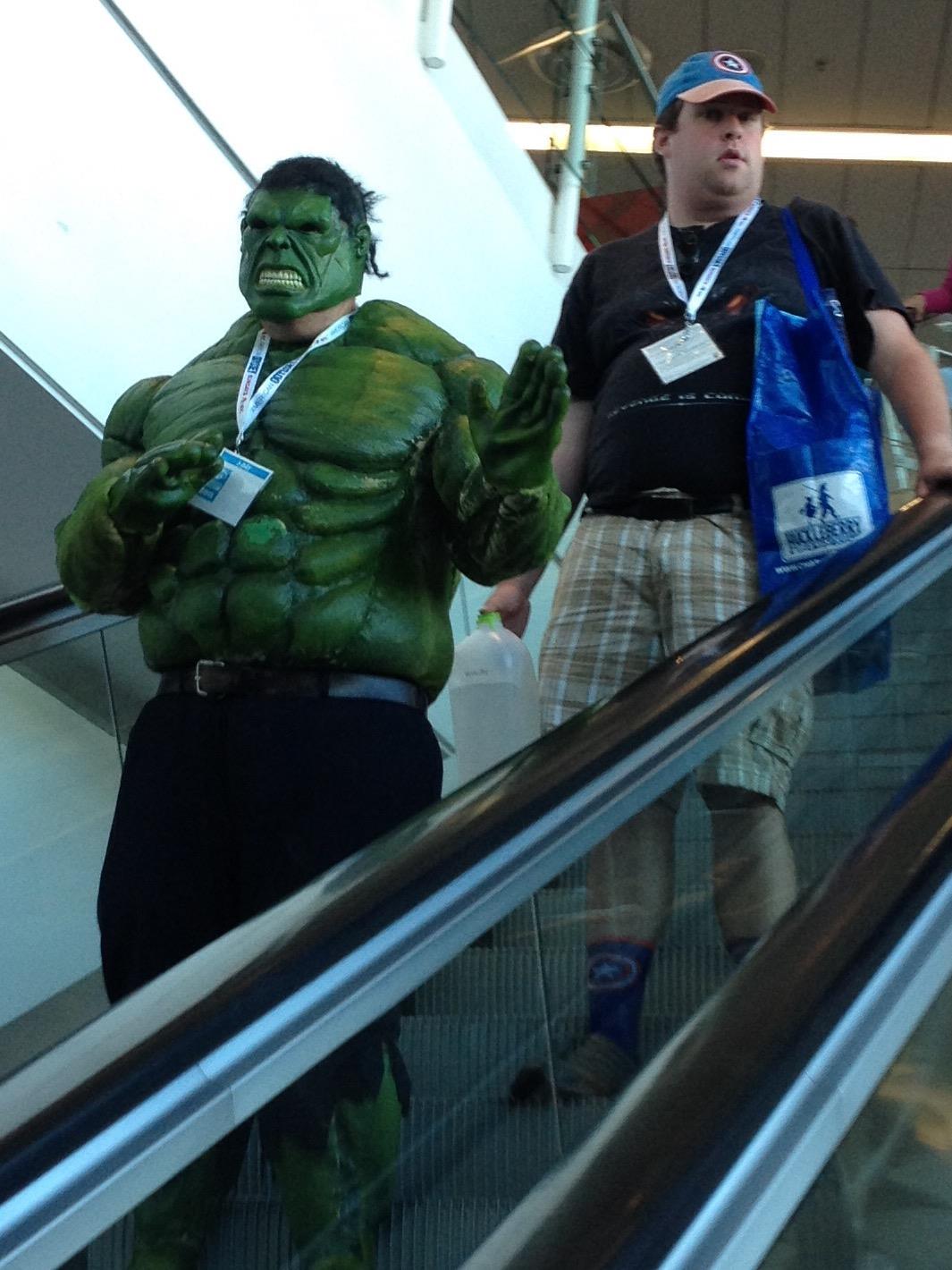
It was the only place in the country where you could find scowling street preachers, moms and dads with cute, little Jawas in tow, gender-bending Harley Quinns and Hulks, and ladies in anime finery that made all but the perviest of amateur photographers blush.

It was WonderCon, that annual gathering of comic book nerds and pop culture enthusiasts, where the atmosphere is a weird, entertaining mixture of family friendly and R-rated.

Transforming the Anaheim Convention Center into a colorful sea of celebrities, comic book artists, superheroes, Disney princesses, “Game of Thrones” characters and animated critters, the event wrapped Sunday after three days of movie, TV and manga-inspired madness.

11136188_10152792128258806_3477464611132453974_o

This was my fourth year at WonderCon, an event I anticipate with relish. I love taking in the unusual sights and sounds of the convention, communing with fellow fangirls and -boys, and letting my enthusiasm for pop culture run wild.

This time around, though, the bloom was off the rose. Maybe I wasn’t in the right mood, or maybe I’m getting old, or maybe I need to take a breather, but the convention is starting to feel a bit repetitive to me.

In 2012, organizer Comic-Con International moved its second largest event from San Francisco to Anaheim, an exciting development for Southern California pop culture enthusiasts. Since then, however, the programming at WonderCon has grown less compelling and less relevant with each year.

This is especially true when it comes to the film-related portion of the convention. Because WonderCon competes with its big sister convention, San Diego Comic-Con, the major Hollywood studios aren’t willing to expend the resources to make appearances at both events.

Disney throws its own convention, D23, so that rules out any Marvel movie or Star Wars presence at WonderCon. Meanwhile, Fox, Warner Bros. and their ilk won’t loan out footage or talent from their most anticipated comic book or sci-fi flicks when they’ll be bringing out the big guns in July at Comic-Con.

Initially, WonderCon organizers managed to scrape together some interesting Q&A sessions and sneak peaks anyway.

In the past, featured films included “Battleship,” “Snow White and the Huntsman,” “The Amazing Spider-Man,” “Prometheus,” “Pacific Rim,” “The Conjuring,” “This is the End,” “Evil Dead,” “Godzilla” and “The Maze Runner.” Stars such as Charlize Theron, Emma Stone, Michael Fassbender and Seth Rogen appeared to discuss their projects.

Those days are apparently over. This year’s Hollywood programming could only be described as dismal.

11134119_10203956653820919_1806268538688242834_o

Aside from a presentation by horror outfit Blumhouse, the only major movie event at WonderCon this year was a Warner Bros. panel.

What did Warner Bros. deem worthy of showcasing to the thousands of fans who filled the convention center’s flying-saucer-like Arena? Aside from some admittedly electrifying footage from the upcoming “Mad Max: Fury Road,” the studio spent the majority of its (extremely brief) time hawking the cheesy disaster flick “San Andreas,” starring Dwayne Johnson.

The Rock couldn’t be bothered to attend, leaving director Brad Peyton and co-stars Carla Gugino and Alexandra Daddario to congratulate themselves on finding the “emotions” in this ridiculous looking film.

I propose that WonderCon organizers refrain from insulting convention-goers with half-hearted, mediocre offering and just jettison the movie portion of the event. They should focus on their strengths: the comic books, the TV shows, the nerdy Internet phenoms.

That isn’t to say that there wasn’t good stuff to be seen at the 2015 Con. I sat in on a delightful panel for BBC America’s “Orphan Black,” which returns for a third season on April 18.

11083689_10152792154128806_2576306805105050402_o

There were screenings and signings and sneak peeks galore. Geek icons Felicia Day and Chris Hardwick held audiences spellbound. There were Q&As and special screenings for popular series “Gotham” and “The Flash,” while viewers were courted by newbies “American Odyssey” and “iZombie.”

11053261_10203958214779942_2973905006582908154_o

The convention’s exhibit hall continues to be an overwhelmingly wondrous place to shop for nerd necessities, like action figures, comic books, T-shirts and pleasingly strange curios, although it does tend to feature the same vendors year after year.

The fans who attend WonderCon never fail to entertain, especially the ones who turn out in the elaborate handmade get-ups that inspire the rest of us to point with childlike glee and whip out our cameras.

My favorites this year included the entire, elaborately costumed team from “Big Hero Six,” a handful of convincing “Game of Thrones” lookalikes, a baby Tank Girl, a couple of tiny Jawas, a fabulous Poison Ivy drag queen and the usual assortment of Star Wars fans, who never fail to pull out all the stops when it comes to wardrobe.

11083925_10152792128133806_1214149089834121169_o

It has been reported that organizers plan to move the 2016 edition of WonderCon to the Los Angeles Convention Center, a development that raises all kinds of questions for the future of the event.

Will this larger, more Hollywood-centric location inject some much-needed novelty into the event? Perhaps give it the heft it needs to attract stronger programming?

Or will it turn it into the impossible-to-navigate, hyper-commercial circus that San Diego Comic-Con has become?

Only time will tell.

Here’s hoping time will be kind to us, the fans who love WonderCon.

11080733_10203958104657189_6509703212827212116_o

Photos: Nick Vroman, Lavender Vroman

HBO’s Scientology Documentary is Credible, Astonishing

Going Clear: Scientology and the Prison of Belief
Three stars (out of four)
Not rated
119 minutes
(HBO has been rerunning the documentary for those who missed Sunday’s premiere. The film will inevitably be released for home viewing, although no date has been announced.)

I’ve never been a member of the Church of Scientology. I’ve never been “audited.” I’ve never been compelled to part with large sums of money so I can move up “The Bridge.” I’ve never been intimidated or abused or harassed by disciples of that dubious religion.

Despite my lack of firsthand experience, for most of my life, I’ve been riveted, with a mixture of fear and fascination, by the sensational rumors that swirl around Scientology. So, of course, I couldn’t wait to see HBO’s documentary, “Going Clear: Scientology and the Prison of Belief.”

In the late ’80s, my dad took the family on our first official sightseeing trip to Hollywood. Among the bizarre points of interest we encountered were friendly people armed with funny-looking gadgets, offering free “stress tests,” or E-Meter readings, to passersby.

In response to our questions, my father regaled us with tales of the mysterious religion/cult known as the Church of Scientology. During a career in advertising, he’d met several former members who recounted harrowing tales of harassment after “escaping” the church — bullets left in mailboxes, shady characters lurking in cars outside suburban houses, sinister acts that sounded like something from a movie.

Later, as an entertainment reporter, I had my own brief but strange encounter with Scientology.

The newspaper I worked for received a press release announcing an event at Willow Springs International Raceway featuring the Dianetics motorcycle racing team. I was dispatched to cover the event because several celebrities were expected to attend, including “King of Queens” star Leah Remini. (Remini has since become an outspoken critic of Scientology.)

Despite the fact that it was Saturday and I was sick and the raceway was no short distance from my home in Lancaster, I dutifully dragged myself to Rosamond to interview Remini and friends. When I arrived at the track, there were no celebrities to be found, only a cheery publicist who handed me a free copy of Dianetics and explained that Ms. Remini was stuck in traffic.

As the minutes ticked by with nary a recognizable Hollywood personality in sight, she suggested I interview some of the racers instead. Out of politeness, I agreed, listening to enthusiastic personal testimonies detailing how Scientology had helped these guys overcome problems, like conquering fear and tight curves on the racetrack.

After several hours passed, it became apparent that Leah Remini was never going to show up, despite the publicist’s insistence the actress was only a few minutes away. I began to wonder if the promise of her appearance was a lie from the very beginning.

As one church member after another was trotted out to recount to me the life-changing benefits of Scientology, I was overcome with the suspicion that the entire event had been staged simply for the purpose of proselytizing unsuspecting rookie journalists.

After what seemed like an eternity, I managed to make my excuses and break free, hightailing it back to the office with a story to tell my editor and the lingering sensation that I had only narrowly escaped this unexpected, vaguely creepy situation.

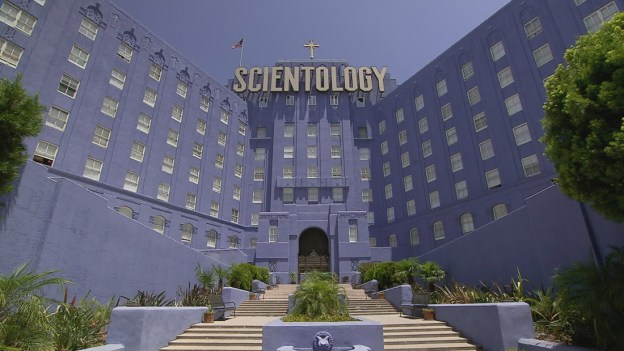
Maybe that’s why I found it easy to give credence to the bold, often horrifying allegations in “Going Clear.”  Based on a book by Lawrence Wright, the documentary first created a stir in January at the Sundance Film Festival. After a limited theatrical release, it premiered Sunday on HBO to a viewership of 1.7 million. That’s the biggest audience for one of the network’s docs since 2006’s “When the Levees Broke,” according to the Hollywood Reporter.

The fact that most of the accusations in “Going Clear” cannot be corroborated, thanks largely to the Church of Scientology’s notorious secrecy, doesn’t make the film any less credible or shocking.

Veteran documentarian Alex Gibney has a way of quietly creeping up on his topic, saving the more astonishing revelations for the end of the film. It’s an insidiously clever approach. The film’s gradually escalating flow of revelations is calculated for maximum impact.

“Going Clear” begins predictably with a history of Scientology and its creator, science-fiction author L. Ron Hubbard. Gibney’s portrait of Hubbard relies heavily on the recollections of the writer’s ex-wife, Sarah Northup, who claims her former spouse once kidnapped her child and kept the girl in a cage. Northup also recalls that Hubbard was obsessed with creating a religion so he could enjoy the profits tax-free.

Gibney paints a colorful picture of Hubbard that is so bizarre, it’s difficult to deny the man was anything but completely bonkers. It makes director Paul Thomas Anderson’s roman a clef “The Master” seem tame in comparison to the apparent reality.

If you’ve spent any time reading about or researching Scientology, there’s nothing terribly surprising about much of this information, or the details of the religion’s wackier tenets, including a creation myth involving an alien overlord named Xenu and extraterrestrial spirits that cling to human hosts, causing them psychological trauma.

“Going Clear” really starts kicking butt and taking names when Gibney delves into a series of face-to-face interviews with eight former high-level members of the church. On-camera appearances by present or past members are a rarity and these “talking heads” have a lot of damning things to say about the religion’s alleged history of abuse, physical violence, manipulation, blackmail, fraud and cult-like lack of transparency.

“Crash” director Paul Haggis recalls being innocently sucked into the church while beginning his screenwriting career, claiming that members are kept in the dark for years about Scientology’s absurd core philosophies.

A publicist who was once a respected member of Hubbard’s elite Sea Org operation and a friend of celebrity Scientologist John Travolta remembers undergoing weeks of church-mandated rehabilitation that involved imprisonment and forced labor. She was pregnant at the time.

Several former church officials admit to participating in lies, intimidation, cover-ups and blackmail using scandalous personal information culled during the intense auditing sessions members are encouraged to undergo.

The jaw-dropping highlight of the film comes when Gibney actually has the guts to call out two of Scientology’s most famous ambassadors — Travolta and Tom Cruise — for their complicity in the church’s corrupt practices.

The doc goes so far as to allege that Scientologists conspired to break up Cruise and ex-wife Nicole Kidman and entertainingly addresses some of the crazier rumors that surfaced shortly before Cruise’s infamous couch-jumping phase.

“Going Clear” also goes after Hubbard’s successor, Scientology’s current leader, David Miscavige, a charismatic figure of controversy whose alleged ruthless and paranoid tactics are credited with filling the church’s coffers even while depleting its membership.

If even a handful of the misdeeds described in “Going Clear” are true, then the Church of Scientology’s tax exempt status should be revoked immediately, as suggested in the film.

And we, as a society, should scrutinize this so-called religion with sharper eyes, instead of dismissing it as merely harmless and eccentric.

Photo: http://www.sundance.org


Will You Be Next to Take On the Movie Love Questionnaire?

In this week’s installment of the Movie Love Questionnaire, we discover that enthusiasm for cinema runs in my family and that my sister has a much better memory than I do.

Learn more about RogerEbert.com’s Movie Love Questionnaire here.

Enjoy Fawn Kemble’s clever responses to the survey below.

Movie Love Questionnaire:

Fawn Kemble is the fourth of five children (Lavender is her only sister) raised by parents who were artists and teachers. An unabashed nerd, she lives in LA as a high school English teacher. Fawn reads a lot, drinks too much coffee, binge-watches Netflix & Hulu, and travels as much as she can. 

Where did you grow up, and what was it like?

Born in Verdugo Hills, I was a Southern Californian kid (minus a couple yrs. in Texas). We moved around a lot, finally settling in the Antelope Valley, where I never fully felt comfortable. My childhood was magical, spent immersed in books and outdoors in worlds of imagination with my sister and little brother.

Was anyone else in your family into movies? If so, what effect did they have on your moviegoing tastes?

We didn’t have a TV for much of my childhood, but I knew my parents appreciated movies. As image3we got older they introduced us to classics from Hitchcock and Doris Day, to Peter Sellers and Cary Grant. My grandmother made sure we got an education in musicals, Fred and Ginger were her favorites, as well as “Singing In The Rain” and “Seven Brides For Seven Brothers.” Disney was also a staple, with “Mary Poppins” and “The Happiest Millionaire” high on the list. Our oldest brother introduced us to “Star Wars” at a young age, and there was no turning back. I still love these old classics and defy anyone who disses black & white movies or musicals!

What’s the first movie you remember seeing, and what impression did it make on you?

We used to go see free movies at the library when I was little. I have a horrible memory so this is nowhere near the first movie I saw, but I recall seeing “Chitty Chitty Bang Bang” at a young age and being completely freaked out by the Child Catcher part. Shudder.

What’s the first movie that made you think, “Hey, some people made this. It didn’t just exist. There’s a human personality behind it?

I think being obsessed with “Singing in the Rain” helped with that since it dealt with the making of movies. The microphone scene where Lena Lamont kept swinging her head back and forth stays in my mind to this day, as I watch my high school students struggle with sound on their student films or live performances.

What’s the first movie you ever walked out of?

I have the great joy and satisfaction of having walked out of the movies right behind my sister, Lavender, both times she left. The first when we were frightened by Maleficent in “Sleeping Beauty” and the second when we were disgusted and not at all entertained by “The Sweetest Thing.” I haven’t walked out of any others.

What’s the funniest film you’ve ever seen?

There’s no way I can pick just one! “Bringing up Baby,” “Monty Python and the Holy Grail,” or “This Is Spinal Tap” top a long list.

What’s the saddest film you’ve ever seen?

“Up” gets me every time. “Life Is Beautiful” tugged every heart string. And “Moulin Rouge” made me weep.

What’s the scariest film you’ve ever seen?

I avoid scary movies and truly think I’ve blocked the ones that most scared me from my mind. The scary movie I liked being frightened by because it was so eerily beautiful was “Pan’s Labyrinth”

What’s the most romantic film you’ve ever seen?

“Roman Holiday”

What’s the first television show you ever saw that made you think television could be more than entertainment?

“Buffy the Vampire Slayer” and “My So-Called Life” made me realize how much insightful social commentary could be hidden in television and how much it could affect me.

What book do you think about or revisit the most?

Like my sister, I reread Bradbury’s “Dandelion Wine” every couple of years. I also reread Charlotte Bronte’s “Jane Eyre,” Jane Austen’s “Pride and Prejudice,” John Milton’s “Paradise Lost,” Nick Hornby’s “About A Boy,” and Neil Gaiman’s “Death” comics frequently.

What album or recording artist have you listened to the most, and why?

I keep coming back to Damien Rice and The Smiths. My sister says I like suicidal music. What can I say, the depth of sadness and beauty there just speaks to me.

Is there a movie that you think is great, or powerful, or perfect, but that you never especially want to see again, and why?

“Schindler’s List,” for obvious reasons. And “Big Fish” which I saw with me mum in the theatre shortly after my dad died, and it I thought it was beautiful and true, but I will never see it again.

What movie have you seen more times than any other?

Movies I actually WATCH? I’ll quote my sister here. “It’s gotta be “Star Wars” or the “Lord of the Rings” trilogy.” Movies I put on in the background while I’m grading? The forever long Colin Firth “Pride and Prejudice,” or “You’ve Got Mail.” I’ve also watched the first two “Anne of Green Gables” tons of times.

What was your first R-rated movie, and did you like it?

Lavender tells it wrong, it wasn’t a Pauly Shore movie we were supposed to be seeing, it was “Ace Ventura: Pet Detective” but instead we snuck into “Blink” because we thought Aidan Quinn was hot. And it was such a bad movie with horribly awkward scenes. We never did that again.

What’s the most visually beautiful film you’ve ever seen?

There are too many. I cried, literally tears running down my face, when the screen panned up to reveal the brontosaurus Rex scene in “Jurassic Park.” I had never seen anything like it. “Hugo, “Midnight in Paris,” and “Moonrise Kingdom” spoke to my soul. And my latest visual obsession is Ben Stiller’s version of “The Secret Life of Walter Mitty.”

Who are your favorite leading men, past and present?

Cary Grant, Harrison Ford (the earlier days), Nathan Fillion, Bill Murray, Jack Lemmon, Humphrey Bogart, Alan Rickman, Benedict Cumberbatch, Tom Hiddleston, Robert Downey Jr.

Who are your favorite leading ladies, past and present?

Katharine Hepburn, Audrey Hepburn, Maggie Smith, Amy Adams, Emma Stone, Marion Cotillard, Emma Watson, Emma Thompson, Jennifer Lawrence

Who’s your favorite modern filmmaker?

I like all things Joss Whedon, Christopher Guest, Baz Luhrman, Wes Anderson, Alfred Hitchcock, Sophia Coppola, and have a soft spot for Spielberg and Lucas.

Who’s your least favorite modern filmmaker?

Michael Bay.

What film do you love that most people seem to hate?

I love “The Spice Girls Movie” for real.

What film do you hate that most people love?

I too hate “Titanic” and any movie version of a Nicholas Sparks book. Blech.

Tell me about a moviegoing experience you will never forget — not just because of the movie, but because of the circumstances in which you saw it.

Once, years ago, my mum, sister, and I walked into a theatre to see an unheard Australian film we knew nothing about, “Strictly Ballroom.” Within the first few minutes, we could hear nervously whispered conversations from others in the audience, mostly older art theatre patrons, who were confused about what exactly this movie was. Was it supposed to be funny? The three of us were dying laughing and it quickly became a family favorite film, long before Baz was heard of in the US.

What aspect of modern theatrical moviegoing do you like least?

The rude behavior of fellow moviegoers.

What aspect of moviegoing during your childhood do you miss the most?

Seeing the same movie over and over and over again at the dollar theater, just for the air conditioning, inside jokes with friends, and freedom from adults. One summer, we must’ve seen “Mannequin 2” five times. So much fun.

Have you ever damaged a friendship, or thought twice about a relationship, because you disagreed about whether a movie was good or bad?

I don’t think I can date someone who isn’t a Star Wars and LOTR fan.

What movies have you dreamed about?

I don’t often remember my dreams.

What concession stand item can you not live without?

I don’t often get stuff at the movies, but when I do it’s Diet Coke and Sour Patch Kids or Jr. Mints. 

If you’d like to take a crack at the questionnaire, I’ve included the list of questions to cut and paste below. Respond in the comments section here or on the Facebook link, or email your responses to lavendervroman@gmail.com. If I find your answers interesting and insightful, I might post them on the blog.

Movie Love Questionnaire:

Where did you grow up, and what was it like?

Was anyone else in your family into movies? If so, what effect did they have on your moviegoing tastes?

What’s the first movie you remember seeing, and what impression did it make on you?

What’s the first movie that made you think, “Hey, some people made this. It didn’t just exist. There’s a human personality behind it.”

What’s the first movie you ever walked out of?

What’s the funniest film you’ve ever seen?

What’s the saddest film you’ve ever seen?

What’s the scariest film you’ve ever seen?

What’s the most romantic film you’ve ever seen?

What’s the first television show you ever saw that made you think television could be more than entertainment?

What book do you think about or revisit the most?

What album or recording artist have you listened to the most, and why?

Is there a movie that you think is great, or powerful, or perfect, but that you never especially want to see again, and why?

What movie have you seen more times than any other?

What was your first R-rated movie, and did you like it?

What’s the most visually beautiful film you’ve ever seen?

Who are your favorite leading men, past and present?

Who are your favorite leading ladies, past and present?

Who’s your favorite modern filmmaker?

Who’s your least favorite modern filmmaker?

What film do you love that most people seem to hate?

What film do you hate that most people love?

Tell me about a moviegoing experience you will never forget — not just because of the movie, but because of the circumstances in which you saw it.

What aspect of modern theatrical moviegoing do you like least?

What aspect of moviegoing during your childhood do you miss the most?

Have you ever damaged a friendship, or thought twice about a relationship, because you disagreed about whether a movie was good or bad?

What movies have you dreamed about?

What concession stand item can you not live without?

Photo: Fawn Kemble

Oblivious Sexism of ‘The Gunman’ One of Many Misfires

The Gunman
One and a half stars (out of four)
R (strong violence, language, some sexuality)
115 minutes

I suppose we have “Taken” to thank for reigniting interest in testosterone-laden action flicks in which women are little more than objects to be rescued.

A “Taken” wannabe that can’t make up its mind whether it wants to be serious or over the top, “The Gunman” raises this antiquated cinematic trope to troubling new levels of obliviousness.

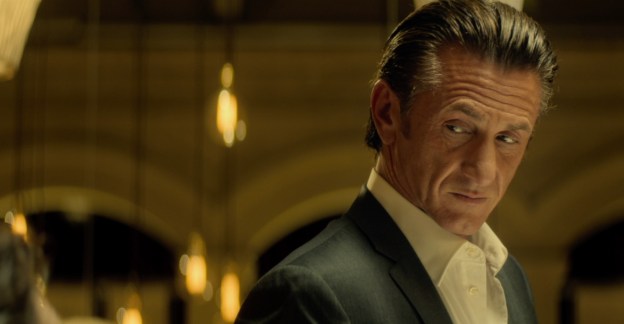
Sean Penn plays an assassin, posing as a security contractor, who falls in love with an impossibly beautiful aid worker in the Congo (Jasmine Trinca). Annie — even her name implies childlike helplessness — speaks with an alluring Italian accent. Her hair is perfectly tousled, even when she’s pulling an all-nighter at the local medical clinic.

She and Penn’s character, Jim, appear to have little in common — “He’s a hard man,” she tells a friend who questions her taste in boyfriends — but she spends her free time waiting around for him anyway, ready to hop into bed at a moment’s notice. Afterward, she gazes pensively out the window, clad only in a white button-down shirt that highlights her glorious legs.

There are a lot of other things going on in “The Gunman.” Too many things, actually. But director Pierre Morel, the French filmmaker who not-so-coincidentally helmed “Taken,” is inordinately preoccupied with Annie’s suffering and humiliation.

Despite Jim’s professed passion, he is responsible for the increasingly preposterous catastrophes that befall her. During the course of the film, Annie is abandoned, manhandled or worse, passed back and forth like a trophy between Jim and a colleague/rival (Javier Bardem), relentlessly pursued, captured, drugged and in constant need of rescue. The camera lingers on her, trussed like a chicken on the floor, blouse slipping off her shoulders.

Annie’s primary reaction to these circumstances is to fall apart at every turn. The only decisive, independent action she takes is a sexual one and, though she plays a part in the villain’s demise at the end of the film, it is almost entirely accidental. This woman is the insulting epitome of the mindless, passive damsel in distress who has no place in modern cinema.

Penn apparently helped screenwriters Don MacPherson and Pete Travis pen the script for “The Gunman” — working from a novel by Jean-Patrick Manchette — so he is at least partially to blame for this antiquated character. Would someone please introduce him to the concept of the Bechdel Test?

The irony is that “The Gunman” could function decently — indeed, it would be a better film — without the presence of Annie.

The premise is promising, if unoriginal: Ex-Special Forces sniper Jim participates in the assassination of a government minister, whose death plunges the Congo into chaos. Guilt-ridden, he disappears for eight years, before trading wet work for aid work and returning to the Congo, where he becomes the target of heavily armed mercenaries.

To find out who wants him dead, Jim must globe trot to London and Barcelona, confronting his former partners in crime, including point man Felix, played by Bardem, still oozing the scenery-chewing hamminess he exhibited to greater effect in “The Counselor” and “Skyfall.”

Like Liam Neeson in Morel’s aforementioned film, Jim possesses a particular set of skills, resulting in several brutal set pieces, including scenes at an aquarium and a bull ring that should be more thrilling than they ultimately are. In the latter sequence, Morel gracelessly juxtaposes images of Penn and the slaughter of a great, horned beast.

Jim has an Achilles heel, a disorienting mental affliction that makes his vengeful mission all the more grueling. So “The Gunman” is basically “The Bourne Identity” with the extreme violence, silliness and international slumming-it of the “Taken” franchise.

At the film’s halfway mark, Jim jets to Spain, where Bardem sulks drunkenly in an opulent luxury mansion and a lipstick red vintage getaway car conveniently waits in a nearby barn. That’s about the time the movie begins to feel like a James Bondian vanity project.

Penn obviously took this role seriously, a little too seriously perhaps. Buffed up to proportions that would elicit the envy of men decades younger, he’s all desperation and intensity, but this attempt at action stardom is a strange fit. Neeson doesn’t have anything to worry about.

Morel surrounds Penn with a pedigreed ensemble, including Ray Winstone and celebrated British stage actor Mark Rylance, but they’re mostly wasted or miscast.

You know something is off when the excellent Idris Elba shows up in a single scene and all he gets to do is monologue about tree houses.

Photos: http://www.openroadfilms.com


The Movie Love Questionnaire Challenge Continues … Sorta

So … I thought this Movie Love Questionnaire thing would catch on like wild fire, that film buffs would be falling all over themselves to reveal their personal cinematic preferences, that stimulating, thought-provoking dialogue would ensue.

A couple weeks ago, I challenged several Facebook friends to submit their answers to the aforementioned questionnaire, the creation of RogerEbert.com, designed to reveal an intimate glimpse into the quiz taker’s taste in film.

The response has not been as enthusiastic as I’d hoped. I get that it’s a busy world and the questionnaire is really long and time consuming and answering the questions requires thought.

Still, I’m quite taken with the quiz and what it reveals about the quiz taker. I’m hoping a few more people will send me their responses before this little experiment runs its course.

To my delight, I recently received a completed questionnaire from my very own big brother, Greg Kemble. Maybe I’m biased, but I enjoyed reading his answers immensely. You’ll find them below.

Movie Love Questionnaire:

Greg Kemble has the good fortune to be Lavender Vroman’s big brother. He is an English professor at a community college, which means he teaches mostly composition — though he dabbles in journalism, creative writing, and various literature courses. He loves both threads of film history –spectacle and art — though he’s often amazed at how few movies he gets to see.

Where did you grow up, and what was it like?

Born in Illinois, moved to Ontario, Canada for awhile, then four different places in Southern GregCalifornia. A bit disjointed. Starting in jr. high, I lived fairly far from my school; in high school, this distance increased. So all the friends I had were from my church, not from school.

Was anyone else in your family into movies? If so, what effect did they have on your moviegoing tastes?

I don’t remember a lot of movies growing up. The parents took me to a few, but it wasn’t a practice. We had limited television. I’m not sure to what extent they affected my taste in movies. Of course, my sister became a film journalist, but I was already old by then. 🙂

What’s the first movie you remember seeing, and what impression did it make on you?

I’m sure this was not the first movie I saw, but the first I remember that made an impression was What’s Up, Doc? starring Streisand and O’Neill. I was probably 5th grade. I remember trying to write a novelization of it (I didn’t now that such things existed), and when I found the published novelization I was in heaven. I tried to narrate the whole thing to my friends, who didn’t find it (or me) at all interesting. But I crushed majorly on the Streisand character, and I think it was the first comedy I’d seen.

What’s the first movie you ever walked out of?

I’ve never walked out of a movie, though I did fall asleep in “Raise the Titanic.”

What’s the funniest film you’ve ever seen?

Midnight Run. (Before that, it was All of Me; before that it was The Jerk.) I’ve seen lots of funny movies since then, but this is still my favorite.

That said, the funniest scene I’ve ever seen is the money hand-off in Ruthless People. I didn’t love the movie, but I fell out of my chair during that scene.

What’s the saddest film you’ve ever seen?

I weep at AT&T commercials, so I don’t trust my judgment. I can’t even call a sad movie to mind right now. Something where someone died of cancer, I’m sure.

What’s the scariest film you’ve ever seen?

Wait Until Dark.

What’s the most romantic film you’ve ever seen?

Amelie.

What’s the first television show you ever saw that made you think television could be more than entertainment?

Jacques Cousteau specials.

What book do you think about or revisit the most?

Gravity’s Rainbow.

What album or recording artist have you listened to the most, and why?

Sam Phillips, Cruel Inventions. Great voice, unusual lyrics, T-Bone Burnett producing.

Is there a movie that you think is great, or powerful, or perfect, but that you never especially want to see again, and why?

I can’t think of any.

What movie have you seen more times than any other?

The Matrix. However, if we’d had DVDs back when Star Wars came out, there’d be no contest.

What was your first R-rated movie, and did you like it?

The parents took me to see Sleuth. I liked it, but I’m sure part of that was because it was rated R. I didn’t fully understand it. But it held up to a second viewing when I was older.

What’s the most visually beautiful film you’ve ever seen?

This is hard, as there are many types of beauty. Anything by Ridley Scott. Avatar. But I think Dersu Uzala would still hit the top of the list.

Who are your favorite leading men, past and present?

Clooney always surprises me. Pitt, especially in unusual roles (12 Monkeys, Fight Club). Ford in Blade Runner. De Niro in anything. Pacino in anything, though especially Glengarry Glen Ross. Johnny Depp.

Who are your favorite leading ladies, past and present?

Audrey Hepburn, Angelina Jolie.

Who’s your favorite modern filmmaker?

I don’t have one. I don’t think in those terms, I guess–I like movies, or I don’t. The only person I’d go see just because it was him was Kubrick, but of course he’s not around anymore.

Who’s your least favorite modern filmmaker?

I’m not a big fan of Sandler, but I wouldn’t notice if I didn’t have kids. Again, I don’t think in those terms.

What film do you love that most people seem to hate?

I can’t think of any off hand.

What film do you hate that most people love?

Depends on who “most people” is, but Star Wars Episodes 1-3 for sure.

Tell me about a moviegoing experience you will never forget — not just because of the movie, but because of the circumstances in which you saw it.

In Austria, I was visiting a friend who went off on a backpacking trip and let me stay in his house for a few days. I went stir crazy–I didn’t know anyone, and I don’t speak German. Finally I went to the only theater in town and watched an American film, not knowing that the Austrians dub everything in German. So I sat through a film I’d never have gone to see by choice–Up the Creek–in German. It was doubly horrible.

What aspect of modern theatrical moviegoing do you like least?

The price. Old people trying to make sense of movies like The Matrix (“That was all a dream?”) behind me. I’m old, but I shut up, most of the time.

What aspect of moviegoing during your childhood do you miss the most?

I didn’t go to a lot of movies as a kid. The only thing I miss is sneaking into other theaters when my movie was done–but that was as a teen; we didn’t have multiplexes as a kid.

Have you ever damaged a friendship, or thought twice about a relationship, because you disagreed about whether a movie was good or bad?

Nah.

What movies have you dreamed about?

I wish I dreamt about movies.

What concession stand item can you not live without?

If I didn’t have kids, I’d never spend a penny on concessions.

If you’d like to take a crack at the questionnaire, I’ve included the list of questions to cut and paste below. Respond in the comments section here or on the Facebook link, or email your responses to lavendervroman@gmail.com. If I find your answers interesting and insightful, I might post them on the blog.

Movie Love Questionnaire:

Where did you grow up, and what was it like?

Was anyone else in your family into movies? If so, what effect did they have on your moviegoing tastes?

What’s the first movie you remember seeing, and what impression did it make on you?

What’s the first movie that made you think, “Hey, some people made this. It didn’t just exist. There’s a human personality behind it.”

What’s the first movie you ever walked out of?

What’s the funniest film you’ve ever seen?

What’s the saddest film you’ve ever seen?

What’s the scariest film you’ve ever seen?

What’s the most romantic film you’ve ever seen?

What’s the first television show you ever saw that made you think television could be more than entertainment?

What book do you think about or revisit the most?

What album or recording artist have you listened to the most, and why?

Is there a movie that you think is great, or powerful, or perfect, but that you never especially want to see again, and why?

What movie have you seen more times than any other?

What was your first R-rated movie, and did you like it?

What’s the most visually beautiful film you’ve ever seen?

Who are your favorite leading men, past and present?

Who are your favorite leading ladies, past and present?

Who’s your favorite modern filmmaker?

Who’s your least favorite modern filmmaker?

What film do you love that most people seem to hate?

What film do you hate that most people love?

Tell me about a moviegoing experience you will never forget — not just because of the movie, but because of the circumstances in which you saw it.

What aspect of modern theatrical moviegoing do you like least?

What aspect of moviegoing during your childhood do you miss the most?

Have you ever damaged a friendship, or thought twice about a relationship, because you disagreed about whether a movie was good or bad?

What movies have you dreamed about?

What concession stand item can you not live without?

Photos: RogerEbert.com, Greg Kemble

Unlikely Vampires Inhabit Awkwardly Funny ‘Shadows’

What We Do in the Shadows
Two and half stars (out of four)
Not Rated (violence, sexual content, language)
86 minutes
(The film received an extremely limited release and is playing this week and next at BLVD Cinemas in Lancaster.)

When it comes to vampires and geography, we tend to think of Transylvania, New Orleans, London, Forks, Wa., even Santa Cruz (ah, “The Lost Boys”). We don’t tend to think of New Zealand.

To most Americans, New Zealand is famous as the location of “The Lord of the Rings” trilogy and not much else. It’s not a place we’d except to find a thriving coven of brooding bloodsuckers.

The utter unlikeliness of the setting is the primary source of humor in the vampire comedy “What We Do in the Shadows.” The film was made by and stars New Zealanders in the capital city of Wellington — not exactly a recipe for the sexy, gothic, darkly thrilling vampire movies audiences are accustomed to.

To be frank, the creatures of the night who inhabit “Shadows” aren’t very good at being vampires.

Drawing much of its appeal from its irresistible brand of awkward, laid-back Kiwi humor, “Shadows” was written and directed by Jemaine Clement, the goofier looking half of hilarious comedy duo Flight of the Conchords, and actor-filmmaker Taika Waititi.

Like the short-lived “Conchords” HBO series, “Shadows” revolves around oddball flatmates who fit together comfortably, whatever their quirks, but are clumsy when it comes to navigating the outside world.

In the movie, these flatmates are centuries-old monsters, holed up in a crumbling, genuinely creepy ruin on the outskirts of Wellington. They’ve invited a documentary crew to take a glimpse into their everyday lives, which are more mundane than anything Anne Rice or Stephenie Meyer ever envisioned.

The den mother of these fanged fiends is Viago (Waititi), a cheery Victorian nobleman with a flair for antiquated fashion, still pining after an unrequited crush.

Viago tenderly looks after pals Vladislav (Clement), a Dracula-type with a taste for orgies and sadism; 8,000-year-old Petyr, a hideous fanged thing who lurks in the basement; and Deacon (Jonathan Brugh), the 183-year-old youngster of the group and self-professed party animal.

Like most roomies, these guys squabble over chores, give each other fashion tips (it’s hard to put together a nice ensemble when you can’t see yourself in the mirror), play pranks on their guests (Here’s a tip: don’t eat the spaghetti), weather catastrophes, like “fatal sunlight accidents,” and look forward to the social gathering of the year, the Unholy Masquerade.

Improvising heavily and impressively, Clement, Waititi and the rest of the cast mine laughs by subverting vampire movie tropes from everything from “Interview With the Vampire,” to “The Lost Boys,” to “Twilight,” and classics like “Nosferatu.”

There’s nothing suave, sexy or even very sinister about these bloodsuckers, who dress like they’re appearing in a mash-up of “Pride and Prejudice” and “Saturday Night Fever” and struggle to adapt to modern technology, including cellphones and Facebook, with the help of their new human friend, IT guy Stu (Stuart Rutherford). Stu is so helpful, they’ve all agreed not to eat him.

“Shadows” has a very loose plot, revolving around the conflict that erupts with the addition of newly initiated, indiscreet vampire Nick (Cori Gonzalez-Macuer) to the group. Some viewers may find this tedious.

Still, the film’s got enough gore and fun special effects to satisfy horror aficionados. If the initially clever concept begins to feel a bit threadbare, there are more than enough high points to make up for it.

In one scene, Viago and friends encounter a pack of testy but polite werewolves, led by ginger-headed “Conchords” alum Rhys Darby.

“We’re werewolves, not swearwolves,” he declares.

That’s a hashtag if there ever was one.

Photo: movies.mxdwn.com