‘Lucy’ and the Evolution of Scarlett Johansson

Lucy
Two and a half stars (out of four)
R (strong violence, disturbing images, sexuality)
90 minutes

“Lucy” is the exciting next step in the unlikely but intriguing evolution of Scarlett Johansson. I can’t emphasize enough how refreshing it is to witness an actress who was once celebrated for her luscious body transform into an action heroine whose mind is even more enticing than her sleek moves.

Johansson began her career as the girl from “The Horse Whisperer” and “Ghost World.” Thanks to that low, silky voice and those curves, she quickly became a sex symbol. While she has always projected pensive intelligence, she was relegated, in films such as “Lost in Translation” and “Girl With a Pearl Earring,” to the role of luminous innocent, a childlike beauty never in control of her fate.

It wasn’t until 2012’s “Avengers” that Johansson embraced her potential in the part of the quiet but deadly Natasha Romanoff, aka Black Widow, Nick Fury’s favorite S.H.I.E.L.D agent. Yes, the role requires the actress to squeeze herself into a tight, black catsuit, but the character’s appeal isn’t found in her physicality alone. It’s in her precision, smarts and cool authority.

I think Johansson is the best hope we have right now of someday seeing a satisfying comic book adaptation featuring a well-written, well-acted female superhero. After seeing “Lucy,” I’m even more convinced of this. The film is part of a flawed but fascinating trilogy — along with the recent “Her” and “Under the Skin” — in which Johansson defies humanity, technology and even physics, time and space to become something mysterious and “other.” It’s clear our Scarlett is no longer content to bother with girlish trifles. What she wants now is to transcend.

Transcend is exactly what she does in “Lucy,” rising above the goofiest movie in French director Luc Besson’s prolific and often strange career. Because of her enlightened performance, the film is a lot of fun, until Besson’s silly-pretentious script runs out of steam. I’ll admit I enjoyed it a lot more than I probably should have.

Besson is at his bloody, stylish, Euro-thriller best in the film’s first act, in which we are introduced to the title character, a naïve college student who inexplicably happens to live in Taiwan. Duped into delivering a suitcase to Tapei’s most powerful drug lord (Min-sik Choi) — who is apparently Korean. Huh? — Lucy becomes an unwitting mule, awakening to find that a pouch containing an experimental substance has been stitched into her stomach.

In the film’s most electrifying scene, the pouch bursts, spilling its contents into Lucy’s bloodstream and making its way to her brain, where it unlocks hitherto unrealized cerebral potential. It’s a rush to watch Johansson suddenly snap from quivering victim to calculated killing machine, sending a would-be rapist flying across the room, using her belt to snare a nearby weapon.

Besson is riffing here on the well-worn myth that humans only use 10% of their brain capacity. In contrast, the chemically-enhanced Lucy’s ever-expanding noggin operates at up to 20% and counting. To emphasize his theme, the director intercuts Lucy’s violent exploits with a lecture delivered by a celebrated neuroscientist played by the mellifluous Morgan Freeman.

Freeman’s oratory goes on for so long, it begins to feel as if we’re trapped in a boring science class. When it comes to academics, Besson is something of a cheat, cribbing from such mind-bending sources as “The Matrix,” “Limitless” and the recent “Transcendence.”

The 10% of the brain thing is a fun idea but as the premise plays out, it doesn’t make a whole lot of sense. As Lucy’s brain opens up — Besson helpfully keeps us appraised of her development by flashing us the latest percentages — she acquires an uncanny new skill set, including telekinesis and the ability to fight off stereotypical Asian baddies, change her hair color at will, manipulate matter and use her mind like a universal remote control for all the radios, light fixtures, computers and cell phones in the world. She also has a killer fashion sense.

Besson contrives to send Lucy to his favorite cinematic location — Paris — to track down what’s left of the drug that is literally blowing her mind, dodging Choi (the star of “Oldboy” deserves much better) and enlisting the help of Norman and a typically Bessonish French cop (Amr Waked). In the City of Light, the director serves up trademark outbursts of violence, including a fairly run-of-the-mill car chase and machine-gun shootout.

A scene in which Johansson literally suspends a gang of astonished gangsters in the air with a flick of her fingers is more promising. If only “Lucy” was content to deliver a high-concept premise and bone-crunching action, along with a few moments of vulnerability. A hospital scene featuring Lucy phoning home to her mother is surprisingly emotional and more evidence of Johansson’s own expanding capacities.

Less successful is the nature footage Besson includes, like shots of cheetahs hunting their prey and a couple of completely nutso glimpses of the original, missing-link Lucy. It’s as if the director suddenly evolved into Terrence Malick.

“Lucy” gets pointedly weirder as it progresses and it isn’t nearly as smart as Besson thinks it is.

Photo: Jessica Forde

My Tortured Love Affair With Comic-Con

Dear San Diego Comic-Con,

We’ve had our good times, you and I, but over the last few years, we’ve had our differences too.

I’m not the bright-eyed, energetic pop culture junkie I once was. I’m older. I have a kid. I have responsibilities. I can’t be bothered with noise and crowds and inconvenience. I still consider myself a die-hard nerd, but you probably won’t catch me standing outside movie theaters at midnight with my lightsaber or Harry Potter wand anymore. I no longer have the stamina to part a sea of hygienically challenged fanboys, poster tubes strapped to their shoulders like samurai swords, backpacks full of munchies and Monster Energy Drinks.

I’m not the only one who has changed. You used to be this cool thing that only certain people knew about. Then suddenly, you were popular. You started off as a small gathering of comic book collectors in a hotel ballroom. Now you’re a juggernaut, sprawling all over the San Diego Convention Center and beyond.

Every media outlet, from Entertainment Weekly to the 5 o’clock news, is compelled to cover you. Your latest installment, kicking off tonight, is expected to attract a horde of at least 130,000. Attending used to be a relatively simple affair, as long as one was on the ball and made one’s plans early. It now requires an exhausting scramble for tickets and exorbitantly priced hotel rooms.

So several years ago, after much agonizing, I quit you, Comic-Con. But I have a confession to make.

I still miss you.

I miss ducking out of work early and rolling into San Diego on Preview Night just in time for badge pick-up. We’d check into our over-priced hotel and stuff our faces with Extraordinary Desserts while marking up the official Comic-Con schedule, formulating our strategy for the long weekend ahead.

After a night of terrible sleep, we’d rise early, tug on our nerdiest T-shirts, and hike the mile to the Convention Center. If we were in a hurry, we’d splurge on a cab so we could join the queue to gain admittance to that wondrous place known as Hall H, the cavernous room where early-bird movie buffs catch a glimpse of Hollywood’s most anticipated future flicks. We were lucky if we got to sit in the very back of the room, where giant video monitors saved us from squinting blearily at the celebrities on stage, whose heads appeared no bigger than pins.

Sure, there was the year we had to sit through the “Twilight” panel and listen to thousands of “Twilight” moms shriek over Robert Pattinson and Taylor Lautner. There was the time the hall went on lock-down after a guy in a Harry Potter T-shirt stabbed another guy in the eye with a pencil. And there was always that one slobbering idiot just waiting to ask Scarlett Johansson an incredibly inappropriate question during the Q-and-A session.

Still, I must admit I miss Hall H. I miss sitting in that massive room from sun-up to sundown, listening to actors and writers and directors talk about their upcoming movies and watching sneak previews, new trailers and footage fresh from the set. Somehow, it didn’t matter that it was going to be up on the Internet by the next day. We didn’t mind subsisting on hot dogs and cardboard cheese pizza or the delirium that kicked in about the fourth hour spent in that windowless prison. There was something electric about being there, about being one of the first people to witness it all.

That time the entire cast of “The Avengers” took the stage was pretty awesome. So was the time Harrison Ford showed up to promote “Cowboys & Aliens” and was absolutely flummoxed by the standing ovation he received. Anything moderated by Patton Oswalt or featuring Guillermo del Toro and his favorite word — it begins with an “F” — is always a good time. Impeccably dressed in a natty suit, Robert Downey Jr. is … well … he’s just the man.

Heck, I even miss standing in that endless, serpentine line for Hall H, which resembles something out of “The Hunger Games.” In that mass of humanity, you are guaranteed to meet a stranger who shares whatever interest floats your geeky boat, whether it be Harry Potter, “Doctor Who,” “Transformers,” “The Goonies,” “Star Trek,” “Firefly,” or some obscure anime series. Communing with like-minded nerds is a huge part of your sloppy charm, Comic-Con.

63151_10151158548098806_851197575_n

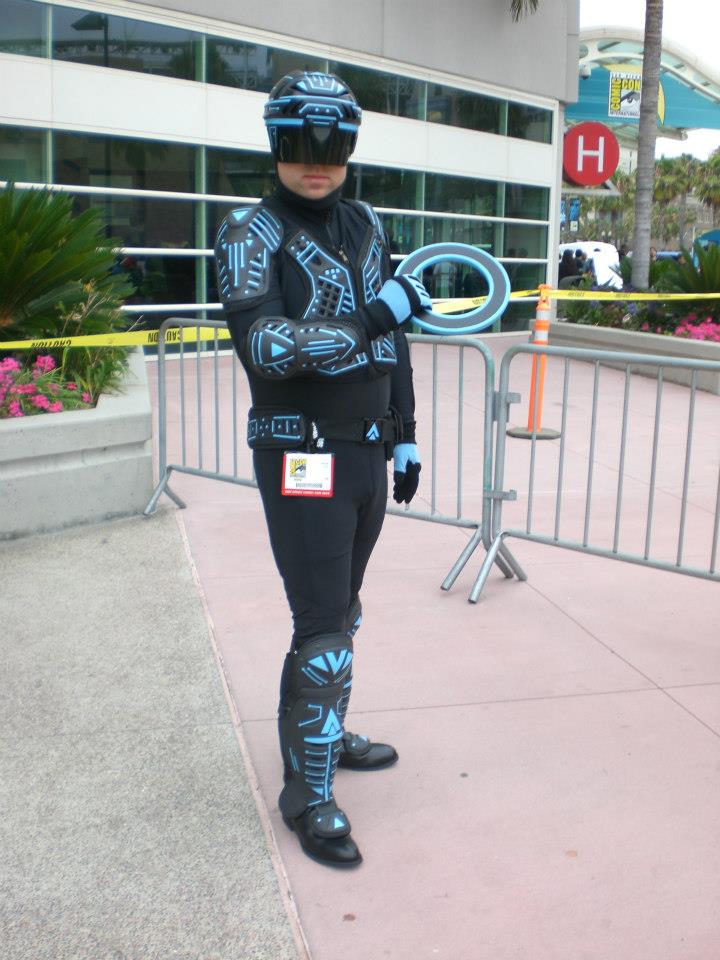
Let’s not forget the cosplayers, a brave and astonishing species unto themselves, living out their private fantasies in public in a shameless parade of elaborate finery. Here’s to you, glow-in-the-dark “Tron” pajama guy, chubby Batman, baby Thor, and Slave Leia, bold enough to don the sacred gold bikini. Here’s to you, amateur Tony Stark, builder of the most awesome, fully functional Iron Man suit ever. Here’s to you, Stormtroopers, always kind enough to pose for a picture, and tiny Jawas with light-up eyes, and that dude dressed like Luke in the Dagobah training sequence, a baby strapped to his back, clad in a Yoda costume. You rock.

14174_10151158559293806_429030868_n

As if that wasn’t enough, there is the exhibit hall floor, a veritable wonderland of geek culture, where fans jostle each other shoulder to shoulder in search of that elusive collectible or a must-have surprise — a T-shirt, an action figure, a bumper sticker, a handmade Harry Potter scarf, an indie comic book, a signed poster.

At Comic-Con, there are wonders waiting around every corner. You might happen upon Stan Lee in the hallway or the entire cast of “Star Trek: The Next Generation” — sans Patrick Stewart, of course.

533980_10151158561273806_95916800_n

I think what I remember most fondly about you, Comic-Con, is dragging myself through the Gaslamp Quarter at dusk in search of a watering hole where my friends and I could rehash the amazing events of our day, swapping stories and laughing over newly forged inside jokes. We’d head back to the hotel, dump the contents of our complimentary Comic-Con bags out on the bed and sort through our swag. Most of it would inevitably end up in the trash, but at the time it seemed like the most precious of treasures.

Then we’d settle down for another night of terrible sleep so we could wake up and do it all again the next day. It was the best.

I think that says it all, dear Comic-Con. Maybe one day I’ll return to you. I hope you miss me, too, just a little bit.

Affectionately yours,

Lavender

401336_10151158553653806_2088040582_n

Lavender Vroman and Kristy Rivas at the 2010 San Diego Comic-Con.


Apes With Machine Guns? Yes, Please

Dawn of the Planet of the Apes
Two and a half stars (out of four)
PG-13 (intense sequences of sci-fi violence and action, brief strong language)
130 minutes

Those damn, dirty apes are back and as sympathetic as ever, thanks to the wizardry of motion capture technology and another dazzling performance by Hollywood’s motion capture go-to guy, Andy Serkis.

“Dawn of the Planet of the Apes” is the sequel to 2011’s “Rise of the Planet of the Apes” (there’s no shame in it if you mix up the titles), a reboot of the cheesy but beloved 1968 classic starring Charlton Heston. I don’t think anyone expected much out of “Rise” — visions of corny rubber ape masks were still dancing in moviegoers’ heads — yet the film proved to be a surprisingly compelling drama, hinging on the tragic but satisfying character arc of the noble simian known as Caesar.

Serkis, famous for his portrayal of Gollum in the “Lord of the Rings” and “Hobbit” trilogies, delivered a remarkable, emotional performance as the ape whose metamorphosis from cute baby chimp to savior of his species provides the foundation for “Dawn.”

On the surface, “Rise” was a cautionary tale of reckless genetic research and animal cruelty, but at its heart it was an exploration of the volatile bond between fathers and sons. Aside from its impressive visual effects and a finale in which dozens of angry apes swarmed the Golden Gate Bridge, it wasn’t much of an action movie. “Dawn” is just the opposite, a bang-em-up summer blockbuster that offers geek-pleasing images of monkeys on horseback, their hairy fists brandishing machine guns.

“Dawn” continues the father-son theme with a story built around two pairs of dads and their offspring. There’s the genetically-enhanced Caesar, who left behind adoptive papa James Franco at the end of “Rise,” and now has two sons of his own, including a rebellious teenager who’s constantly questioning his authority.

The setting is post-apocalyptic San Francisco and Caesar is patriarch of a flourishing ape society in the Muir Woods. This treetop civilization may resemble the Ewok village but it’s surprisingly advanced. Its hairy residents have discovered the secrets of fire and developed the ability to read, write and speak.

If the idea of talking monkeys is just too much for you, have no fear. Director Matt Reeves wisely downplays this potentially outrageous element with ape talk that is an easy-to-swallow mixture of sign language and guttural speech.

Caesar’s story parallels that of Malcolm (Jason Clarke), one of the few human survivors of the “simian flu,” the lethal virus unleashed by the very experimentation that triggered Caesar’s evolution. Malcolm has his own teenage boy (Kodi Smit-McPhee) to look after and is co-founder of a makeshift civilization in what remains of downtown San Francisco.

To thrive, the fledgling outpost needs power, a requirement that sends Malcolm and a small band of humans on a dangerous errand, crossing into ape territory, where they are met with distrust by Caesar’s band. The tentative reunion of man and monkey results in several tense stand-offs, including a clever scene in which a crafty ape uses the stereotypes of his species to quite literally disarm a couple of redneck gun nuts. There’s also a lovable moment involving Smit-McPhee, an orangutan and the graphic novel “Black Hole.”

Caesar and Malcolm may be in favor of diplomacy but the situation escalates thanks to the meddling of their most trusted advisers — the scarred, embittered ape Koba (played by versatile Brit Toby Kebbell) and paranoid military chief Dreyfus (an over-the-top Gary Oldman) — who see violence as the only way forward.

Reeves demonstrated his affinity for idiosyncratic sci-fi with giant monster movie “Cloverfield” and creepy vampire thriller “Let Me In.” He quickly establishes a tone of hushed unease, contrasting striking images of verdant forest and a shattered San Francisco. The director proves up to the considerable visual effects demands of “Dawn,” especially the battle-heavy third act that boasts those soon to be famous shots of apes who are packing.

Inserting hyper-intelligent, talking animals into relatively realistic war scenarios is likely to result in a mixed bag of reactions. It’s a strange sight, which some will find thrilling and others deeply disturbing or at the very least unsettling. For me, the final act of “Dawn” simply drags on far too long as it abandons humanity for apes-gone-bananas action.

Returning screenwriters Rick Jaffa and Amanda Silver and co-scribe Mark Bomback (“The Wolverine,” “Total Recall”) are too enamored with their ape creations to get a good handle on their human characters, so even actors as fine as Clarke and Oldman come up blank.

That’s not at all the case for the film’s computer-generated simian stars. Serkis’ Caesar is still an astonishingly lifelike and — dare we say? — intensely human creation. If anyone deserves to rule the planet based on personality alone, it’s the apes.

Why I’m Boycotting Michael Bay

I spent about two seconds last weekend thinking about whether I should go see “Transformers: Age of Extinction.”

My conclusion?

Nah. I’d rather binge watch “Orphan Black.” Or stare at the wall for three hours. Even banging my head against the wall for three hours would be a more attractive alternative to sitting through Michael Bay’s latest extravaganza of shape-shifting robots, wanton destruction, senseless civilian casualties and explosions, explosions, explosions.

Based on the 1980s toy line and cartoon series, the original “Transformers” trilogy is packed with colossal morphing creatures, sleek technology, things that go boom and gratuitous shots of voluptuous pinups posing as leading ladies. They are flicks made for boys, both the literal sort and the kind who never grew up. And I just can’t bring myself to sit through another one.

I know I’m in the minority here, considering that “Age of Extinction” set a record for biggest box office debut of 2014, grossing $300 million worldwide. It may be futile, but I’ve decided to take a personal stand against Hollywood’s most annoying, antiquated and nonsensical filmmaker.

I’m sick of the way Bay blithely mingles jokes catering to the 8-year-olds in the audience with wildy inappropriate innuendo, harsh violence with treacly sentimentality, and cutting-edge filmmaking technology with politically incorrect, hackish storytelling that borders on quaint.

I’m weary with sitting through movies that double as jingoistic recruitment videos for the armed forces.

Bay may have an impressive grasp of how to serve up insane visual effects sequences, but he’s sexist, juvenile, self-indulgent, wildly unfunny — and judging from his on- and off-set antics over the years — something of a douche bag.

So while I dutifully sat through last year’s utterly pointless and morally bankrupt “Pain & Gain,” I won’t be seeing “Age of Extinction” or the upcoming “Teenage Mutant Ninja Turtles,” which Bay produced. This despite the promise of Dinobots and Mark Wahlberg.

And the only justification I need for this decision can be found in the original “Transformers” trilogy.

2007’s “Transformers” is big, loud, bold and brainless, and mostly diverting in that insanely excessive, more-is-more Bay kind of way. It has car chases, explosions, air strikes, ambushes and all varieties of mass destruction.

Then there’s the cleavage, bare midriffs, gratuitous slow motion and weirdly uneven mingling of wacky, politically incorrect humor with laughably “serious” moments set to overbearing symphonies of strings.

The plot is straight out of a Saturday morning cartoon and treated alternately with the utmost gravity and tongue-in-cheek glee. It’s essentially the tale of a boy — Sam Witwicky (Shia LaBeouf) — and his car — trusty Camaro Bumblebee, who is actually an “autonomous robot from the planet Cybertron.”

The highlight of the film is its computer generated vehicular stars, who are not only stunningly and realistically rendered through the considerable marvels of CGI but are surprisingly intriguing as personalities. The Autobots, with their sad, robot eyes and agenda of peace, are far more engaging than the film’s overstuffed assortment of human characters.

If the first “Transformers” is a flashy sports car, the sequel, “Revenge of the Fallen,” is simply a piece of junk as the robots in disguise are rendered virtually indistinguishable. With this second installment, the king of Hollywood excess’ trademark profusion ceases to be enjoyable, threatening the audience with total exhaustion.

There’s too much going on in the movie: too many characters, too many robots, too much so-called comic relief, too much mayhem and too much of a plot that is at once vague and over-complicated as Sam heads off to college and is swept up in an Autobot mission to stop the evil Decepticons from resurrecting their leader, Megatron.

“Revenge” isn’t 2½ hours long because it’s stuffed with actiony goodness. It’s seemingly endless because of the nonsense Bay fills it with, like sexy coed Isabel Lucas, who turns into a serpentine assassin, a conspiracy theorist roommate (Ramon Rodriguez) and Sam’s mom’s (Julie White) wacky interlude with a pot-laced brownie.

In the previous film, the Transformers were the stars of the show, hulking, meticulously detailed hunks of metal with personality and heart, showcased with loving care. In “Revenge,” there’s no time for that. In some scenes, it’s a strain to even tell them apart.

The third “Transformers” film, “Dark of the Moon,” may be an improvement over the virtually unwatchable “Revenge” but it’s still a ridiculous, cacophonous spectacle built on equal parts juvenile humor and superlative special effects.

The film depicts an epic battle between the Autobots and Decepticons, which results in the gleeful destruction of large swathes of downtown Chicago. The movie clocks in at two hours and 37 minutes, but there’s a lot of nonsense we could do without, including another appearance by Sam’s annoying parents and John Malkovich’s funny but utterly pointless cameo as Sam’s eccentric new boss.

In the grand, unenlightened tradition of “Transformers” babes, Rosie Huntington-Whiteley traipses around in her underwear and waits for Sam to come rescue her.

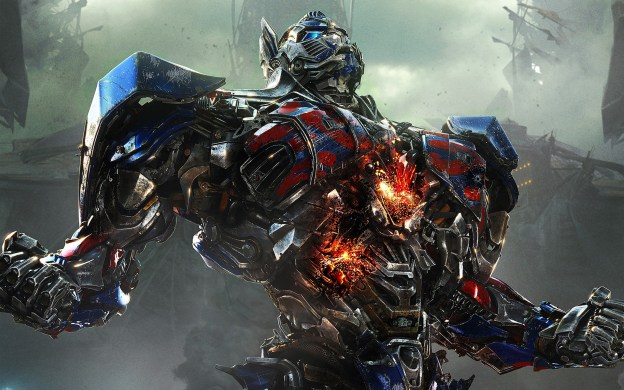
Bay continues to beat us over the head with supremely silly moments, as when Optimus Prime gives an inspiring speech in front of a battered American flag while thundering music threatens to drown out the dialogue.

The only reason he gets away with it is because we all love Optimus Prime.

Perhaps the director’s biggest crime is ruthlessly and relentlessly preying on the insatiable nostalgia of the children of the ’80s.

There Be More ‘Dragons,’ More Visual Wonders

How to Train Your Dragon 2
Three stars (out of four)
PG (adventure action, mild rude humor)
102 minutes

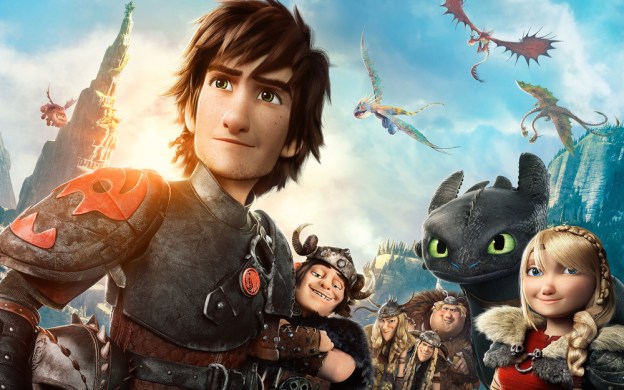
With its cute and clever character design, irresistible premise and soaring scenes of flight, “How to Train Your Dragon” was the first DreamWorks film to truly rival the animated wonders of Pixar. The sweet-natured Viking adventure debuted in 2010 and quickly became a classic, thanks in no small part to Toothless, the fierce but loyal little dragon who supplied the movie with its generous heart.

However many times I see it, I still get teary-eyed in that moment when Hiccup reaches out to touch his new friend, the Night Fury — who, as it turns out, is not so furious — and his affections are finally accepted. It’s a simple moment of grace that perfectly captures the joy of man’s bond with nature’s beasts and it’s right up there with anything that “Up” or “Toy Story 3” has to offer.

A sequel was inevitable. Arriving four years later, “How to Train Your Dragon 2” seems to have lost some of the franchise steam, under-performing at last weekend’s box office. It’s a shame because this second installment builds on the charms of the first film with gorgeous animation and fantastical adventure designed to appeal to everyone’s dragon-loving inner child. And whether you’re a fan of “The Hobbit,” Harry Potter or “Game of Thrones,” who doesn’t love dragons?

Returning writer-director Dean DeBlois brings us back to the once dragon-fearing cliff-top burg of Berk, which has embraced its winged former foes and transformed itself into a haven for the fire-breathing beasts. Vikings and dragons live side by side and the mythical creatures enjoy luxurious stables, all-you-can-eat fish and a culture that revolves around dragon racing. It’s kind of like Quidditch with airborne sheep.

The sport is depicted in an opening sequence that is a heck of a lot of fun, reintroducing the audience to the colorful cast of supporting characters, including Hiccup’s aggressive girlfriend Astrid (America Ferrera), wise-cracking, one-armed, one-legged blacksmith Gobber (Craig Ferguson) and squabbling twins Ruffnut (Kristen Wiig) and Tuffnut (T.J. Miller).

But it is in the next sequence that DeBlois pulls out all the stops, depicting Hiccup and inseparable pal Toothless gliding high above the clouds, testing the limits of some nifty new gadgetry designed by the tinkering chief’s son. The animation is jaw-dropping and exhilarating, showing off the “Dragon” creative team’s exquisite grasp of light and water effects.

Once a misfit, an older, less gawky Hiccup (the endearingly nerdy Jay Baruchel) is now hailed as “the pride of Berk.” He’s on better terms with his father, hairy uber-Viking Stoick (a gruff and goofy Gerard Butler), but dad could still stand to brush up on his listening skills. Hiccup is ambivalent about succeeding his father as chief, but Stoick’s method of dealing with this is to mostly ignore his kid’s reservations.

Hiccup escapes the mounting pressure by indulging his passion for exploration, flying farther and farther beyond his island home and mapping out new realms. In the process, he and Toothless make an unsettling discovery — not everyone shares Berk’s dragon-loving philosophy.

While much of the beauty of “How to Train Your Dragon” could be found in its simplicity, DeBlois takes a more ambitious approach to the sequel. He’s expanded the franchise universe, venturing beyond the familiar world of Berk to introduce new territories, new dragons, new humans — including a cocky dragon trapper voiced by “Game of Thrones” star Kit Harington — and a scarred, dreadlocked villain (Djimon Hounsou) who looks menacing, but doesn’t have much of a personality.

The colorful menagerie of new dragons results in welcome and wondrous sights. They include ice dwellers, water dwellers, rambunctious babies and a couple of massive, tusked Kaiju that could have lumbered straight out of “Godzilla.” There’s also an intriguing addition to the cast in the form of a figure from Hiccup’s past, a sort of Jane Goodall of dragons richly voiced by Cate Blanchett.

At times, it feels like there’s too much going on in “How to Train Your Dragon 2.” Some of the characters get lost in an over-abundant assortment of subplots, like Astrid, for instance, who comes along for the ride but doesn’t do much. The film loses something when its focus wanders from the fast friendship shared by Hiccup and Toothless and the finale goes to a dark place — perhaps darker than necessary — which some young moviegoers may have trouble processing.

DeBlois has once again enlisted veteran cinematographer Roger Deakins (“Skyfall,” “True Grit”) as a consultant and his expert visual influence is seen and felt throughout the film. From Toothless’ hilariously feline expressions to the play of surf, sun and cloud as great beasts skim the skyline, “How to Train Your Dragon 2” takes the eye to stunning visual heights.


You’ll Find a Few Faults in These ‘Stars’

The Fault in Our Stars
Two and a half stars (out of four)
PG-13 (thematic elements, some sexuality, brief strong language)
125 minutes

Here’s the thing about John Green’s best-selling young adult novel, “The Fault in Our Stars.”

It’s a book about a teenage girl, a girl who isn’t in love with a vampire or fighting for survival in a dystopian death arena. This girl has terminal cancer. She has no illusions about the fact that she’s dying, which makes “TFiOS” the rare YA read that dares tackle the thorny intricacies of reality. Its heroine is an ordinary young woman, though she happens to be unusually sharp-witted and insightful, which makes her certain fate all the more heart-wrenching.

What’s remarkable about “TFiOS” is that it was written by a thirtysomething man, who has no trouble at all getting into the head of 16-year-old Hazel Grace Lancaster. As if that wasn’t enough, he draws beautifully nuanced, sympathetic portraits of Hazel’s anguished parents, too. It’s quite a literary feat, one that holds enormous appeal for readers at any stage of life.

Teenagers love “TFiOS” for the epic, star-crossed love story at its center. The sweet but doomed affair between Hazel Grace and Augustus Waters is adorable but never precious. Green sets a pivotal romantic scene between the two at Amsterdam’s Anne Frank House of all places.

Adults are wrapped up in the book for different reasons. How you respond to it has a lot to do with your beliefs about and experiences of life and death. After I read it, I sank into an existential funk for days. This is a book that’s brutally honest about the end of life and the process of dying. It raises questions we don’t like to think about. Is it possible to die gracefully? How important is it to leave a legacy? Is it worth it to love when love inevitably leads to loss?

You can see how all of this might be an awkward fit for a Hollywood movie.

Surprisingly, director Josh Boone’s adaptation of Green’s beloved novel gets it mostly right. It’s not perfection, by any means, but it does nothing to dishonor its source. It’s also one of the few movies you’ll see this summer with a young woman in a lead role that doesn’t require her to jump out of moving trains, shoot a bow and arrow or undergo a magical transformation right before the prom. Female moviegoers showed their gratitude last weekend to the tune of $48 million. “TFiOS” even beat out Tom Cruise’s “Edge of Tomorrow” and Disney’s “Maleficent” at the box office.

“TFiOS” succeeds largely on the talents of its ingratiating performers. Shailene Woodley, the luminous young star of “Divergent” and “The Descendants,” plays Hazel Grace, a thoughtful Indianapolis girl whose diagnosis of throat cancer at the age of 13 is a death sentence, postponed by an experimental drug. The disease spreads to her lungs, so Hazel is in and out of the hospital, frequently short of breath and must constantly tote an oxygen tank behind her.

With a lot more than fashion on her mind, Hazel’s only accessory is the cannula, or transparent tube, that wraps around her ears and feeds air into her nostrils. To his credit, Boone takes care that the physical manifestations of Hazel’s cancer remain front and center throughout the film. This isn’t one of those movies in which we’re told the heroine is dying but never see any evidence of it.

Because she prefers to mope around the house reading and watching reality TV, Hazel’s mother (Laura Dern) and doctor declare her depressed. Mom’s solution is to send her daughter to a cheesy cancer support group in a church basement. Hazel can’t stand the meetings and their trite, sentimental speeches, but she does meet Augustus Waters, a charming 18-year-old cancer survivor with a prosthetic leg.

Augustus takes one look at Hazel and is smitten. Hazel clearly enjoys his attentions but is slower to reciprocate. In her volatile state, she considers herself a grenade. It’s her responsibility to minimize the damage she causes to those around her, she says.

Despite her protestations, Hazel and Gus bond over their mutual sarcasm, blunt approach to the prospect of impending death and Hazel’s favorite novel, “An Imperial Affliction,” written by the reclusive Peter Van Houten (Willem Dafoe). Hazel’s obsession with addressing the questions left unanswered at the end of Van Houten’s book send the couple on an unforgettable trip to Amsterdam, where they discover, as Augustus says, that the world is not a wish-granting factory.

Woodley’s pensive, unglamorous but utterly charismatic performance is a marvel. Her Hazel Grace is more full of life than most people who foolishly bank on the assumption that they have years and years ahead of them. She and the irresistible Ansel Elgort — who plays her brother in “Divergent” — have a warm, rich chemistry that turns even the most potentially maudlin scenes into heartfelt moments, particularly an Amsterdam love scene that is tender, bittersweet and sincere in a way teenage love scenes rarely are.

Screenwriters Scott Neustadter and Michael H. Weber penned “The Spectacular Now,” another teen drama starring Woodley. They’ve filed down some of the rougher, more profound edges of Green’s book, perhaps to make it more palatable. They’ve also softened Hazel a bit, shying away from some of the negative but honest emotions, like rage and despair, that are present in the book.

I wish the movie didn’t require a voiceover. Narration almost always comes across as too on the nose in films that hover dangerously on the edge of becoming obvious and “inspirational,” but the book’s deeply internal qualities practically demand such a device.

I wish Boone didn’t resort to cutesy visual gimmicks, like the wiggly text bubbles that pop up on screen whenever Hazel and Augustus communicate.

I wish Hazel’s parents got the poignant, three dimensional portrayal they deserve.

I wish the movie didn’t have the weepy emo soundtrack all quirky, youthful rom-coms seem to have.

I wish the director had a better handle on the tone of the film, which sometimes segues choppily from irreverent humor, to melodrama, to genuine sorrow.

“TFiOS” the movie might have you reaching for a Kleenex, but Green’s novel reached right inside you and ripped out your guts.


This Weekend, See ‘Maleficent,’ Skip ‘A Million Ways’

Maleficent
Two and a half stars (out of four)
Rating: PG (Fantasy action and violence, frightening images)
98 minutes

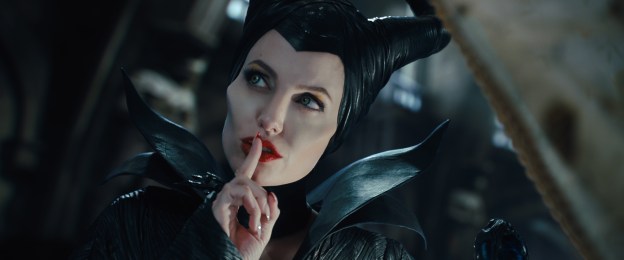
Angelina Jolie has always kinda scared me. Not because she used to wear vials of blood around her neck and sleep with knives under her pillow, but because she’s always been something of a goddess, so chilly and unapproachable. Maybe that’s why she’s perfect as the iconic villain of Disney’s “Maleficent,” a revisionist history of the studio’s own classic animated film “Sleeping Beauty.”

As a kid, the sorceress and her eerie, horned silhouette struck terror into my heart. Jolie melts into the stuff of my childhood nightmares so effortlessly, with cheekbones Marlene Dietrich would kill for and a purr that’s pure, silky evil. “Maleficent” is a surprisingly sympathetic take on the object of my youthful fears, putting a clever enough spin on the gorgeously animated 1959 “Sleeping Beauty” with a refreshingly feminist twist.

The movie imagines a colorful back story for the fairy tale’s famous baddie, envisioning her as the winged, nature-loving guardian of an enchanted forest whose betrayal at the hand’s of an ambitious lover drives her to cast that notorious narcoleptic curse upon an innocent princess. This alternate myth gives Jolie ample opportunity to display many facets of an intriguing character. Clad in leathery black, there’s something of the sexy dominatrix about her but she’s also vulnerable and funny and downright tragic with a magnificent sneer and a killer villain’s laugh.

Unlike co-stars Sharlto Copley, who plays the maniacally paranoid King Stephan, and Elle Fanning, as the simpering Aurora (apparently, it is too much to ask to have two interesting female characters in one movie), Jolie ingeniously underplays what could have been an unbearably hammy performance.

“Maleficent” is heavy on visual effects. It was directed by first-timer Robert Stromberg, a former VFX artist and supervisor. He’s populated the film with an ensemble of obnoxious CGI fairies and cutesy woodland critters. Not all of them are convincing, but Jolie is the only special effect this movie really needs.

A Million Ways to Die in the West

 A Million Ways to Die in the West
One and a half stars
Rating: R (strong crude and sexual content, language, violence and drug material)
116 minutes

There may be “A Million Ways to Die in the West,” but there are only a handful of jokes hilarious enough to send yer whiskey snortin’ out yer nose, pardner.

Writer-director Seth MacFarlane seems to be on to something by playing this Western parody mostly straight. As the title suggests, the film pokes fun at the often lethal living conditions of the 1800s frontier, but the concept proves limited. This ain’t no “Blazing Saddles.”

At first, the sight of villagers in the tiny Arizona outpost of Old Stump perishing in sudden and random ways — getting squashed by a block of ice or gored by a runaway bull —  is mighty amusing, but the well of laughs quickly runs dry. What’s left is a fairly predictable story about a misfit sheep farmer (played by MacFarlane) who befriends a like-minded, sharp-shootin’ cowgirl (a game Charlize Theron), only to run afoul of her outlaw husband (Liam Neeson).

The film’s gags are just as irreverent, raunchy and politically incorrect as you’d expect from the creator of “Family Guy” and “Ted” and the Oscar’s most controversial host. There’s a running joke involving the town virgin (Giovanni Ribisi) dating the town whore (Sarah Silverman) and Neil Patrick Harris does unspeakable things to a couple of dandy bowler hats, but there is a general dearth of laugh-out-loud moments. Even a moustache-themed dance number doesn’t feel nearly as clever or strange as it should.

There’s a reason MacFarlane doesn’t usually star in his own films. He’s just too smug to play the sarcastic but likable everyman. But the ubiquitous Harris is a hoot as his romantic rival, the preening proprietor of the local moustachery. There’s also a priceless joke that almost makes sitting through this overlong, underwritten comedy worthwhile, at least for “Back to the Future” fans.

 Photos by Disney, Lorey Sebastian


Bradley Cooper, Clint Eastwood Set Sights on ‘Sniper’

Bradley Cooper and Clint Eastwood set their sights on Acton, California, as a location for the movie “American Sniper.”

Cooper stars in the film as Navy SEAL Chris Kyle, a record-setting sniper who served four tours in Iraq, only to be shot and killed in 2013 at a gun range in Texas. Eastwood is directing the film, which features combat scenes lensed at Blue Cloud Ranch in Santa Clarita.

Cooper and co-star Sienna Miller have been spotted on set at several Los Angeles locations over the last few weeks.

Eastwood arrived about 3:30 p.m. Monday at a shopping center on Santiago Road in Acton, where an empty unit had been dressed as a Navy recruitment center. Cooper, star of “The Hangover” and “American Hustle,” showed up shortly after the director, wearing a plaid shirt and jeans. The actor was looking husky, having bulked up considerably for the role, but didn’t have the bushy beard he sported for much of the movie’s production. He spent most of Monday’s shoot inside the building.

The production involved a small film crew and a large crane to light the exterior of the building, located between the Dancin’ in Acton dance studio and the Rustic Cafe & Bakery. Several 1970s or ’80s era picture cars were parked outside the faux recruitment center, including a weathered brown pickup truck and a Dodge Magnum with a license plate reading “MGNUMPI.”

The shoot drew a small crowd of onlookers from neighboring businesses, which remained open for the day. They gathered to try to get a look at Cooper, but were disappointed when much of the filming revolved around several denim and cowboy boot-clad extras walking in and out of the recruitment office.

Eastwood is no stranger to the Antelope Valley. He shot a scene for his 2002 thriller, “Blood Work,” and footage for 2008’s “Changeling” in the area. Cooper recently spent time in Tehachapi, filming scenes for “The Hangover Part III.”

Based on Kyle’s memoir, “American Sniper” is among the modestly budgeted productions taking advantage of California’s film tax credit, according to the Los Angeles Times. Eastwood also shot his last project, the upcoming Broadway musical adaptation “Jersey Boys,” in L.A.

“Sniper” is set to be released next year.

Scroll down for more photos.

Melissa Medialdea contributed to this post.

photo (11)Clint Eastwood takes a look at the monitor on the set of “American Sniper” in Acton.

photo (8)


photo (7)

photo (4)

photo (2)

Prep for ‘Future Past’ with Ultimate X-Men Recap

Are you planning to see “X-Men: Days of Future Past” this weekend?

Ideally, you’ll want to watch all six movies that preceded this sequel, which features a time travel plot so twisty and complex, it would leave J.J. Abrams scratching his head.

Director Bryan Singer’s wildly entertaining but mentally taxing seventh franchise installment requires moviegoers to keep straight a huge ensemble of mutants past, present and future in various eras, various places and various stages of their lives.

You don’t have to be a rocket scientist to enjoy “Days” but it does help if you brush up on the X-movies that have gone before. Below you’ll find reviews, complete with plot summaries, of every chapter in the franchise, from 2000’s “X-Men” to last year’s “The Wolverine.”

Consider it your refresher course on all things mutant. Professor X would be proud.
xmene1

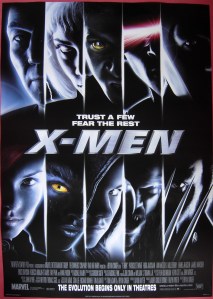
X-Men (2000)
Three and a half stars
PG-13
104 minutes

Some comic book junkies waited more than 30 years for an X-Men movie. When the film was finally made, it was greeted with a flurry of hype reminiscent of the fuss over “Star Wars: Episode I — The Phantom Menace.” After months and years of pent up anticipation, someone was going to be disappointed. But that someone wasn’t me.

Director Bryan Singer brings the mythology of the comic book to life without sacrificing substance for special effects — and the special effects are spectacular. Yes, Wolverine’s knife-like talons shoot from his skin with a thrilling metallic ring and Storm brews up magnificent bursts of thunder. Yes, Magneto twists metal bars like balloon animals and Wolverine and Mystique pirouette in a graceful, butt-kicking fight sequence.

The heart of the film, however, is in the richness of the characters and the resonance of the themes of prejudice and intolerance which made the comic so popular. Dark, moody and intelligent, but always fun, the mutant charms of “X-Men” will satisfy even the most X-ignorant and leave them hungry for more.

The brilliance of “X-Men” begins with the casting. Led by stage and screen veterans Patrick Stewart and Ian McKellen and charismatic newcomer Hugh Jackman, the actors transform comic book caricature into flesh and blood. Jackman is Logan, one of a minority of humans who have reached the next stage in evolution, feared by society because of their extraordinary powers. Logan is also called Wolverine because of the metal claws that spring from his knuckles, his wolfish sensory ability and rapid healing power.

Wolverine meets up with waifish runaway Rogue (Anna Paquin). She’s no ordinary teenager. Anyone who makes skin to skin contact with her could end up in a coma or worse. The two are pursued by bad guys from the Brotherhood of mutants: shape-shifting, blue-skinned Mystique (Rebecca Romijn-Stamos), big, dumb and hairy Sabretooth (Tyler Mane), slithery-tongued, high-jumping Toad (Ray Park) and their ringleader, Magneto (McKellen), who manipulates all types of metal without moving a finger.

Wolverine and Rogue are rescued from Magneto’s clutches by the X-Men, whose headquarters are hidden beneath a school for gifted youngsters where Professor Charles Xavier (Stewart), one of the world’s most powerful telepaths, trains mutants to use their powers for the good of humankind. He and ex-students Jean Grey (Famke Janssen), whose power also lies in her mind; Cyclops (James Marsden), who can blast through walls with his eyes; and Storm (Halle Berry), who wields power over the weather, keep track of the world’s mutants and fight evil.

As Rogue and Wolverine adjust to a community where mutants share acceptance and mutual respect, the X-Men strive to keep them safe from Magneto’s grasp and stop his diabolical plot for world domination.

It’s a delight to watch the distinguished McKellen and Stewart face off in “X-Men.” Two such passionate and imposing actors need not leap from planes and pummel each other with their fists to catch our attention. In one tense standoff, they do battle with nothing but their minds — Xavier pulls a sort of Jedi trick on Magneto’s men while Magneto holds cops at bay by turning their own guns against them.

It’s Jackman, however, who holds the movie in his sharp-clawed hands. His Wolverine is a sexy mix of James Dean leather-jacketed cool and Jack Nicholson crazy. A raging animal whose only soft spot is for Rogue — and perhaps Jean Grey — Wolverine is the film’s darkest, most intriguing source of conflict. The chemistry between Paquin and Jackman infuses “X-Men” with a tender humanity.

Unfortunately, the screenwriters are too bogged down in explanations and exposition to extend this human touch to the rest of the X-Men. It’s hard to believe, for instance, that Cyclops and Jean Grey are lovers when they don’t ever seem to look at each other. Sometimes the mutants, who have supposedly been together through thick and thin, hardly seem to know each other.

Some people will probably complain about the way “X-Men” shamelessly and meticulously sets itself up for its inevitable sequel. I didn’t mind it. They won’t be able to make the second one fast enough to satisfy my craving for more.
MPW-48454

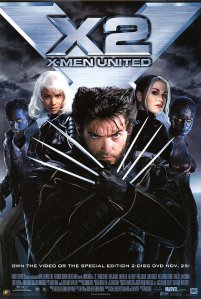
X2: X-Men United (2003)
Four stars
PG-13
134 minutes

“I feel a great swell of pity for the poor soul who comes to that school looking for trouble.”

Professor X utters this line at the end of “X-Men,” and in “X2: X-Men United,” we find out exactly what he means by it.

When special operations commandos storm the professor’s ivy-covered, manor-style school for gifted young mutants, they get a whole lot more than they bargained for. Instead of lying there waiting to be tranquilized like good little kiddies, the students melt through walls, let out literally paralyzing screams, turn into walking masses of steel and spin walls of ice from their fingertips.

And then there’s Wolverine, who happens to be baby-sitting this particular night. You don’t mess with Wolverine.

You don’t mess with director Bryan Singer, either. The “X-Men” helmer is back in the driver’s seat for “X2,” and the man knows what he’s doing. The sequel is every bit as good as its predecessor, boasting seamless special effects, rollicking action and actors who really “get” their characters.

It is darker, sexier, more adult and more violent — though surprisingly nongraphic, with a heightened sense of camaraderie between the characters and more mutants with more intriguing powers.

In short, it’s a good time at the movies.

“X2” opens with an assassination attempt on the president of the United States by a mutant unlike any we’ve seen before. He is Nightcrawler (Alan Cumming), a blue-skinned, strangely tattooed, devil-tailed creature who can instantly teleport from one location to another, disappearing from the grasp of secret service agents in a kind of inky blue “poof!”

In a doozy of an action sequence, Nightcrawler is barely thwarted from knifing the pres, but the incident gives ruthless Army Gen. William Stryker (Brian Cox) the opening he needs to obtain authorization for a special ops invasion of Xavier’s School For Gifted Youngsters.

Unaware of Stryker’s plot, Xavier, the wheelchair-bound leader of the X-Men, also known as Professor X (Patrick Stewart), dispatches the weather-controlling Storm (Halle Berry) and telekinetic Jean Grey (Famke Janssen) to pick up Nightcrawler, in hopes they can prevent him from further violence.

Wolverine (Hugh Jackman), in the meantime, has returned, still unsatisfied, from his quest to solve the mystery of his past, and Jean’s powers are threatening to burgeon out of control.

It is Professor X’s nemesis, the metal-manipulating Magneto (Ian McKellen), who busts out of his plastic prison with the help of shape-shifting lackey Mystique (Rebecca Romijn-Stamos), to warn Xavier and the X-Men of Stryker’s hidden intentions, which involve the professor’s powerful mutant-tracking device, Cerebro.

In true serial comic book fashion, there is a lot going on in “X2,” but screenwriters Michael Dougherty and Dan Harris manage to keep the story uncluttered, as well as allow sufficient time for each character to have his or her moment.

New faces are introduced, including the rebellious, flame-throwing Pyro (Aaron Stanford) and the tough-as-nails Deathstrike (Kelly Hu), who is, in essence, a vinyl-clad female version of Wolverine with knife-like talons protruding from her fingertips.

All of the actors are game and energetic, most notably Jackman, whose rugged, flippant, cool-but-caring attitude signals the arrival of a true action hero, and the quietly imperious McKellen, who steals every scene he’s in.

Curry wisely does not go too far over the top in his portrayal of the eccentric Nightcrawler. Stamos gets more screen time and she’s surprisingly good, even getting a chance to shed her blue scales for her human skin in one scene.

Who am I kidding, though? The real stars of the X-show are the special effects and they are mighty impressive. From Wolverine’s whirling, lightning-paced final confrontation with Deathstrike, to the computer-generated maneuvering of the X-jet, to a scene in which Pyro unleashes jets of flame at a squad of police cars, only to be halted rather creatively in midrampage by the power-absorbing Rogue, these are action sequences that make you want to leap out of your seat and do an adrenaline-pumped dance of joy.

The “X2” finale is a bit overblown and those long-drawn-out and harped-upon secrets of Wolverine’s origins, once revealed, aren’t nearly as shocking as we might have expected.

Still, “X2” accomplishes what every good comic book should. It leaves us salivating for issue No. 3.
MPW-19862

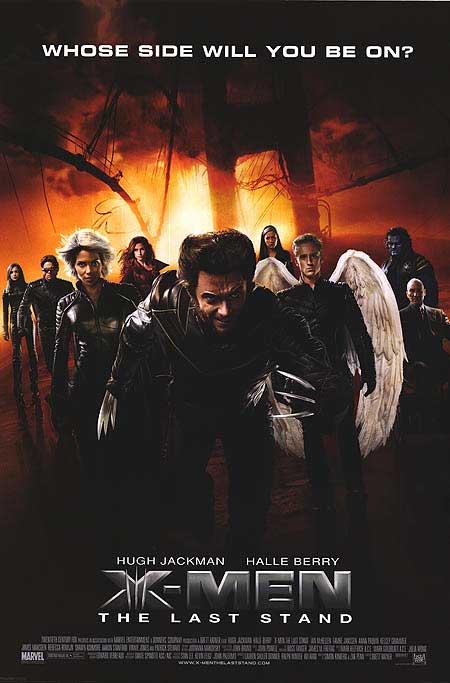
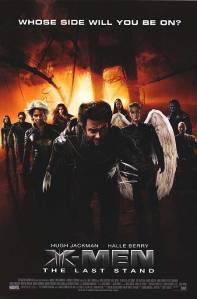
X-Men: The Last Stand (2006)
Two and a half stars (out of four)
PG-13
103 minutes

The miracle of the first two X-Men movies was that they were based on a comic book series and still managed to be action packed and character driven. So while the audience was dazzled by the sight of Wolverine flashing those adamantium claws or Jean Grey manipulating futuristic airplanes with her mind, the real attraction was in the relationships of these mutants, whose ambivalence over their supernatural powers is really just a metaphor for whatever individual gifts or curses we struggle with here in the real world. 

Though he had hundreds of possible characters to choose from, director Bryan Singer was always careful not to cram the screen too full with them. They were painstakingly selected for maximum conflict, each one — with the possible exception of Halle Berry’s Storm — was given a moment to shine, and while fists flew and monolithic battles were waged, it was the interaction between them that made the films so compelling.

Singer famously abandoned the X-Men franchise when the prospect of bringing yet another Lycra-clad avenger to the screen — a musclebound fellow by the name of Superman — proved too tempting to resist. He left his mutant charges in the hands of Brett Ratner, helmer of the “Rush Hour” flicks.

In “X-Men: The Last Stand,” Ratner has clearly bitten off more than he can chew. The movie is so bloated with characters, old and new, that many of the personalities moviegoers have come to love have been unceremoniously shoved to the side. Screenwriters Simon Kinberg
(“Mr. & Mrs. Smith”) and Zak Penn (“X2: X-Men United”) must share in the blame because they of all people should have known better than to attempt such a juggling act.

The plot of “The Last Stand” revolves around a pharmaceutical company’s sudden announcement that it has developed a cure for the genetic mutations that grant the X-Men their remarkable paranormal abilities. The U.S. government’s head of mutant affairs, Dr. Hank McCoy (Kelsey Grammer), aka the furry blue Beast, attempts to address this startling turn of events diplomatically, but the nation is quickly divided between those who line up at clinics, desperate for the shot that will rid them once and for all of their embarrassing
abnormalities, and those who take offense at the very thought of such a thing.

“There’s nothing wrong with any of us,” Storm protests as talk of the cure swirls around Professor Charles Xavier’s (Patrick Stewart) School for Gifted Youngsters. Inclined to agree with her is Magneto (Ian McKellen), the megalomaniacal metal manipulator and Xavier’s best-friend-turned-nemesis, who seizes upon the controversy over the cure to brew up his own violent mutant revolution.

Xavier and the X-Men are a little too distracted to deal with Magneto immediately because Jean Grey (Famke Janssen), who seemingly died at the end of “X-Men United,” has
resurfaced and she’s acting mighty strangely, causing inanimate objects to float about the room and trying to seduce Wolverine (Hugh Jackman), who has long nursed an unrequited
crush on the fetching telepath.

The transformation of Jean into the omnipotent, id-driven force known as the Dark Phoenix is one of the most anticipated elements of “The Last Stand.” It doesn’t disappoint, at least initially, as the furious Phoenix demonstrates her awesome powers in her childhood home in a scene of absolute devastation. Unfortunately, Janssen spends the rest of the movie mostly standing around, as do many of our favorite members of the X-gang, that is if they haven’t already abruptly departed from the screen.

Among the other returning characters who get woefully short shrift are the fatherly Xavier, laser-eyed Cyclops (James Marsden), chameleonic Mystique (Rebecca Romijn), angsty fireball-throwing Pyro (Aaron Stanford) and Rogue (Anna Paquin), whose lethal talent for absorbing other mutants’ powers via skin-to-skin contact sparks a love triangle with her boyfriend, the hormonal Ice Man (Shawn Ashmore), and cute Kitty Pryde (Ellen Page), who can
walk through walls.

These characters are all relegated to the background to make way for Storm, Wolverine and Magneto — not necessarily a bad thing considering Jackman and McKellen are two of the best actors in the franchise — and an assortment of new, but
largely uninteresting villains, including the behemoth Juggernaut (Vinnie Jones sporting a goofy helmet and an unsightly wedgy) and fast-moving Callisto (Dania Ramirez).

Ratner spends a lot of time dwelling on Magneto and his brooding band of drab disenfranchised mutants, who look like a bunch of pierced and eye-linered Goth kids
camped out at a Marilyn Manson concert, while utterly wasting some fascinating new arrivals, like the winged and tortured Angel (Ben Foster) and a mysterious bald child
named Leech (Cameron Bright), who is the source of the mutant cure.

Ratner seeks to mollify fans with some impressive special effects sequences, including a forest chase in which Wolverine gets to really bare his claws, an over-the-top set piece
on the Golden Gate Bridge and a final mutant showdown complete with flaming, flying cars and whizzing syringes.

On the whole, though, “The Last Stand” ends the X-Men trilogy on a terribly unsatisfying note. Of course, I’m not buying for a second that it was ever really intended to be the
final chapter. If you doubt me, stick around for the final teaser at the end of the credits.

The X-Men will be back. Let’s hope they bring Singer with them.

kqO36IYvWbRKMPiUeiVZUFH06Rc

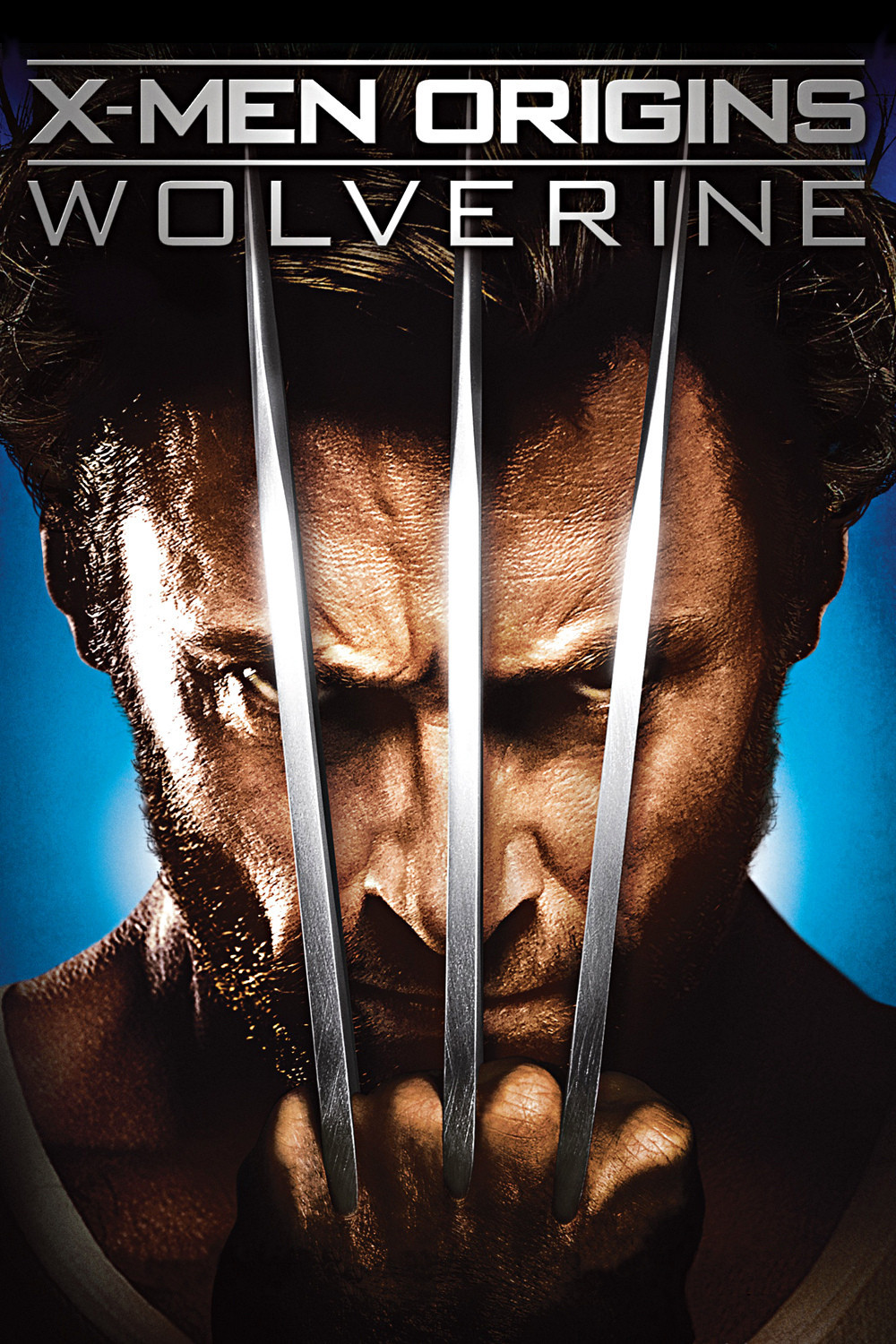
X-Men Origins: Wolverine (2009)
Two stars
PG-13
107 minutes

In the movies, at least, Wolverine has always been the coolest of the X-Men. Those lightning-quick adamantium claws. That werewolf-meets- Elvis pompadour. The leather jacket and the motorcycle, indicating his status as a rebel and a drifter. The grouchy glower and throaty growl. The fact that underneath all that animalistic rage, he’s just a softie with identity issues.

So, you might be tempted to think “X-Men Origins: Wolverine,” the first of several planned spin-offs of 20th Century Fox’s successful X-Men trilogy, would be the coolest flick of all.
Instead, it feels like the cold, stale leftovers of a franchise already past its expiration date.

If you’ve seen “X-Men” or its sequel, “X2,” then you’re already familiar with this origin story charting the mutant hero’s evolution from wolfie mercenary to indestructible
government test subject. “Wolverine” spends most of its time filling in the blanks, or manufacturing blanks to fill in — including the ferocious Canadian’s tragic love affair with an ethereal schoolteacher and his rivalry with psycho half-brother Sabretooth –before contorting itself into a tangle of twisted logic so that the story flows
back into the established movie mythology. Seamless is not a word I’d use to
describe this process.

The movie begins with an intriguing montage of all the wars the nonaging Logan (Hugh Jackman) and his equally timeless brother, Victor Creed (Liev Schreiber), have fought during more than a century of existence, stretching back to before the Civil War. In the modern world, their unique powers — bony talons burst from Logan’s knuckles, while Victor has
the nails and teeth of a tiger — capture the attention of William Stryker (Danny Huston), the sort of mildly deranged military chief who, at least in Hollywood’s version of things, is
forever starting up renegade bands of top-secret super-soldiers in the interest of national security.

When Logan loses his taste for Stryker’s bloody agenda, he hightails it to the Rockies and settles down as a lumberjack with a fetching pacifist named Kayla (Lynn Collins). You can
probably guess where this is going because, obviously, Jackman can’t spend the entire movie snuggling in a cabin with some hot chick. The abrupt disintegration of his idyllic normal life, the work of a brother pushed over the edge by the horrors of the Vietnam War, sends Logan on a quest for revenge and straight into the lab of Stryker, where the broken-hearted mutant
is transformed into the angry, hairy, metal-skeletoned beast we’ve come to know and love.

Pumped up like a plastic action figure — indeed, the actor’s muscles have become a spectacle unto themselves — Jackman is as roguishly charismatic as ever. His Wolverine
is soft-spoken, given to spouting quaint, old fashioned phrases, like “bub,” but there’s a burning, primal fury coursing through those swollen veins. We like him, but we’re also a
little bit afraid of him.

Unfortunately, ever since “X-Men: The Last Stand,” Fox has jettisoned that potent, satisfying blend of character development and action that made the first two films such a delight.
With a writer like David Benioff (“25th Hour,” “The Kite Runner”) on board, you’d think the screenplay might be a smidgen more cerebral but, then again, his co-scribe was Skip Woods (“Swordfish,” “Hitman”), so nevermind.

Action is now all that remains — and if you’re in the mood tostart your summer viewing off with a bang, you could do worse than “Wolverine,” I’ll admit — leaving Jackman little to do besides glowering, growling and flashing those claws. Another fine actor set adrift in a
sea of vaguely-sketched-out personalities is Schreiber, a thinking man’s thespian who brings a refreshing level of subtlety and craft to what could have easily been the stock bad guy role.

Yes, there’s real acting going on in “Wolverine,” but it only calls attention
to the loudly echoing vacant space that is the rest of the film. Director Gavin Hood — whose
previous films include the promising South African drama “Tsotsi” and the not-so-promising thriller “Rendition” — seems slightly out of his league with a movie of this massive-budgeted scale. Perhaps this is why he relies on action movie clichés for his visual approach. The hero clutching a murdered loved one and bellowing “Noooooo!” as the camera swirls overhead, Jackman walking in slow-motion with a gigantic fireball behind him — it’s all here.

Hood also encounters one of the pitfalls that befell the makers of “The Last Stand.” With a host of new characters to introduce, it’s impossible to give each one their due, so many of these new arrivals fail to make even the smallest impression. Among them, the sumo wrestler-sized Blob (Kevin Durand), the sparky Bolt (Dominic Monaghan) and sharp-shooting Agent Zero (Daniel Henney). Even X-favorites, like the cardflinging Gambit (Taylor Kitsch) and
the slicing-and-dicing Deadpool (Ryan Reynolds), are given deflatingly short shrift.

So many mutants, so little time.

x_men__first_class_movie_poster_by_nicolehayley-d4uer4q

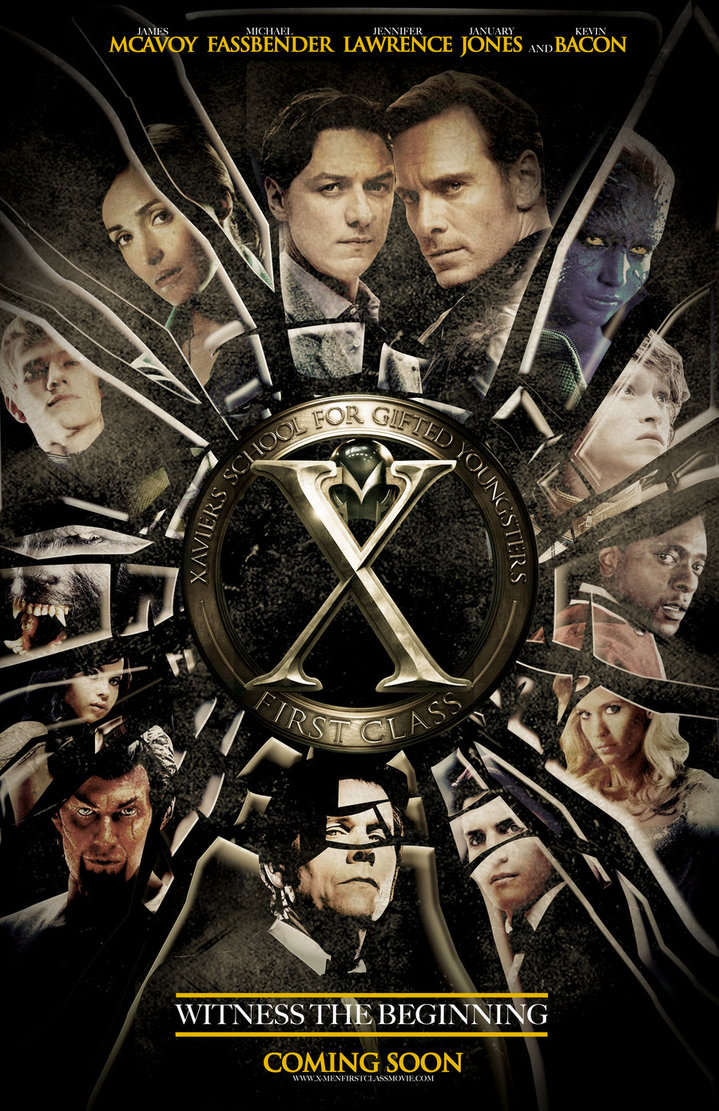
X-Men: First Class (2011)
Three stars
PG-13
132 minutes 

Many fans lost faith in Marvel’s X-Men after “The Last Stand,” the bloated, messy,
infuriatingly shallow third movie that seemed to signal a disgraceful end to the franchise.

Hope may be restored by “X-Men: First Class,” a younger, sexier installment designed to send the series in a fun and lively new direction, while introducing the comic book mutants to another generation of moviegoers.

“First Class” is a marked improvement over “Last Stand,” even if it doesn’t quite stack up with the effortlessly cool and exhilarating first installments, 2000’s “X-Men” and 2003’s “X-2: X-Men United.”

Directed by Matthew Vaughn, who has yet to crank out a flick that’s not worth seeing — his ouevre consists of “Kick-Ass,” “Stardust” and “Layer Cake” — this reboot has energy, style and an infusion of new blood that bodes well for the future of the franchise. Vaughn penned the script with his “Kick-Ass” collaborator, Jane Goldman, and “Thor” scribes Zack Stentz and Ashley Miller, working from an idea from original series director Bryan Singer.

They’ve taken a few liberties in regard to the existing films, but proceed with a surprising amount of respect for the preceding installments. There’s even a couple of priceless cameos involving characters from the first two flicks and playful references to X-Men lore, including the much loved and reviled classic blue and yellow suits.

Some fans may be miffed that Vaughn and company freely mix and match characters from various eras of the comic book for a story that is set during the Cold War as tensions escalate between the United States and Russia. We’re introduced to Charles Xavier (James McAvoy), aka Professor X, a wealthy Oxford graduate with telepathic talents tapped by the CIA as a consultant on the rapid evolution of a species of mutants with powerful but frightening natural abilities.

Assisting Charles is childhood best friend Raven (Jennifer Lawrence of “Winter’s Bone” and the upcoming “Hunger Games”), a scaly, blue-skinned shape shifter who will grow up to be the alluring mimic Mystique, but for now is insecure about her true appearance. The agency wants Charles and Raven to help them prevent enterprising madman Sebastian Shaw
(Kevin Bacon) from igniting World War III in his quest to shift the balance of power between humans and mutants.

Shaw has a connection to Erik Lehnsherr (Michael Fassbender), a Holocaust survivor and powerful manipulator of metal, consumed with the desire to avenge his past.
Erik’s obsession leads him to cross paths with Charles, who befriends the future Magneto and urges him to channel his anger into more positive pursuits. Together, they begin
recruiting others like them to join what one character describes as the CIA’s special “mutant unit.”

The recruitment sequence is one of the most enjoyable in a movie that takes its cues from the swingin’ ’60s suaveness of early James Bond films. There are submarines and smart suits, martinis and miniskirts and a pre-feminist vibe that’s capped off by January
Jones’ smoking-hot portrayal of Shaw’s shimmery, indestructible, skintight jumpsuit-wearing righthand gal, Emma Frost.

If only the countless scenes of generals plotting out strategy in war rooms filled with blinky lights and maps were as titillating. Sadly, the historic machinations of the plot tend to drag, as do moments involving Bacon’s Shaw, a disappointingly run-of-the-mill Bond-style baddie
whose motives are suspiciously like those of the fully formed Magneto.

A hefty helping of teen angst is served up by the film’s assorted young mutants, including Lawrence’s Raven, the fluttery fairy-winged Angel (Zoe Kravitz), shy and nerdy Beast (Nicholas Hoult), screaming Banshee (Caleb Landry Jones), adaptable Darwin (Edi
Gathegi) and energy wave-blasting Havok (Lucas Till). As in past films, some of their powers are more compelling than others.

The highlight of “First Class” is the interplay between McAvoy and Fassbender as close comrades with starkly opposing philosophies that will eventually drive them apart.
Both actors bring an emotional weight to their scenes together, although it is Fassbender’s tormented rage — hold onto those metal fillings, folks! — that commands the most attention.

A final showdown between these friends, soon to be foes, hints at potentially awesome things to come.

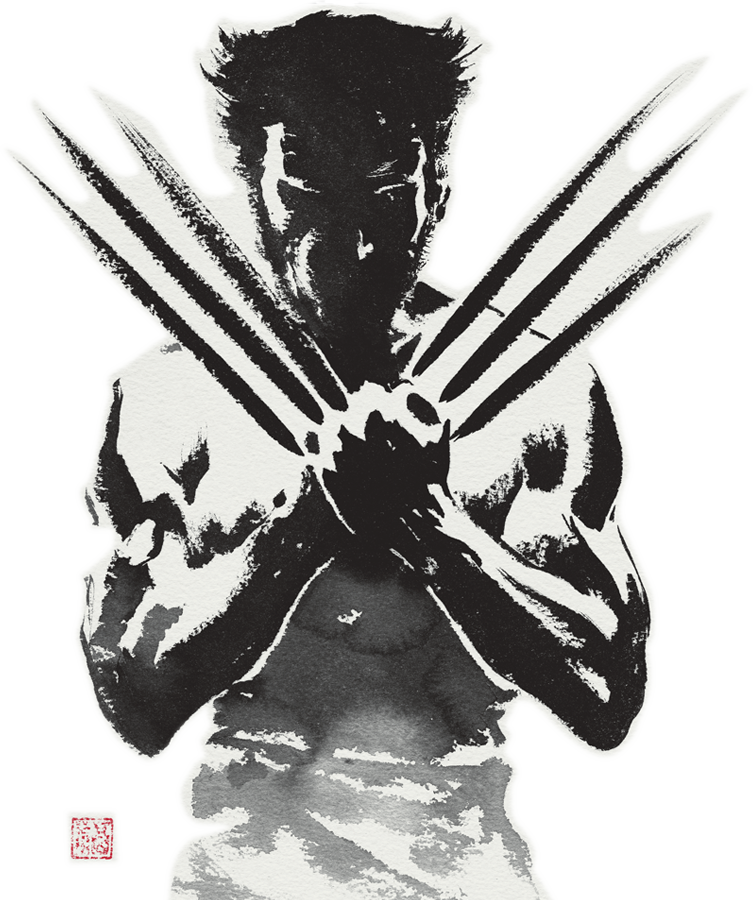
background_wolverine

The Wolverine (2013)
Three stars
PG-13
126 minutes 

Hugh Jackman has been playing Wolverine for more than a decade now, and the actor — and his spectacular bulging sinews — are no worse for wear.

Sure, the adamantium-clawed antihero had a bad time of it in 2009’s “X-Men Origins: Wolverine,” a brainless, bloated action epic that twisted itself into too many knots in an attempt to conform to franchise canon.

But thankfully that seems like a distant memory with the arrival of Logan’s fifth big-screen outing, “The Wolverine,” (the sixth if you count his brief but priceless outing in “X-Men: First Class).

“The Wolverine” ditches the franchise’s preoccupation with its protagonist’s tortured origin story and puts the focus back where it belongs — on Jackman and his ferocious embodiment of the enraged mutant, the indestructible product of twisted government experimentation.

Capably directed by James Mangold (“Walk the Line,” “3:10 to Yuma”), the movie presents us with a Wolvy who is more vulnerable than ever before, physically and emotionally. The script by Mark Bomback (“Live Free or Die Hard”) and Scott Frank (“Minority Report”) doesn’t skimp on action, but also works hard to ensure its epic scale never overwhelms the human drama.

At the beginning of the film, Logan is squatting in the wilds of Canada, unkempt, stringy-haired and looking a lot like Jean Valjean, the desperate ex-con Jackman played in “Les Miserables,” only beefier.

This mutant is sorely in need of a bottle of shampoo, a shave and an escape from the bad dreams that haunt his sleep, including visions of lost love Jean Grey (Famke Janssen), who he was forced to kill at the end of 2006’s “X-Men: The Last Stand.”

After a tragic encounter with one of his fellow beasts of the forest, Logan gets riled up and instigates a backwoods barfight. He is reluctantly extricated from the brawl by Yukio (Rila Fukushima), a samurai with crimson hair and a penchant for schoolgirl skirts who has traveled all the way from Japan to track him down.

Yukio convinces Logan to return with her to Tokyo at the request of her employer, Yashida (Haruhiko Yamanouchi), a dying businessman who wants to thank him for saving his life years ago during World War II.

Once in Tokyo, Logan discovers there is more to Yashida’s interest than gratitude. The ailing man claims he can rid Logan of his rapid healing powers and the immortality that weights so heavily upon him.

While Logan considers this proposal, he is introduced to Yashida’s heirs, his scheming son Shingen (Hiroyuki Sanada) and demure granddaughter Mariko (Tao Okamoto). Wolverine never could resist a damsel in distress and becomes Mariko’s protector after an assassination attempt by the Yakuza.

The Japan setting of “The Wolverine” makes for entertaining intrigue, complete with stealthy ninjas, sword-wielding samurai and family secrets hidden behind sliding Shoji screens. Here the tank-top-clad Logan and his husky biceps stick out like a sore thumb, which makes for some compelling culture clash.

With her balletic blade skills, Fukushima is a spunky new sidekick for Logan, while the slinky Svetlana Khodchenkova is alluringly creepy as venomous nemesis Viper.

Tossing off sarcastic one-liners and glowering grouchily at his castmates, Jackman continues to do an excellent job of channeling the tormented rebel’s fury and guilt. The actor is getting older, but you wouldn’t know it, especially from the state of his strapping physique.

There are a few points where the pace of the film lags — Mangold, to his credit, is more interested in character development than comic book bluster — but X-fans should be satisfied with the energetic action setpieces the director unveils.

There’s a great introductory sequence that takes place during the bombing of Nagasaki. A Yakuza ambush during a funeral zings with cleverly choreographed flying arrows, swordplay and martial arts, punctuated by the thud of Wolverine’s massive fists.

“The Wolverine” may be the first film ever to stage a chase atop a bullet train in one of the few instances in which Mangold gives in to the sillier impulses that comic book movies tend to bring out with over-the-top feats that defy physics.

Parents should note that the film’s PG-13 designation is what would be considered a “hard” rating. In other words, “The Wolverine” is considerably violent, despite its general lack of blood and gore. In one scene, Logan is pierced again and again by arrows. In another, a bit of self-surgery is performed that could either be considered laughable or cringe-worthy.

I’ll close with another note, this one to fans rabidly anticipating next year’s “X-Men: Days  of Future Past”: Stay for the credits to see a teaser that will have you wishing it was already May 23.

‘X-Men: Days of Future Past’ Delivers Best of Both Worlds

X-Men: Days of Future Past
Three and a half stars (out of four)
PG-13 (some sci fi violence and action, suggestive material, nudity and language)
131 minutes

“X-Men: Days of Future Past” could be the best chapter yet in a comic book franchise that has been going strong for the last 14 years. That’s because this seventh entry offers the best of all possible worlds, allowing the seasoned mutants of the first trilogy to appear alongside the excellent young cast of recent reboot “X-Men: First Class.”

“Days of Future Past” preserves the fun historical revisionism of “First Class” while simultaneously heading into darker, more emotionally wrenching territory, literally jumping between a world we recognize – the turbulent 1970s – and a world we don’t – a bleak and violent dystopian future.

Director Bryan Singer smoothly juggles an unwieldy ensemble of mutants old, new and even newer and succeeds in keeping the film’s focus on the characters. The movie’s brain-cell-melting concept is clever and the visual effects are superior, but “Days of Future Past” isn’t about that. It’s about people coming together despite epic personality clashes, the very thing that made the X-Men so relatable when they made their comic book debut in 1963.

It’s almost as if Singer and writer Simon Kinberg are atoning for letting the fans down with the much reviled third X-Men movie, which Singer produced and Kinberg penned. “Days of Future Past” niftily erases “The Last Stand,” while cunningly opening the door to an alternate reality with lots of tantalizing possibilities for the franchise.

They achieve this improbable feat with the help of “First Class” co-writer Jane Goldman and director Matthew Vaughn, who contributed to the mind-bogglingly complicated story. It begins with a glimpse of an inky future in which mutants, who boast unique super powers thanks to their evolved genes, are hunted by high-tech killing machines known as Sentinels. Haunting images of bodies and mass graves set the tone for a film that is often grim and, parents should note, not always kid friendly.

Despite the dismal outlook for their future, the X-Men continue the fight for the survival of their species. In a spectacular opening sequences, a young band of mutants engages the eerily faceless Sentinels in combat. It’s clear they’re outmatched by their relentless mechanical foes, but they manage to stay a step ahead of them thanks to Blink (Fan Bingbing), who can open up portals to transport her comrades from one space to another.

The X-Men’s other secret weapon is Kitty Pryde (Ellen Page) who apparently has a gift for … take a deep breath and try to stay with me now … transferring an individual’s consciousness back in time to their younger body. She and the surviving X-Men, including Professor X (Patrick Stewart) and his old nemesis Magneto (Ian McKellen), who have temporarily buried the hatchet, concoct a plan to send Wolverine (Hugh Jackman) back to the past. His objective? Stop shape-shifting, blue-skinned Raven, aka Mystique (Jennifer Lawrence), from committing the fateful act that will trigger the mutants’ impending extinction.

Because of his quick healing powers, Wolverine is the only one whose mind can withstand the traumas of such rigorous mental time travel. It’s not long before he wakes up in his youthful, pre-adamantium-enhanced body in an era still reeling from the Vietnam War and the Kennedy assassination.

To get to Mystique, Wolverine must appeal to Professor X and Magneto at the very point in time their friendship evaporated, back when they were still going by Charles Xavier (James McAvoy) and Eric Lehnsherr (Michael Fassbender).

This is no easy task because Charles, awash in self pity after the climactic events of “First Class,” has shuttered his school for gifted youngsters and hunkered down in his mansion, blocking out the mutant voices in his telekinetic head. Eric is imprisoned in the Pentagon, due to his participation in a particularly notorious crime. A solitary Mystique continues Eric’s militant pro-mutant sabotage, zeroing in on maverick weapons developer Bolivar Trask (Peter Dinklage).

“Days of Future Past” presents us with an X-Men universe gone topsy-turvy, occupied by a Wolverine who still flashes claws of bone, a Professor X who can walk but whose powers are diminished, the only thing he shares now with the metal-manipulating Magneto.

McAvoy and Fassbender basically pick up where they left off in the finale of “First Class.” Their highly charged chemistry remains the rebooted franchise’s greatest strength. McAvoy is particularly intense as a Xavier whose optimistic humanism has been replaced with despair — there are allusions to drug addiction in his suffering – and Fassbender is all cool, controlled rage, magnetic in his malevolence.

There are so many other mutants to love in “Days of Future Past,” too. Chief among them is newcomer Quicksilver (Evan Peters), a kleptomaniac teenager who delights in his speedy gifts and presides over the best sequence in the film, using his supernatural swiftness to bust Magneto out of his plastic prison. This may be the film’s most entertaining moment, but it’s just one of many in which Singer and Kinberg bring the mutants’ gifts to vivid life in uncannily crafty ways.

Also new to the club are the energy-absorbing, dreadlock-sporting Bishop (played by Omar Sy, charismatic star of French film “The Intouchables”) and strong and fast Warpath (“Twilight’s” Booboo Stewart).

Reprising their roles from “First Class,” Lawrence transforms the increasingly empowered Mystique into a much richer character and Hoult provides much of the film’s humor and heart as Xavier’s right-hand man, the furry, blue Beast.

Patrick Stewart and McKellen bring a veteran gravitas to the film and while we all have to suspend disbelief a bit to imagine that Jackman still looks like the young Wolverine, he’s so comfortable and confident in the role, we’re willing to go along with the charade.

If you haven’t seen the previous films in the X-Men franchise, the plot of “Days of Future Past” could be near impossible to follow. Actually, this could be the case even if you have seen them. By time the credits roll – and you’ll want to stick around until the very end for an apocalyptic teaser – you may have a Cerebro-sized headache.

It’s a small price to pay, though, for the satisfaction of viewing the most compelling team of comic book characters ever to grace the big screen. An unforgettable bunch of freaks and weirdos, they speak to the disenfranchised, the misfit, the loner in all of us.

The Avengers may get more attention these days, but they’re not nearly as cool.