Category Archives: Uncategorized

This Weekend, See ‘Birdman,’ Skip ‘Exodus’

This weekend, a tsunami of holiday films will crash down upon us, threatening to submerge us in cinematic overindulgence.

(The deluge actually began Wednesday with the release of the final chapter of “The Hobbit.”)

With dozens of movies vying for your attention and Christmas fast approaching, it’s unlikely you’ll find yourself with much free time.

However, if you should happen to be in the mood for an alternative to the obvious yuletide fare — like “The Hobbit: The Battle of the Five Armies” or “Into the Woods — there is one choice that rises above the rest, along with one over-hyped epic that deserves to be passed over.

Here’s why you should see “Birdman” and skip “Exodus: Gods and Kings.”

Birdman
Three and a half stars (out of four)
R (language, sexual content, brief violence)
119 minutes

There are few cinematic experiences that truly astonish, but “Birdman” is one of those rare discoveries.

Director Alejandro Gonzalez Inarritu’s darkly funny, painful, unexpectedly deep rumination on showbiz, ego and the human condition is a movie that has to be seen to be believed. Nominated for seven Golden Globe awards, the film has a serious shot at carting off the best picture Oscar in February.

“Birdman” is exciting on several levels, beginning with the way Inarritu and cinematographer Emmanuel Lubezki create the illusion the film was shot in one long, exhilarating take, winding its way through backstage corridors, out into New York’s Time Square and back again.

The movie is fun to watch even as Inarritu heaps his signature humiliations upon his characters, chiefly Michael Keaton’s has-been actor, who briefly tasted fame in a before-its-time superhero flick and seeks redemption by writing and starring in a Raymond Carver adaptation on Broadway.

The role feels more than a little autobiographical for former Batman Keaton, who basically lays all his wrinkles and a receding hairline at our feet in a vanity-free performance that is a breathtaking revelation. The entire cast of “Birdman” is amazing, including an adorably messy, big-eyed Emma Stone and Edward Norton, so vital and commanding here, you’d think he somehow resurrected his younger self from his “Fight Club” or “American History X” days.

Playfully meta with a feverish intensity that recalls “Black Swan” and “All That Jazz,” “Birdman” has smart, clever, pop culturally literate things to say about our celebrity obsessed society. It’s the anti-“Avengers,” but like a good comic book movie, it’s a total rush.

Exodus-Gods-and-Kings

Exodus
Two stars (out of four)
PG-13 (violence, battle sequences, intense images)
150 minutes

With “Exodus: Gods and Kings,” director Ridley Scott intends to give one of the most famous Old Testament legends the blockbuster origin story treatment, but instead he ends up remaking his 2000 hit, “Gladiator.”

The filmmaker takes more than a few liberties with the Biblical account of Moses, but sadly none of them are very compelling. In this version of the scriptural saga, the revered leader of the Israelites is played by Christian Bale as a wise and brave general in Pharaoh’s army, raised alongside heir-to-the-throne Ramses (Joel Edgerton, bald and resplendent in eye liner).

Sibling rivalry and daddy issues breed resentment between the siblings, just as they did between Russell Crowe’s general and Joaquin Phoenix’s prince in “Gladiator.” When Pharaoh (portrayed in an odd bit of casting by John Turturro) kicks the bucket, Ramses becomes Egypt’s ruler, even though Moses is the better man. Ramses discovers Moses’ true roots as a Hebrew slave and is terribly, terribly vexed, while his adopted bro reluctantly begins his journey as revolutionary savior of his people.

With its opulent Egyptian sets and costumes and impressive rendering of the plagues and other divine judgments in CGI, “Exodus” aims for the pomp and melodrama of great Biblical epics like “The Ten Commandments,” “Ben-Hur” and “King of Kings.” But with a running time of two-and-a-half hours, it plods along so slowly, it begins to feel as if the audience has been wandering the desert for 40 years.

When it comes to Moses’ identity, Scott and the “Exodus” screenwriters can’t commit. Bale talks to God — the form the deity takes is bound to miff some viewers of faith — but only after suffering a blow to the head, so it’s possible his hero enjoys a direct line to heaven. Then again, he might just be insane.

In the end what “Exodus” lacks is a well defined vision and the courage to examine religious conviction in all its complexity.

Photos: moviesmxdwn.com, http://www.digitaltrends.com


‘Die Hard,’ ‘Bridget Jones’ Among Christmas Guilty Pleasures

When it comes to choosing Christmas movies, there are a surprising number of options.

There are the beloved classics, films that have stood the test of time, like “It’s a Wonderful Life,” “Miracle on 34th Street” and “A Christmas Carol.” (Dickens’ classic is in a category unto itself with dozens of different versions for the picking.)

Then there are the childhood favorites, including “How the Grinch Stole Christmas!,” “Home Alone” and “A Charlie Brown Christmas.”

And there are Christmas movies to be found in virtually every genre: comedy (“National Lampoon’s Christmas Vacation”), romantic comedy (“Love Actually”), action (“Die Hard”), period drama (“Joyeux Noel”), horror (“Gremlins”), animation (“The Polar Express”) and more.

If you want to get carried away with the yule-tide themed viewing, things can start to get weird. A list of the “50 Best Christmas Movies of All Time,” compiled by gamesradar, includes such unlikely selections as “Go,” “Tinker Tailor Soldier Spy,” “Batman Returns,” “Eastern Promises,” “Life of Brian,” “Eyes Wide Shut” and “In Bruges.”

Christmas viewing is an extremely personal activity. Every family has its traditional favorites. Every person gets sentimental about different films. Some people live for cheesy holiday movies on Lifetime. Others love “The Santa Clause” just as much as “It’s a Wonderful Life.”

So this season, I offer a list of my 10 favorite Christmas movies (in no particular order). I’m not going to pretend they’re the best holiday films ever made. You won’t find Jimmy Stewart’s perennial favorite here or many other traditionally cherished flicks.

This is my guilty pleasure list. These are the movies I return to year after year and never grow tired of watching.

When you’re done reading, I’d love to hear your list of Top 10 Christmas flicks.

1. “Mixed Nuts,” 1994: Nora Ephron’s quirky little Southern California Christmas comedy just may be my favorite seasonal pick of all time. Last year, I wrote this ode to the movie, which depicts the wacky Christmas Eve shenanigans of the staff of a Venice Beach suicide hotline.
“Mixed Nuts” features a hilarious cast, including Steve Martin, Rita Wilson, Juliette Lewis, Anthony LaPaglia, Liev Schreiber (in drag), a very young Adam Sandler and the sublime Madeline Kahn. This is the one film my family watches every Christmas without fail.

2. “Love Actually,” 2003: When I’m doing my holiday shopping and hear the high notes of Mariah Carey’s “All I Want for Christmas is You” coming out of the P.A. system, I get a hankering to watch the most addictive holiday rom-com ever. With its cheeky humor and stiff-upper-lip melodrama, writer-director Richard Curtis’ roller-coaster ride of yuletide emotions is especially appealing to anglophiles. The film turned 10 last year, sparking debate about its merits or lack thereof, but that doesn’t change the fact that it has become a legitimate classic in only a decade. It doesn’t hurt that the cast, which includes Liam Neeson, Emma Thompson, Keira Knightley, Bill Nighy, Colin Firth, Hugh Grant and Rick Grimes from “The Walking Dead,” is both talented and wildly attractive.

3. “The Holiday,” 2006: I’ll admit there are a lot of “chick flicks” on this list, but that’s hardly surprising considering I am, gasp!, a chick. Second only to “Love Actually,” Nancy Meyers’ decadent and delicious rom-com is the guiltiest of guilty pleasures, as comforting as a cup of cocoa. It stars Cameron Diaz and a too-adorable-for-words Kate Winslet as a couple of sad grinches who get an unexpected dose of seasonal spirit when they swap houses for the holidays. The film may be as over-stuffed as a Christmas goose, but it’s chock full of goodies, including an unbelievably blue-eyed Jude Law and the late Eli Wallach as a rascally Hollywood screenwriter who encourages Winslet to be the heroine of her own life.

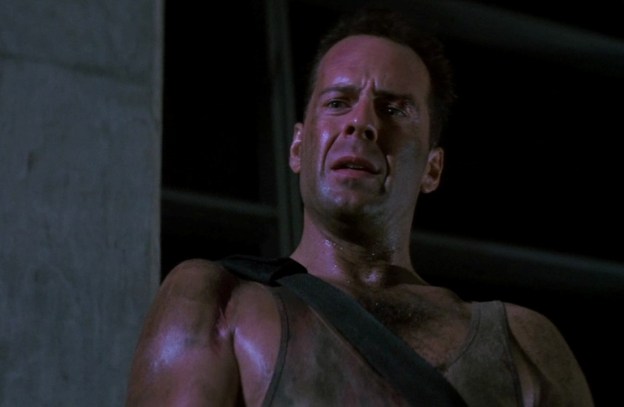
4. “Die Hard,” 1988: Here’s one to counteract all those ooey-gooey romantic comedies. This ’80s action classic is fun to watch at Christmastime precisely because it doesn’t trade in holiday cliches. Instead of peace on Earth and good will toward men, it features clever, hostage-taking terrorists (or are they?), volleys of machine gun fire, a hefty helping of adult language and the wanton destruction of an L.A. high-rise. Plus, it stars a wise-cracking, tank-top wearing Bruce Willis and a smooth-as-eggnog Alan Rickman.

still-of-will-ferrell-in-elf

5. “Elf,” 2003: I don’t know a living soul who doesn’t appreciate Will Ferrell’s instant Christmas classic. The silly, sweet-natured story of a displaced North Pole helper manages to remain funny and heartwarming after countless viewings. With his green and yellow spandex, perpetual grin — smiling’s his favorite — and irrepressibly sugar-plummy disposition, Buddy the Elf is impossible not to love. The comedy is insanely quotable — “You sit on a throne of lies.” — and will, however improbably, stay atop the list of best loved holiday movies, right alongside “It’s a Wonderful Life.”

6. “Christmas in Connecticut,” 1945: When it comes to classic movies, screwball comedies are my favorite, and as far as I’m concerned the queen of screwball comedy — second only to Katharine Hepburn — is Barbara Stanwyck. As a New York City food writer forced to go to extremes to maintain the charade that she’s the perfect country homemaker, Stanwyck is gorgeous, amusing and oh-so-sly. “Casablanca” alums Sydney Greenstreet and S.Z. Sakall provide merry support. The madcap antics are coated in a dusting of Norman Rockwell-esque Christmas Americana, and you’ll learn how to flip the perfect pancake just by watching.

7. “Bridget Jones’s Diary,” 2001: This adaptation of Helen Fielding’s laugh-out-loud read is perhaps not technically a Christmas movie, but it is bookended by two unforgettable yuletide scenes: one involving humiliating jumpers and questionable hors d’ouevres, the other a snowy kiss with everyone’s favorite Mr. Darcy, Colin Firth. Renee Zellweger is awkward and adorable as a London singleton trying to get her stuff together in time to find Mr. Right for the holidays. Firth is snobbish and gentlemanly in a way that makes Jane Austen fans swoon. As warm and cozy as a well-worn pair of Christmas pajamas, this one never gets old.

8. “White Christmas,” 1954: Because nothing gets you in the holiday spirit quite like Bing Crosby crooning Irving Berlin’s atmospheric yuletide classic. Because my grandmother loved this film and showed it to me and my siblings over and over again. Because it’s helmed by “Casablanca” director Michael Curtiz. Because few comedy duos are as smooth and quick-witted as old Bing and the incomparably funny Danny Kaye. Because never were there such devoted sisters as Rosemary Clooney and Vera Ellen. Just because.

9. “Edward Scissorhands,” 1990: When you grow tired of Christmas movie cliches, Tim Burton’s sublime suburban satire hits the spot. Johnny Depp first demonstrated his flair for eccentric characterizations in this macabre but poignant fairy tale about an innocent young man with blades for fingers and a talent for avant-garde hairdos and topiary sculptures. There are two scenes in this film that have me crying like a baby every time. The first features Vincent Price and the most wonderful cookie-making machine ever dreamed up. In the second, Edward carves a snow angel for his crush (a crush-worthy Winona Ryder) and transforms the mundane into holiday magic. That sound? It’s my heart breaking.

10. “A Christmas Story,” 1983: This one goes on the list in tribute to my dad, who never grew tired of taking writer Jean Shepherd’s trip down memory lane. Having grown up in the 1940s in the very region where “A Christmas Story” takes place, my father harbored a deep nostalgia for this hilarious warts-and-all depiction of a working-class family celebrating the season. Even if you can’t relate, the story of precocious Ralphie (Peter Billingsley) and his quest for a Red Ryder BB gun will send you flashing back to your own childhood misadventures. Ralphie may be the star and narrator, but it’s his pop, The Old Man (Darren McGavin), who steals the show with his unholy passion for a certain leg lamp. Fra-gee-lay!

Photos: http://www.tasteofcinema.com, the-gaggle.com

Defending George as ‘The Force Awakens’

Instead of spending Black Friday fighting over flat-screen TVs at Walmart, I replayed “The Force Awakens” teaser trailer over and over on my phone, along with the rest of the world’s Star Wars nerds.

I analyzed and reanalyzed every detail: Is that Benedict Cumberbatch or Andy Serkis intoning ominously in voiceover? Who is that black-clad figure wielding the coolest lightsaber ever? Is that a droid or a soccer ball?

Then I took to Twitter to find out if I had missed anything. I texted friends and relatives to compare notes. I tried not to get too excited. “Remember the prequels,” I told myself, but it was no use.

In one of those spine-tingling moments that will go down in geek history, I and seemingly every other person on the planet was besotted.

In the days since the big reveal, relief and delight over the fact that “Star Wars: Episode VII” may not be the fiasco we feared has given way to gleeful mockery directed at “Star Wars” creator George Lucas, the man behind the best-loved sci-fi franchise of all time. (You may now start sending me hate mail, Trekkies.)

Dozens of comments on Facebook and Twitter express satisfaction that George can’t touch this new trilogy, J.J. Abrams be praised.

This hilarious version of “The Force Awakens” trailer, parodying the director’s much-loathed “improvements” to his original trio of films, has been circulating.

Also making the rounds, to great amusement, is this befuddling preview for an animated movie hailing “from the mind of George Lucas.” Turns out it’s based on a story he wrote and, yes, it looks pretty terrible.

I understand where all the George bashing comes from and I enjoy poking fun at his missteps as much as anyone. As far as my family is concerned, the filmmaker’s infamous prequels don’t exist and mention of a certain sequel with the words “Crystal” and “Skull” in the title causes physical pain.

Yet I can’t help but feel that Lucas doesn’t deserve such bitter backlash from the very fans who profess to adore his original creation.

This isn’t the first time I’ve defended Lucas. In 2008, I wrote a column arguing the director’s case. Ironically, it was just before the release of “Indiana Jones and the Kingdom of the Crystal Skull.”

Even so, I stand by what I wrote then:

(Lucas) has gotten a bad rap over the past decade for his megalomaniacal tendencies, a certain computer-generated abomination called Jar Jar Binks, his mysterious ability to transform capable actors, like Natalie Portman and Samuel L. Jackson, into unfeeling blocks of wood and his inability to stop tampering with the “Star Wars” master prints.

These trespasses are not easily forgiven, but I can’t help but feeling that we have been a little too harsh on the master of the “Star Wars” universe, styling him in our imaginations as a scheming villain holed up at Skywalker Ranch, cackling as he dreams of new and better ways to annoy his adoring fan base.

… Perhaps it would be helpful, not to mention therapeutic, if we remembered all the things we used to like about George, his legendary contributions to the film industry and what his legacy means to us.

Lucas may be a control freak who doesn’t give a fig about what his colleagues or devotees desire, but it’s doubtful he would have accomplished all that he has if he wasn’t so uncompromising.

This is the man who almost single-handedly revolutionized independent filmmaking, championing artistic control with a savvy business deal that allowed him to preserve the “Star Wars” franchise exactly as he envisioned it and make a fortune off the licensing rights.

His technical contributions to the entertainment industry are innumerable. Since the debut of “Star Wars” in 1977, he and his creative team have aggressively advanced the fields of visual effects, sound, editing, digital filmmaking and video games. Industrial Light & Magic, THX, Skywalker Sound, Pixar –they all sprang from the mind of Lucas.

And it’s not as if his extreme wealth and power have driven him to the Dark Side, either. Lucas is a philanthropist, establishing an educational foundation and donating millions to his alma mater, the University of Southern California.

Perhaps the most important thing to remember, however, is that Lucas is the creator of “Star Wars,” “The Empire Strikes Back,” “Return of the Jedi” and the Indiana Jones trilogy, six films that have inspired and continue to inspire generations of lifelong movie lovers.

“Star Wars” was the movie that first introduced this critic to the wondrous possibilities of the cinema. “Indiana Jones and the Last Crusade” was the film that showed her how much fun you could have in a movie theater.

… I must confess that I have nothing but gratitude for him.

Perhaps it’s time we showed more respect for the mind that spawned the little space opera that has become not just a series of movies, but a pop cultural touchstone, a lifestyle, a shared language, practically a religion.

This guy invented the Millennium Falcon, the lightsaber, R2-D2, Darth Vader, Yoda and Boba Fett. He breathed life into a galaxy far, far away with rudimentary but revolutionary special effects that still hold up. He inspired John Williams’ epic, instantly recognized musical score. His depiction of the battle between good and evil — a battle that rages inside all of us — is timeless.

So I’ll say it again.

Thanks, George.


I’ll Always Give Thanks for the Movies

Thanksgiving is just around the corner, the time when we take stock of our lives and acknowledge the amazing gifts we’ve been given.

Like most well fed, well cared for, comfy Americans, I have more things to be grateful for than I can list, especially this year, as my husband and I welcomed into our home a magical and mysterious creature, a now 10-month-old daughter who keeps us on our toes.

On a more playful note, and with no disrespect intended to the One our thanks is owed, I’ve been reflecting on my many movie-related blessings. It may be silly, but film is an important part of my life, helping me celebrate what is good and process what isn’t, shining some light into a dark world.

I’m grateful that for 15 years I was privileged to work at my dream job at a local newspaper. Over the course of my career, I performed many different tasks, some of them tedious, but I never grew tired of writing about movies.

Being a film critic is, hands down, the best job ever. I got paid to drive to Los Angeles and see the latest releases before anyone else did. Most Friday afternoons, I’d pop my head through the door of my boss’s office and say, “I’m going to the movies,” before strolling out of the building long before quitting time.

Pondering over, analyzing, nit-picking and discussing films is my favorite pastime and I got to do it for a living, in print, which often resulted in lively debate with readers.

Though I worked on the fringes of Hollywood, I had the opportunity to indulge my passion for movies with a wide spectrum of assignments. I interviewed fans at midnight screenings, talked to actors and directors by phone, covered film festivals, went to museum exhibit openings, delved into Tinseltown history and maneuvered my way onto film sets in the middle of the desert.

I perturbed Steven Spielberg by sneaking onto the Palmdale set of “The Terminal” (at least that’s what his publicists told me). And I passed out right in front of “Man of Steel” star Henry Cavill at a local premiere (but that’s another story).

After all these adventures, I’m surprised at how much I don’t miss my newspaper job, but I do miss spending every day immersed in the silly, strangely satisfying world of Hollywood.

That’s why I’m thankful I still get to go to the movies fairly frequently, thanks to a pair of wonderful grandmothers who don’t mind babysitting. And I’m blessed to continue writing about what I love on this blog, so if you’re reading this post, thank you.

Going to the movies wouldn’t be half as fun without my two moviegoing partners in crime. My husband, Nick, and I spend almost every date night in front of a flickering screen. When I traveled to L.A. for screenings, he was usually at my side, even though those nights could be tiring.

He gamely allows me to drag him to “artsy” fare like “Nightcrawler,” sits through the documentaries I put on our Netflix queue, briefs me on the horror movies I don’t have the nerve to watch and makes sure I’m up-to-date on the latest action flicks.

Best of all, as we leave the theater, he listens patiently while I chatter away, deconstructing everything we’ve just seen. I don’t know if anyone else would be willing to put up with my pompous, opinionated rants.

When I can’t convince Nick to come along with me, I can always count on my fellow film buff, Kristy. She’s the one who goes with me on a Tuesday night to see “Laggies” or “Tracks” or “Boyhood” when no one else will.

When I worked at the paper, she often rode shotgun with me to those exhausting L.A. screenings, hashing out the merits or lack thereof of what we’d just seen during the long drive home.

Kristy and I are gearing up for Oscar season, our favorite time of year, when we spend much of our time tracking the results of awards shows, handicapping the various categories and checking off the list of films we have yet to see.

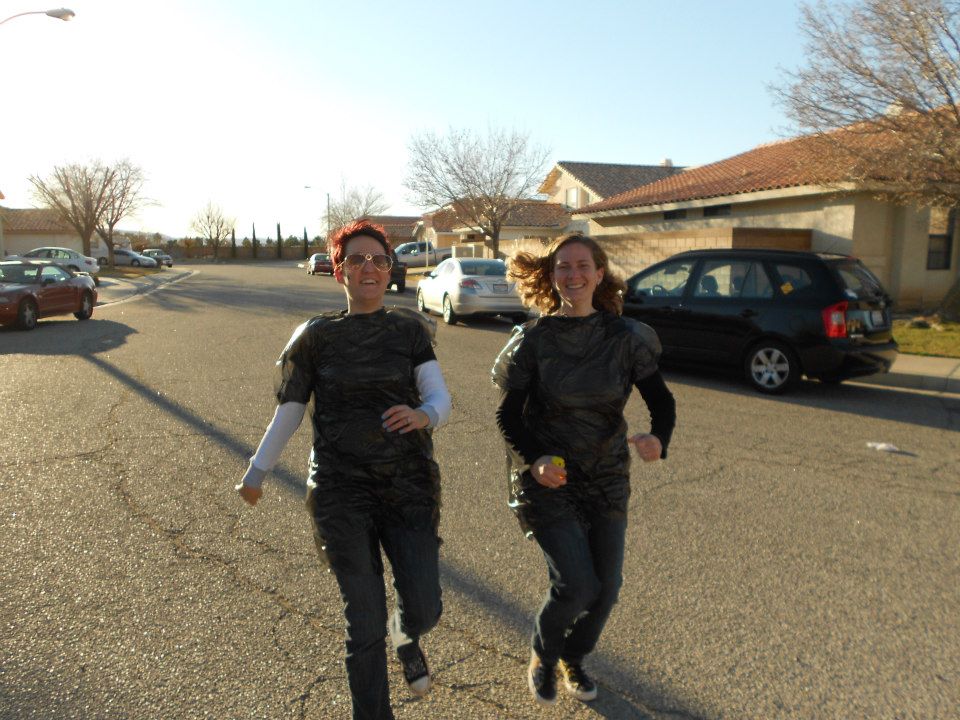
We also spend way too much time, energy and money organizing the best Oscar party ever, at which someone is always guaranteed to do something crazy, like run down the street wearing a trash bag or dress up like Jennifer Lawrence.

This brings me to the next item on my list of blessings — the fact that one of the best seasons of the year is rapidly approaching.

With the holidays looming, Hollywood is ready to inundate theaters with long anticipated, must-see movies, including “The Hunger Games: Mockingjay — Part 1 (opening Friday), “The Hobbit: The Battle of the Five Armies,” “Exodus: Gods and Kings” and “Into the Woods.” It’s like Christmas. Wait, it is Christmas.

Even when January rolls around and the studios clean out their closets, resulting in one lackluster weekend at the box office after another, I’ll still have much to be grateful for, thanks to my go-to movies, the films that are a constant presence in my life, always there to comfort or enlighten or provide a bit of escape.

It’s not possible to list them all, but I’m grateful for the irrepressible hopefulness of “The Lord of the Rings” trilogy, the soulfulness of “Lost in Translation,” the gothic atmosphere of Alfred Hitchcock’s “Rebecca,” the comedic brilliance of “Bringing Up Baby.”

I’ll never take for granted the perfection of “Casablanca” or “Almost Famous,” “Roman Holiday” or “Eternal Sunshine of the Spotless Mind.”

For these and so many other cinematic gifts, I will always give thanks.

Lavender Kristy trash bagsLavender Vroman and fellow film buff Kristy Rivas take a jog around the block in honor of “Silver Linings Playbook” at a 2013 Oscar party. 

Image at top: Lavender Vroman on one of her moviegoing adventures. Photo by Fawn Kemble.


A Few Not-So-Scientific Thoughts on ‘Interstellar’

I’ve been feeling under the weather this week and haven’t been up to the task of pondering the mysteries of “Interstellar,” especially while under the influence of Nyquil.

(Come to think of it, the Nyquil might actually help.)

But I would be terribly remiss if I didn’t say something about Christopher Nolan’s grandiose and truly grand space opera.

“Interstellar” has been out for a week, so I’m a little late to the party but this is a film still worth discussing and it will be for some time.

Do you find yourself on the fence about whether to see the movie? Think it’s over-hyped or looks boring or too similar to “Gravity”? I’d like to give you a gentle nudge toward “yes.”

If, like so many of us, you were mesmerized by Nolan’s past work, which includes such shamelessly entertaining, elegantly realized, smart, sophisticated opuses as “The Dark Knight” and “Inception,” you won’t want to miss “Interstellar.” It is by far the director’s most ambitious, spectacular, challenging and flawed endeavor yet.

I grew up on the writings of science fiction author Ray Bradbury. Bradbury believed it was the destiny of humankind to throw off the bounds of our planet to explore and colonize other worlds. This, he theorized, was the way we would achieve immortality. We should never look up at the stars and be content to remain where we are.

“Interstellar” is alive with the same spirit of optimistic humanism. Like Nolan’s previous films, it is exceptional on a technical level, transporting in a way moviegoers crave but rarely experience. It’s also a film full of big ideas, pushing its audience to engage their brains, to think.

If you’ve seen the trailers, you know the basic plot. “Interstellar” features Matthew McConaughey, continuing his recent, unbroken streak of praiseworthy performances, as Cooper, an engineer and pilot turned farmer living on an overpopulated Earth on the brink of environmental disaster.

Cooper is a widowed father to the fiercely intelligent, stubborn Murphy, nicknamed “Murph” (Mackenzie Foy). As Dust Bowl-like conditions consume the Earth, he’s forced to make a decision between watching his daughter grow up on a doomed planet or leaving her behind in a risky bid to save her and the entire human race.

One of the delights of a Nolan film is that what you’ve seen in the trailers barely scratches the surface of the story. Many surprises await in “Interstellar,” which is why I’m not going to say any more about the movie’s premise. There’s much to spoil, but you won’t hear it from me.

In general terms, “Interstellar” is a movie about the tension between science and the unquantifiable things that make life worth living — love, faith, self-sacrifice.

It’s a science nerd’s dream — or perhaps nightmare, depending on how literally you take Nolan’s interpretation –a movie in which scientists pull out pencil and paper to explain the theory of relativity and how a wormhole works. After that, they might launch into an emotional monologue about how love transcends space and time. (Anne Hathaway plays one of these folks and she’s absolutely lovable, as always.)

If you don’t care much for science or sentiment, you’ll still be blown away by the grandeur of “Interstellar’s” visual effects as Nolan delivers upon his promise to take us to three distinct worlds beyond our galaxy and to brush up against a black hole, which the scientists aptly name “Gargantua.”

Like last year’s “Gravity,” “Interstellar” MUST be seen in IMAX. Nolan shot portions of the film in the format and, while the visuals are astounding, it’s the sound that is most effective, rumbling from state-of-the-art speakers. It literally shakes you in your seat, an amazing sensation perfectly suited to the otherworldly perils depicted on screen. I’m betting this will be the movie to take home all those mysterious sound editing and mixing Oscars in a few months.

Composer Hans Zimmer really outdoes himself with a musical score featuring the sound of organs. Listening to it is practically a religious experience.

“Interstellar” is by no means a perfect film. It’s overlong, takes itself too seriously at times and contains a third act twist that will lose some viewers. I admit that by the end, it had lost me.

The movie’s lines are not as sharp and clean as “The Dark Knight” and “Inception.” Its heightened sense of wonder and hints of the supernatural recall “2001: A Space Odyssey,” “Close Encounters of the Third Kind,” the early films of M. Night Shyamalan and, strangely, “Field of Dreams.”

Whatever its faults, “Interstellar” is still ten times more captivating than most of the movies released in 2014.

You’ll reflect on it. You’ll wrestle with it. You may not physically movie from your cushy IMAX chair, but you’ll feel like you’ve been light-years away.

Photo: http://www.comicbookresources.com


Gyllenhaal Exquisitely Creepy in ‘Nightcrawler’

Nightcrawler
Three and a half stars (out of four)
R (violence, including graphic images, language)
117 minutes

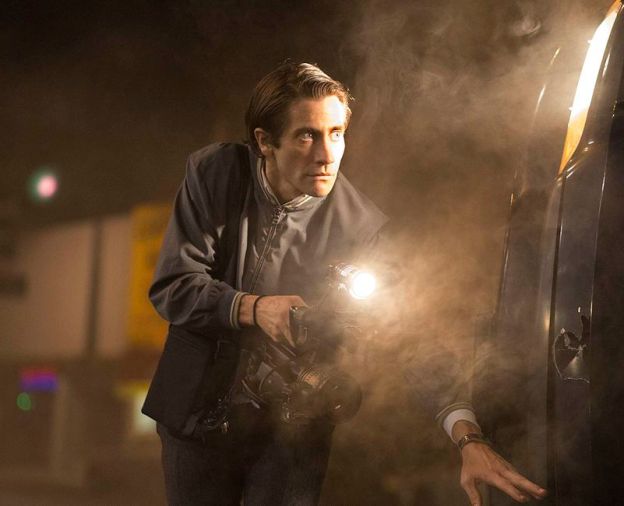
In the thriller “Nightcrawler,” Jake Gyllenhaal delivers an exquisitely creepy, career-defining performance. It’s one of those exciting, stand-up-and-take-notice turns that allows you to see an actor in an entirely new light. I’ll be shocked if it doesn’t demand the attention of the Academy when it comes time for this year’s Oscar nominations.

Gyllenhaal has always had an edge to him, a darkness that belies his clean-cut, blue-eyed good looks. He first made an impression in the nightmarish 2001 indie hit “Donnie Darko” and, alongside mainstream fare such as “The Day After Tomorrow,” “Bubble Boy” and “Prince of Persia,” he’s peppered his career with more challenging efforts, including “Brokeback Mountain” and the recent “End of Watch” and “Enemy.”

In last year’s “Prisoners,” he delved into downright freakish territory, playing Detective Loki, a greasy-haired, tattooed cop obsessively dedicated to his job but completely lacking in bedside manner when dealing with the parents of a couple of missing girls. Gyllenhaal’s work was intriguingly unattractive, but the performance was a little too mannered for my taste. The actor poured on the character’s ticks and loner eccentricities a bit too thick.

That’s why Gyllenhaal’s efforts in “Nightcrawler” are so surprising. As Louis Bloom, an Internet-savvy loner who discovers his twisted calling in chasing down bloody late-night crimes for profit, the actor exercises remarkable restraint.

This is a role that could have easily gone over the top and off the rails, but Gyllenhaal nails it. His Bloom is a complete weirdo and also improbably mesmerizing. He’s like a horrific car wreck — skin-crawingly revolting, yet we can’t turn our eyes away from him.

“Nightcrawler” is the debut film of Dan Gilroy, writer of “The Bourne Legacy” and “Real Steel.” He, too, shows admirable restraint, not to mention atmospheric style, in this chilling, often cringe-inducingly funny indictment of America’s fear-mongering, ratings-hungry television media.

We first encounter Louis Bloom applying wire cutters to the chain link fence of a railyard in what appears to be the dead of night. It’s a fitting introduction, for in those first few minutes we are able to surmise that Mr. Bloom is a) a criminal, b) a jittery smooth talker who simultaneously hypnotizes and unnerves his listener, and c) capable of violence.

Bloom has greater aspirations than petty theft, however. After a few ambitious but misguided attempts to obtain gainful employment, he happens upon a car accident on one of L.A.’s many cutthroat freeways. Pulling over to observe, whether out of curiosity or predatory instinct, he sees a couple of news stringers pounce upon the scene with vans and camcorders. He’s instantly hooked.

After finagling his way into a video camera and police scanner of his own, Bloom hits the streets in a naive attempt to capture footage he can sell. His fledgling efforts are awkward — he shows up at the scene of minor infractions and DUI arrests, to the annoyance of the cops — but he’s a determined guy. Before long, he finds his way to the scene of a carjacking, and because he’s willing to get closer than the other stringers, grabs just the kind of graphic images craved by veteran TV news director Nina Romina (Rene Russo).

Nina explains her station’s “if it bleeds, it leads” philosophy to Bloom, who takes her words to heart. Before long, he’s memorized all the police codes, hired an unsuspecting intern/pawn (Riz Ahmed) and starts showing up at crime scenes before the cops. And if he has to stage and manipulate the situation to get better play, so be it. He’s a man without a single moral qualm, eerily quick to adapt to the nocturnal needs of L.A.’s ethically flexible media.

“Nightcrawler” takes place almost entirely after the sun has set. Gilroy plumbs the grainy depths of a darkened Los Angeles with such assuredness, the film fits comfortably into the great panoply of flicks exploring L.A. by streetlight, which includes such movies as “Collateral” and “Drive.”

This seedy, suburban nightmare-scape serves as a hunting ground for Gyllenhaal’s prowling lowlife. The actor has said in interviews his performance was inspired by the coyotes who slink through the L.A. hills. You can see the animal instinct flickering behind Bloom’s buggy eyes — it’s crazy how strange Gyllenhaal looks after simply dropping a few pounds.

In the film’s best scene, Bloom lets Nina in on his business strategies — mostly composed of cliches learned from Internet “research.” Gyllenhaal’s enthusiasm, coupled with the character’s oddly clipped delivery, is ickily infectious.

Despite the movie’s preoccupation with violent crime, Bloom’s burgeoning relationship with Nina is perhaps the queasiest element of “Nightcrawler.” Russo is great as a desperate, aging news veteran with terrible taste in eye shadow and an insatiable appetite for gory headlines designed to terrify her network’s rich, white viewers.

When it comes to satirizing the media’s moral vacuousness, Gilroy doesn’t pull any punches. Bizarrely, a handful of actual TV news personalities deigned to participate in the film, despite its unsavory insinuations about their vocation. In one scene, real-life anchors deliver hilariously macabre color commentary for the aftermath of a home invasion. Did they read the script before they showed up to set?

Much of what occurs in “Nightcrawler” strains credulity, but Gyllenhaal’s gripping descent into misanthropy keeps us from checking out. Bloom may be a larger-than-life boogie man but we recognize him.

He’s a monster of our own making, a scavenger who feeds on a city’s narcissism and paranoia.

 Photo: http://www.fandango.com

Sweet Zombies, Silly Slashers Make for Un-Scary Halloween

Every film critic has at least one dirty, little secret, one genre they pretend to love but secretly loathe.

For me, that genre is horror.

Since I was a little girl, sleeping with the nightlight on, I’ve cowered in fear of spooky thrillers and big-screen chillers. I’m fine during the day, but after dark, my imagination transforms scary movies into reality, casting giant, terrifying shadows across my mind.

As I grew up, I learned to avoid horror movies, shunning everything from “Nightmare on Elm Street” to “The Grudge.” This strategy worked pretty well until I landed a job as movie critic for the local newspaper. Suddenly, I was expected to see whatever films readers wanted to know about, even the scary ones.

I sat through my share of flicks that kept me up at night, but more often than not, I would do my best to invent excuses so I could weasel out of flicks like “Saw” and “Paranormal Activity.” I freely confess that when it came to horror movies, I was a big slacker.

This Halloween, in honor of my fellow cowards, I offer eight films that are more fun than frightening. A few of them have their share of guts and gore, but they all emphasize hilarity over the sort of terror that will leave you traumatized for weeks.

Go ahead and watch these with the lights out, and sleep tight afterward.

“Arsenic and Old Lace,” 1944: Featuring the incomparable Cary Grant at his harried, madcap best, “Arsenic” is hilarious and demented, an unexpected treat, considering it’s the work of wholesome “It’s a Wonderful Life” director Frank Capra.

Grant gives his superb physical comedy skills and elastic facial expressions a thorough workout, playing Mortimer Brewster, a theater critic whose wedding day is thrown into chaos when he discovers that murder is a family tradition. It seems Mortimer’s maiden aunts (Jean Adair, Josephine Hull) are offering more than simple charity to lonely old bachelors. Other mad relatives pop up as well, prompting Mortimer to exclaim, “Insanity runs in my family. It practically gallops!”

Young_Frankenstein_movie_poster

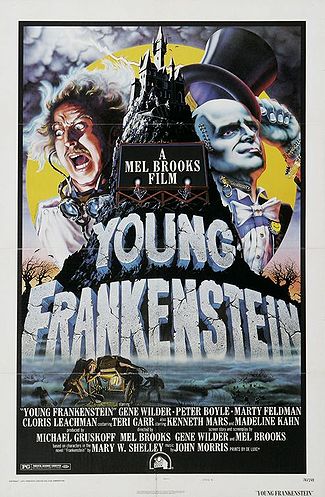
“Young Frankenstein,” 1974: Mary Shelley’s “Frankenstein” is one literature’s great titles, but one could argue it has yet to inspire a truly great film adaptation. “Young Frankenstein” is my favorite by far, so much more fun than stuffier attempts by directors with mustier credits than king of cinema spoofery Mel Brooks.

This spot-on black-and-white parody of Universal’s 1931 “Frankenstein” and 1935 “Bride of Frankenstein” boasts a remarkable cast, including Gene Wilder as the neurotic Dr. Frahnkenshteen and Peter Boyle as his tap-dancing monster.

“The Evil Dead,” 1981: Sam Raimi’s low-budget, DIY horror comedy is a classic, influencing every campy genre spoof that followed it with its inventive special effects and weird and gory humor. Bruce Campbell gives an epic, deadpan performance as Ash, one of five doomed souls at the proverbial cabin in the woods when a bloodthirsty demon is inadvertently unleashed.

Raimi’s original is legend, but Fede Alvarez’s 2013 remake isn’t half bad. I’m partial to Raimi’s even cheesier sequel, 1992’s “Army of Darkness,” which pits Ash and his chainsaw arm against legions of reanimated, stop-motion skeletons.

gb-header-cast

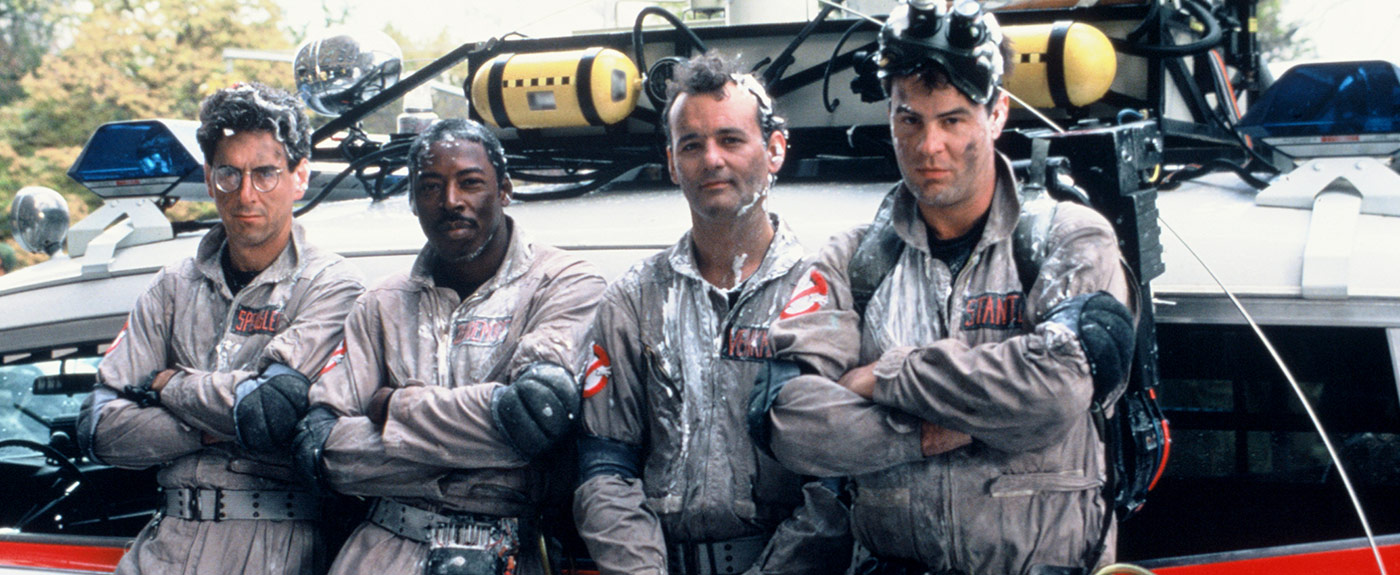
“Ghost Busters,” 1984: You might say the 1980s was the Golden Age of horror comedy. “Ghost Busters” is the cream of the crop of campy classics, celebrating its 30th anniversary this year with lots of screenings and news of a planned reboot.

None of the wussy ghost hunters currently occupying cable television can compare to parapsychology professionals Bill Murray, Dan Aykroyd, Harold Ramis and Rick Moranis, who set out to rid New York City of its pesky ghouls and goblins.

Other silly-spooky ’80s gems include “An American Werewolf in London,” “Beetlejuice,” “Little Shop of Horrors,” “Gremlins” and “Fright Night.”

“Shaun of the Dead,” 2004: If George Romero was British and liked to hang out at the pub, he would have created this zombie comedy instead of “Night of the Living Dead.” Comedian Simon Pegg is in fine form as the eponymous Shaun, a suburban slacker whose life spent goofing off with slovenly best mate Ed (Nick Frost) is upended when the flesh-eating dead come shuffling into his neighborhood.

Desperate to win back his fed-up ex (Kate Ashfield), Shaun is forced to play the hero. His weapons of choice? A cricket bat. His plan of action? Hole up at the local drinking establishment and wait for the apocalypse to blow over. As you probably guessed, that doesn’t go so well.

amazon-will-produce-a-tv-show-about-zombies

“Zombieland,” 2009: If “The Walking Dead” was goofy and offered a good time instead of soul-crushing despair, it would be “Zombieland.” Like the comic book turned hit AMC series, this comedy is about a disparate band of survivors who latch onto each other and form an oddball family.

They include Jesse Eisenberg’s timid student, who stays alive, post-apocalypse, by sticking to a set of practical rules, and Woody Harrelson’s cowboy, who dreams of Twinkies. They’re joined by a pair of con artists, played by a smokey-eyed, smokey-voiced Emma Stone and Abigail Breslin as her little sister. The movie also happens to feature one of the best cameos in cinema history.

“The Cabin in the Woods,” 2012: Deceptively advertised as a straight-up horror flick in an attempt to avoid spoilers, this insanely clever twist on the genre went largely unseen when it debuted in 2012. Penned by master of meta Joss Whedon and “Lost” writer Drew Goddard, “Cabin” deserves a wider audience.

It starts out as a stereotypical slasher flick, with Chris Hemsworth as a college jock heading out to a raucous weekend in the middle of nowhere with a gang of equally hackneyed characters, including a brainy virgin (Kristin Connelly) and a pot-smoking nerd (Fran Kranz). Trust me, though. By the end, “Cabin” has becomes the perfect parody, turning the horror movie inside out and exposing its quivering guts.

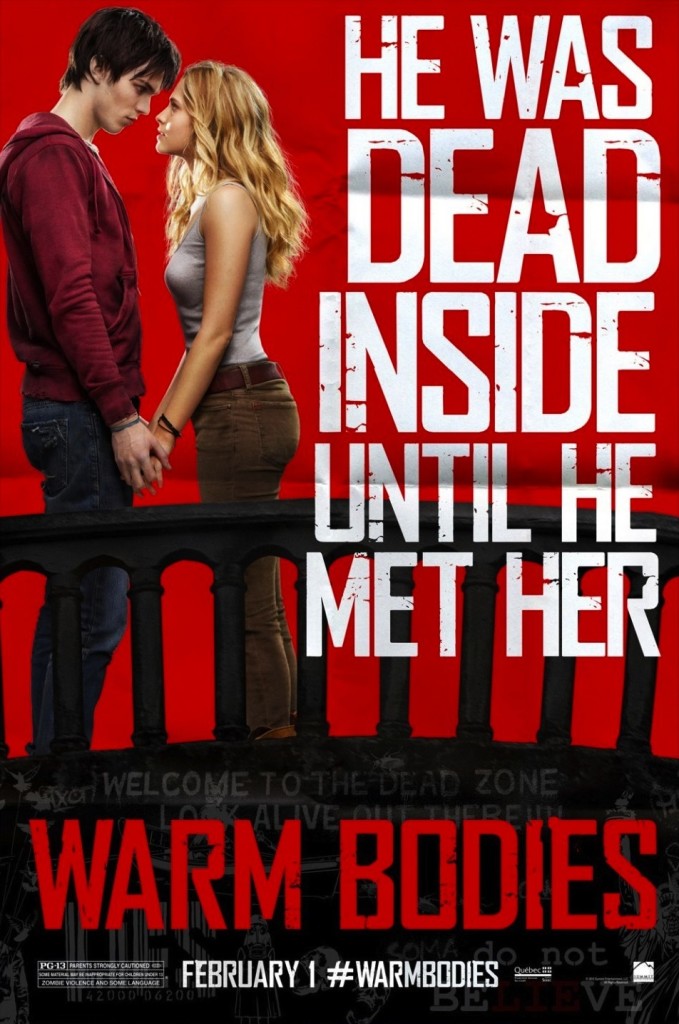
“Warm Bodies,” 2013: Think all zombies are repulsive, rotting creatures with chunks of flesh falling off their bones? Think again. Nicholas Hoult stars as the most adorable, blue-eyed member of the walking dead you’ve ever seen. And he’s in love with a girl. A human girl (Teresa Palmer), who thinks he’s creepy and doesn’t know he ate her boyfriend’s brains. Awkward.

Probably the sweetest movie ever set in the zombie apocalypse, “Warm Bodies” falls into that strange and wonderful horror subgenre, the zom-rom-com. It’s funny. It’s playful. It’s the undead teenage love story “Twilight” should have been.

What movies do you plan to watch on Halloween?

 Photos: http://www.watchandreview.com and ghostbusters.com.

Warm-Bodies-04-679x1024

‘Fury’ as Subtle as, Well, a Tank

Fury
Two stars (out of four)
R (strong sequences of war violence, some grisly images, language)
134 minutes

There is nothing subtle about war, so it follows that there’s not much subtlety to be found in war movies.

That’s not necessarily a bad thing, but in the case of writer-director David Ayer’s “Fury,” the film is so desperate to shock and awe, watching it feels like being barreled over by something big, heavy and unwieldy. Like a tank, for instance.

I know that’s a cheap and easy metaphor for a movie about an American tank crew barreling their way suicidally through Nazi Germany in the last, grim days of World War II. Nevertheless, it’s an apt comparison for a film that prizes force over finesse and sprawling, simplistic themes and imagery over convincing relationships and emotion.

That’s not to say a tank movie isn’t a brilliant idea. It’s gotta be one of the most novel war story angles Hollywood has come up with in a long time. And when Ayer focuses his pen and his lens on what it’s like to be inside one of those gigantic, creaking hunks of metal, rolling its way inexorably through a nightmare landscape of smoke, carnage and death, “Fury” is fascinating.

Unfortunately, the director’s focus too often roams to the kind of wartime sequences we’ve seen before in more compelling visions of World War II, including “Saving Private Ryan,” “Band of Brothers” and “The Pacific.”

“Fury” takes its name from its most imposing star — the one that isn’t married to Angelina Jolie — a battered bruiser of a Sherman tank, manned by the seasoned, war-weary Sgt. Don Collier (Brad Pitt) and his faithful crew.

The movie makes a point of telling us that the average tank crew only survived for about six weeks. Collier’s gang has bucked that trend, managing to stay alive and stick together for four years.

The sergeant’s goal is to keep it that way, not an easy task considering his new crew member, Norman (Logan Lerman), is a baby-faced clerk who has no combat experience and has never seen the inside of a tank.

“Fury” may appear to be an ensemble film, but don’t let that fool you. This is Pitt’s show. It’s almost as if the actor is reprising a less comical version of his character from “Inglourious Basterds,” the Nat-zi-hating Lt. Aldo Raine.

Collier schools young Norman in the ways of war and utters the movie’s choicest monologues. “Ideals are peaceful. History is violent,” he informs his scared-stiff, stubbornly pacifist protege in a jaded Southern drawl.

Don’t get me wrong. Pitt is a fine actor. His hair buzzed into a crew cut, his face scrawled with scars, he deploys his signature blend of toughness and torment like a weapon. If only the other members of the cast were given a chance to show their stuff. Instead, they’re made to embody war movie stereotypes.

Shia LaBeouf plays Boyd, the religious one who quotes scripture and refrains from partaking of the spoils of war. Michael Pena, who was excellent in Ayer’s “End of Watch,” provides the comic relief as driver Gordo. Jon Bernthal, so memorable on “The Walking Dead,” is assigned the role of Fury’s resident redneck, the brutish Grady.

None of these characters are particularly likable, so Lerman is there to soften them up as the GOOD guy. In case, we don’t get that he’s the GOOD guy, one of the actors is kind enough to point it out to us. But even though he is the GOOD guy, Ayer isn’t content until Norman is killing Nazis just as gleefully as his battle-hardened comrades.

Lest we feel any sympathy for those dagnabbit Nazis, the Germans are depicted as goose-stepping ghouls who chant so operatically and in perfect synchronization, they may as well be the Orc army marching out of Mordor in “The Lord of the Rings.

Ayer’s last film, the cop drama “End of Watch,” was equally grandiose, but soared on the strength of the relationship between a pair of LAPD officers played by Pena and Jake Gyllenhaal. If only the interactions in “Fury” were as solid, but truth is we know very little about the characters or what connects them.

The director resorts to stirring up phony conflict between these brothers in arms in a bizarre, deeply uncomfortable scene in which Collier and Norman hold hostage/seduce/befriend — it’s disturbingly never clear — a pair of German women after securing an enemy town.

On a purely technical level, “Fury” fares better. Ayer obviously took great pains to ensure the film’s authenticity and delivers several suspenseful, horrific scenes of combat, illustrating both the power and limitations of the World War II-era tank.

The movie’s finale ramps up the heroism to almost ridiculous extremes.

Funny thing is, the heroics of everyday life inside the tanks, with their claustrophobia, tedium, close quarters and forced intimacies, probably would have proved more profound.

Don’t Stick Your Neck Out for ‘Dracula Untold’

Dracula Untold
Two stars (out of four)
PG-13 (intense sequences of warfare, vampire attacks, disturbing images, some sensuality)
92 minutes

Blame it on “Twilight” backlash.

Just in time for Halloween, Legendary Pictures brings us the manliest of vampire movies, an armor-clad, battle-worn, muscle-flexing hybrid of Bram Stoker, “300” and “Gladiator.”

Was “Dracula Untold” conceived as a reaction to sparkly, sensitive vampires with cheekbones to die for? Pining Edward wouldn’t last long in this unforgiving gothic landscape of blood and steel, not to mention blood-drenched abs of steel.

Irish commercial director Gary Shore and scribes Matt Sazama and Burk Sharpless (what a name for a writer of vampire lore) thoughtfully throw a credit Stoker’s way, but their reboot, or re-imagining, or whatever you’d call it, doesn’t much resemble that classic literary work.

The film actually borrows the formula of a comic-book origin story with an emphasis on Dracula’s rocky childhood (like many superheroes, he’s got daddy issues), his acquisition of awesome superpowers and the tragic consequences of those unholy abilities, which threaten those he holds most dear.

Welsh actor Luke Evans — best known as the villain in “Fast & Furious 6” and Bard the Bowman in “The Hobbit” trilogy — stars as Vlad, a Transylvanian prince spirited away as a boy by ruthless Turks, who train him to serve in their marauding army of merciless young killers.

Sazama and Sharpless are vague about the details, but the grown Vlad has a change of heart, repents of his impaling ways and returns to Transylvania, where he settles down, starts a family and rules his people in peace.

His domestic reverie is interrupted by an old friend, the Turkish sultan Mehmed (a charcoal-eyed Dominic Coooper), who demands a tribute of a thousand boy soldiers, as well as the prince’s own son (Art Parkinson).

Vlad refuses Mehmed’s command with a heavy heart because he’s wildly outnumbered by the Turks. Desperate to save his family and his people, he journeys to the lair of a legendary monster (played by Charles Dance — if you thought Tywin Lannister couldn’t get any more evil, think again), seeking the power the creature might grant him.

Once Vlad is “turned,” he becomes the superest of superheroes, all the Avengers rolled into one with some Justice League thrown in for good measure. He’s got Spidey sense, the speed of The Flash, control of the weather a la Storm, the strength of Superman (and a Kryptonite-like Achilles heel) and an affinity for bats, like a certain Caped Crusader.

Vlad’s bat-whispering is clearly Shore’s favorite of these impressive superpowers. He really pulls out the visual-effects stops when it comes to showing the vampire vanish in a cloud of night-flying critters or directing a swarm of the little black beasts to do his bidding in battle.

“Dracula Untold” is rated PG-13, so it’s strangely light on blood for a movie about someone who drinks the stuff — or rather tries to resist drinking the stuff, which is difficult when Vlad’s wife (Sarah Gadon) swans about with her neck and bosom exposed, like a walking buffet.

Shore compensates for the bloodlessness with a tableaux of stylized landscapes and some fancy cinematography during the film’s copious war scenes — at one point, we glimpse Vlad crushing his enemies in the reflection of a sword — but the result is more disorienting than visually arresting.

Evans is certainly virile, but he’s more convincing as a devoted father and husband than a reluctant fanged fiend wrestling with demon impulses. Sazama and Sharpless can’t seem to decide what sort of animal their Dracula truly is — cuddly family man or bloodthirsty monster.

Adopting the pomp and seriousness of a historical epic, “Dracula Untold” trots out the usual imagery — stakes, crosses, silver, torch-lit castles, jittery monks — and proves disappointingly toothless when it comes to toying with Hollywood’s bloodsucking tropes.

The movie is reportedly the first in a planned franchise and it does make a weirdly playful leap in its final scene that hints of more interesting, even goofy, things to come. If it’s going to succeed, however, the series needs to evolve into something darker, sexier and more twisted.

It’s difficult to recommend “Dracula Untold” when other directors are conducting much more original and intriguing genre experiments in the form of films like “Byzantium” and “Only Lovers Left Alive.”

Those are movies that make you want to stick your neck out.

Image: http://www.comicbookmovie.com


Hollywood Halloween: ‘The Canterville Ghost’

Looking for Hollywood movies to put you in the mood for Halloween? This classic should help you get into the holiday spirit.

The Canterville Ghost
1944
94 minutes
Available to buy on Amazon and Amazon Instant Video.
There are also countless dubious remakes to choose from, including one from 1996, starring Patrick Stewart and Neve Campbell.

Oscar Wilde, pro-American wartime propaganda, a spooky, ancestral British castle and a portly 17th-century specter make for a strange but pleasant combination in the classic comedy “The Canterville Ghost.”

I recently revisited this World War II-era reworking of Wilde’s short story courtesy of Turner Classic Movies. The network is dusting off classic ghost stories Thursday nights throughout the month of October.

I know I saw this eccentric little black and white comedy as a child, but I had forgotten how wacky it is. This is part of the film’s charm. It’s the sort of harmless haunt you can easily watch with the kids.

“The Canterville Ghost” stars classically trained stage and film actor Charles Laughton, hamming it up as the titular phantom, who shamed the family name by shirking his duty in a duel and was cursed to forever roam the halls of the clan’s stately, old mansion.

His pudgy belly draped in lacy period garb, a wild wisp of a mustache perched precariously atop his lips, Laughton makes for a comical sight, especially with the film’s “transparent” ghostly visual effects. (Before there was Nearly Headless Nick, there was this guy.) The movie’s more dated elements only add to the fun, especially once a troop of American GIs takes up residence in the castle.

The lady of the manor, the precocious, young Jessica (played by the adorably prim and proper Margaret O’Brien), warns the soldiers to be wary of the castle’s unwanted guest. They don’t believe her, of course, until the Canterville Ghost makes an appearance in an encounter that goes refreshingly against the grain of ghost story cliches. (You gotta hand it to those American GIs. They ain’t afraid of no ghosts.)

Merry slapstick ensues as Lady Jessica befriends good natured soldier Cuffy Williams (Robert Young), who might just be the man to break the Canterville curse.

Though the film is shamelessly patriotic, screenwriter Edwin Blum takes pleasure in poking fun at Americans and their lack of historical awareness. And the movie literally ends with a bang.