Author Archives: Lavender Vroman

Unknown's avatar

About Lavender Vroman

Lavender Vroman is a blogger, film critic, entertainment journalist and editor with 15 years experience in the news industry.

Mission: Impossible Smoothly Delivers Spectacle, Spy Movie Cliches

Mission Impossible — Rogue Nation
Three stars (out of four)
PG-13 (sequences of action and violence, brief partial nudity)
131 minutes

Few movie franchises make it to a fifth installment without showing signs of weariness, age or impending death.

When it comes to cinematic longevity, “Mission: Impossible” is that spry, old guy you keep running into at the gym. Still going strong. Doesn’t look a day over 45. Will probably outlive us all.

Powered by the unflagging energy of Tom Cruise, this unstoppable machine of a franchise debuted nearly 20 years ago, inspired by the classic 1960s TV series. It remains serviceable and stylish, as evidenced by its latest chapter, “Mission: Impossible — Rogue Nation.”

The film is directed by one of Cruise’s go-to writers, Christopher McQuarrie, who also helmed “Jack Reacher,” but acquits himself much better here. “Jack Reacher” was a mess, but “Rogue Nation” delivers spectacle and spy movie cliches with panache. It is everything we’ve come to expect from a brand built almost entirely on Cruise’s intensity, daring, self-performed stunts, and patented “action run.”

So what if it feels as if we’ve seen a lot of what we see here in other spy movies, namely of the Bond and Bourne variety?

“Rogue Nation” once again finds Cruise’s secret agent, Ethan Hunt, in his natural state: disavowed by the U.S. government, despite the fact that he and his IMF team are the only thing standing between the world and epic disaster.

After an operation involving a Russian cargo plane goes awry, the IMF is disbanded by CIA chief Alan Hunley (Alec Baldwin, whose addition to the “M:I” cast is a no-brainer), despite the fact that Hunt is still in the field, tracking the terrorist activities of a nefarious group known as “The Syndicate.” (What would Hollywood’s super spies do if they didn’t have these shadowy international organizations to foil?)

While government liaison William Brandt (Jeremy Renner) dodges red tape back home, loyal techie Benji (Simon Pegg) is unwittingly lured into the field to assist Hunt in outsmarting the mouse-like, seemingly un-out-smartable supervillain Solomon Lane (Sean Harris). (I wish Lane was a more colorful baddie. I expect more from McQuarrie. After all, he created Keyser Soze, one of the greatest movie villains of all time.)

As Hunt dashes from London, to Vienna, to exotic Casablanca, he becomes entangled with mystery woman Ilsa Faust, a double — or is that triple or quadruple? — agent who presumably works for Lane but has a soft spot for her American rival.

Ilsa is played by Rebecca Ferguson, who resembles classic movie star Ingrid Bergman, best remembered for her role in the film “Casablanca.” Just as Bergman’s Ilsa was torn between Humphrey Bogart’s Rick and Paul Henreid’s Victor, Ferguson’s Ilsa is caught between her weaselly employer and a heroic spy. Or something like that.

McQuarrie is obviously drawing parallels between the two films but the “Casablanca” references don’t make a whole lot of sense. (“Mission: Impossible II” was basically a rip-off of Alfred Hitchcock’s “Notorious” and “To Catch a Thief,” so what the heck.)

Ferguson — who should immediately be cast in any and every film requiring the services of a bad-ass lady — is quite simply amazing as Ilsa. She’s voluptuous. She’s lethal. Her martial arts prowess is rivaled only by her taste in shoes, and yet somehow this doesn’t come off as stereotypical.

More importantly, Ferguson’s Ilsa is 10 times more interesting than the other characters who round out the “Rogue Nation” boys club, including Hunt, who has nothing terribly personal at stake in this installment.

Is it me, or does Hunt actually become less compelling with each “Mission: Impossible” film, despite Cruise’s vigorous commitment and flair for hair-raising stunt work? At times, the film even seems to be aware of this. At one point, Baldwin delivers a monologue with a description of Hunt that borders on parody.

Renner, meanwhile, languishes in a bureaucratic role that doesn’t afford him a shred of action. Maybe Cruise didn’t want the competition? Or is it that Hollywood just can’t figure out what to do with this guy?

Pegg, on the other hand, enjoys a beefed up part as the film’s main provider of comic relief, while Ving Rhames returns to collect another paycheck.

McQuarrie puts the cast through their paces in a labyrinth of plot twists that stretches on for a good 20 minute too long.

All the action sequences are stunning, from an opening scene that has Cruise dangling from a plane to a Vienna opera house sequence that is almost comical in its revolving chain of assassins, shimmying up the rigging, armed with guns disguised as musical instruments.

“Rogue Nation” hits a high note in a moment we expect to unfold with the usual cloak and dagger business of “Mission: Impossible” — fingerprint scanners, uncrackable safes, and impossibly detailed disguises.

Instead, we’re treated to an elaborate set piece reminiscent of the first film’s now legendary laser maze scene. It’s perfectly executed, ridiculously suspenseful and makes it impossible to begrudge the inevitability of an “M:I6.”

Photo: www.trondheimkino.no


McKellen’s Holmes Is One We Haven’t Met Before

Mr. Holmes
Three stars (out of four)
PG (thematic elements, some disturbing images, incidental smoking)
104 minutes
For Antelope Valley moviegoers, the film will continue playing through next week at the BLVD Cinemas in Lancaster.

Few literary figures have existed in as many incarnations as the world’s most famous detective, Mr. Sherlock Holmes.

Sir Arthur Conan Doyle introduced the shrewd solver of mysteries to readers in 1887. One hundred and twenty eight years later, Holmes retains a tenacious grip on our imaginations.

Benedict Cumberbatch is celebrated for his antisocial portrayal of the detective for the BBC, while Jonny Lee Miller plays a contemporary, post-rehab version of the character, opposite Lucy Liu as Watson, on the American series “Elementary.”

Meanwhile, there is apparently a third movie in the works to cap off director Guy Ritchie’s franchise featuring a manic Robert Downey Jr. as a Holmes engaged in comedic bromance with Jude Law’s Watson.

On television and in film, Holmes has appeared in countless variations, from iconic portrayals by Basil Rathbone and Jeremy Brett to Steven Spielberg’s “Young Sherlock Holmes.” He’s been played by the likes of John Cleese, Jeremy Irons, Michael Caine, Roger Moore, Charlton Heston, Christopher Lee, Rupert Everett, Buster Keaton, Christopher Plummer, Peter Cushing and John Barrymore.

So this brings us to the question: Is it possible to bring anything new to the great Holmesian universe created by Conan Doyle more than a century ago?

Hasn’t it all been done? Is it finally time for Holmes to hang up the old deerstalker?

The answer is “no,” judging by the detective’s most recent exploits in director Bill Condon’s thoughtful, surprising, exquisitely acted drama, “Mr. Holmes.”

Of course, it is an immense advantage that the famous investigator is played by Ian McKellen, who has made it his specialty to capture the volatile, enigmatic essence of men with keen minds and hidden demons.

At 76, the actor is at the height of his powers, and his seemingly contradictory gift of communicating playful, twinkly eyed wit alongside brooding cantankerousness is perfectly suited to a role this intimidating and irresistible.

McKellen, Condon and screenwriter Jeffrey Hatcher (“The Duchess,” “Stage Beauty”) present to us a very different Holmes than the one we are familiar with. Gone are the instantly recognizable hat and coat, the pipe, the violin, the Baker Street address.

There is no sign of Dr. Watson or Mrs. Hughes, and there will be no disguises or uttering of such signature catchphrases as, “It’s elementary!” or “The game is afoot.”

Instead, we meet Holmes in retirement, sequestered in a picturesque but solitary cottage on the Sussex Coast, where he tends bees instead of solving riddles. The sunniness of the setting boldly belies the stereotypical image of a fretful figure peering from an upstairs window on a fog-bound London street.

It’s just after World War II and the former detective has returned from a secretive errand in Japan to the company of his begrudging housekeeper (Laura Linney) and her curious son, Roger (Milo Parker). (Both McKellen’s co-stars are excellent.)

Holmes likes to keep to himself, but Roger is fascinated by the cloistered celebrity who bears little resemblance to the sensational portrait depicted in a series of popular novels by his longtime companion, Dr. Watson.

When the detective catches the boy snooping in his upstairs study, an awkward friendship is sparked as Roger tries to coax the details of an unfinished manuscript from the reluctant Holmes, whose memory is showing signs of the disorienting illness then known only as “senility.”

Condon previously directed McKellen in the intriguing 1998 drama “Gods and Monsters,” earning the actor an Oscar nomination for his portrayal of horror movie director James Whale.

Watching “Mr. Holmes,” you’d never know he was also the director of the musical “Dreamgirls” and “The Twilight Saga: Breaking Dawn,” Parts 1 and 2. This latest film certainly marks a return to a more subtle form of cinema.

With the patience and discipline of a painter, Condon slowly and delicately — too slowly for some tastes, perhaps — applies layer upon layer of mystery, gradually revealing an emotional landscape as lovely as it is bittersweet.

One layer tantalizes us with the reason for Holmes’ self-imposed exile to Sussex, while another teases us with the explanation to his surreptitious quest to find a rare Japanese plant. Still yet another tempts us with the true story behind the detective’s final case, involving a haunting, grief-stricken young mother (Hattie Morahan) who dresses all in gray.

The film’s cunning structure actually allows McKellen to dazzle us with two versions of Holmes, the regretful, deteriorating old man and the younger, more debonair detective, glimpsed in flashback on the case of the “woman with the dove-grey glove.”

“Mr. Holmes” is at its best when Condon cleverly plays with ideas of legend and the divide between fact and fiction. The film’s most priceless moment occurs when Holmes sneaks off to the cinema to watch a fictional, black-and-white version of himself on screen. That actor just happens to be played by “Young Sherlock Holmes” star Nicholas Rowe.

Condon and McKellen have weightier things on the brain as well, heavy ruminations on mortality, loss, missed opportunity and memory, but the movie ends on an uplifting note with an idea especially pleasing to lovers of stories.

Facts and logic have their place but sometimes what life calls for is fiction.

Photo: spinoff.comicbookresources.com

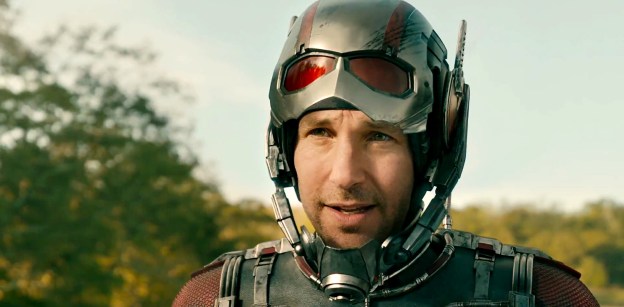
‘Ant-Man’ Should Just Embrace Its Essential Silliness

Ant-Man
Two and a half stars (out of four)
PG-13 (sci-fi action violence)
117 minutes

Of the countless costumed superheroes Marvel has brought to the big screen, Ant-Man is one of the silliest.

A guy who wears an outfit that’s like a cross between an old-fashioned scuba suit and something out of the closet of G.I. Joe’s Cobra Commander is no match for Iron Man in the fashion department.

This is a dude who shrinks to the size of an insect and somehow that’s supposed to make him a deadly weapon. His sidekicks are six-legged creepy-crawlies he controls with his mind. He rides on the back of an ant, for Pete’s sake.

It’s kinda hard to picture him hanging with Thor and Black Widow.

Ant-Man’s early adventures include surviving a bathtub full of water and navigating a dance floor made lethal by an abundance of platform heels. Even The Cap, in all his homespun cheesiness, is far too majestic to hobnob with this would-be mini Avenger.

I say this not as a slam against Marvel’s newest and tiniest recruit, but to point out that “Ant-Man” the movie would work better if the studio just embraced the silliness and left it at that.

The signs of “Ant-Man’s” troubled production history are evident in the film’s uneven tone, which swings like a pendulum between pure, unapologetic fun and some “serious” — and seriously cliche — relationship drama.

“Ant-Man” appears to be aiming for the cool, irreverent, goofy vibe of “Guardians of the Galaxy,” but what’s missing is “Guardians” director James Gunn’s precise vision.

It’s tempting to attribute “Ant-Man’s” identity issues to the dueling visions of original writer-director Edgar Wright, who shockingly left the project after almost a decade of script development, and Wright’s replacement, Peyton Reed, who primarily works in the romantic comedy genre.

No less than four screenwriters are credited with penning the flick, including Wright, “Attack the Block” director Joe Cornish, “Anchorman” director Adam McKay, and star Paul Rudd.

Marvel is fortunate to have Rudd. With his easygoing nice-guy charisma, the actor goes a long way toward making this confused comic book romp feel a little more cohesive.

That’s another issue with Marvel’s movie Ant-Man: He’s not a very interesting character.

Scott Lang is an electrical engineer fresh off a stint in San Quentin for a daring, well-intentioned cyber crime. All he wants to do is spend time with his young daughter, Cassie (Abby Ryder Fortson), but he’s lost custody after failing to pay child support.

(Poor Judy Greer pops up as exactly the kind of no-nonsense, anxious mom she portrayed earlier this summer in “Jurassic World.”)

After losing a thankless job at a popular dessert chain — in what has to be one of the weirdest product placement stunts ever — Scott attempts one last score, breaking into the house of Hank Pym (Michael Douglas), scientist, tech company founder and discoverer of the mysterious “Pym Particle.”

Scott cracks the safe, absconds with a seemingly worthless helmet and leather suit, and soon learns he’s been recruited by Pym to retrieve a piece of dangerous, stolen technology from Pym’s former protege, Darren Cross (Corey Stoll).

At this point, “Ant-Man” bogs down in exposition detailing the history and properties of Pym’s strange, black and red suit. Scott’s initiation into its uses, and his subsequent tutorial on how to ally himself with various species of his namesake insect, play like something out of another Disney property, the 1989 Rick Moranis comedy, “Honey, I Shrunk the Kids.”

The special effects are great, but there’s little at stake in the film’s early action sequences.

While Rudd does his best to endear us to Scott and his ant-colony cronies, Douglas and Evangeline Lilly are stranded in suffocatingly obvious scenes of father-daughter discord. Lilly plays Pym’s emotionally distant daughter, Hope, and is saddled with the same dominatrix-style bob worn by Bryce Dallas Howard in “Jurassic World.”

This leaves plenty of opportunity for Michael Pena to virtually pick up the movie and run away with it. As Scott’s ex-cellmate, Luis, the actor presides over a zany, if stereotypical, Greek chorus of criminal types who specialize in reviving the film whenever it shows signs of expiring.

I suppose the simplicity of “Ant-Man” could be considered refreshing after the complicated pomp and circumstance of “Avengers: Age of Ultron.” Aside from a few references to “Ultron,” a cameo by one of the lesser Avengers, and a prologue featuring some famous S.H.I.E.L.D. alumni, “Ant-Man” remains relatively unentangled by Marvel’s sticky web of intrigue.

Oddly, it’s in the last 20 minutes or so that the movie hits its stride in a hilariously hair-brained finale involving a private jet, The Cures’s “Disintegration,” a bug zapper, Thomas the Tank Engine and several other inspired elements that capitalize on the shrinkage and expansion possibilities of Pym’s amazing particle.

If only the entire film was this peculiar.

Photo: es.gizmodo.com


Missing Your Strawberry Shortcake or My Little Pony? Etsy Shop Reunites ’80s Kids, Fave Toys

Kids who grew up during the 1980s tend to be nostalgic.

If you doubt it, just take a look at the summer movie marquee, where resurrected versions of Mad Max, Poltergeist, and The Terminator jostle for space.

There are new Ghostbusters and Alien flicks in the works. Popular ’80s playthings Transformers and Teenage Mutant Ninja Turtles have been reborn as lucrative franchises, and My Little Pony is back on television.

Ellen Grimm of Portland, Oregon, has discovered a novel way of fulfilling the longings of ’80s kids who cherish fond memories of childhood toys.

At Etsy shop ellies80stoybox, she reunites customers with vintage treasures, from Rose Petal Place dolls to Sweet Secrets Charms, Care Bears to Strawberry Shortcake, and Pound Puppies to plush Smurfs.

Grimm combs Portland thrift stores, eBay, private collections and other sources to find the sort of gems many ’80s kids thought they’d never see again, including rare My Little Ponies and Cabbage Patch Kid dolls, and collectibles ranging from Mickey Mouse, to Sesame Street, to Masters of the Universe.

The ellies80stoybox founder recently answered my questions about her intriguing business. As a bonus, she crafted a list of her Top Five ’80s movies.

How did you get the idea for your Etsy shop, ellies80stoybox?

I’ve loved thrift store shopping for a long time — I started in high school and it’s something that just never lost my interest. I noticed how often I’d find old toys that I recognized from childhood. It seemed a shame to let them sit there and likely end up being trashed. I didn’t want to collect them all myself, but I realized there were lots of people out there who would be interested in them.

It made sense to me to be able to find things for people who couldn’t find them otherwise — people who don’t have the time, access, or inclination to dig through a thrift store to find them. Maybe I took The Velveteen Rabbit to heart too much as a kid, but I like the idea of the toys finding the right home, and I like making people happy by reuniting them with something really special from their childhood.

Do you have a special fondness for ’80s toys? What is it about that era that appeals to you?

Maybe it’s just nostalgia for the era in which I grew up, but I really do think there is something special about these toys. There are so many unique, fantastical characters that sparked my imagination and provided so much fun as a kid. From Saturday morning cartoons to all the toys, books, and breakfast cereals that came as a result, I think the ‘80s were probably the start of the crazy mass-marketing to kids. Whether that’s good or bad, it certainly helped provide myself and other ‘80s kids with a colorful childhood!

DSC_0002

What were some of your favorites growing up? Did you keep any of your toys from the ’80s?

I was always a big fan of My Little Pony. I remember having a lot of them, and playing with them for hours! I also enjoyed playing with a friend’s Strawberry Shortcake dolls, and playing with He-Man figures with the kid down the street! I was always into baby dolls too when I was little. Most of my childhood toys unfortunately did not make it through various moves after I left home. I do still have a few of them though — and those I’ll never sell!

How old were you in the ’80s? What do you remember most vividly about that time?

I was born at the very end of the 1970s, so the ‘80s were solidly my childhood years. When most of the toys in my shop were popular, I was in the right age group to be playing with them. I vividly remember Saturday mornings, with the cartoons, the sugary cereal, and staying in pajamas. Being a Southern California kid, I remember trips to Disneyland and to the beach. It seems like I had so much time to read books, play with toys, and watch TV!

Where do you find the toys you sell in your shop?

The majority of the toys in my shop come from thrift stores. I occasionally purchase larger lots on eBay to stock up on harder-to-find but popular items. Just recently I purchased a personal collection from a woman around my age — I found an ad on Craigslist and it turned out she had some great items. I’ll probably try to make more purchases like that one in the future.

Are they difficult to find?

I tend to look at thrift store visits, garage sales, and other such shopping excursions as a treasure hunt. Sometimes I find something that amazes me! Other times I don’t find anything. Over time I’ve found that even the things I’m hesitant about — ones where I’m not certain anyone will be interested — even those things eventually have someone looking for them.

Are thrift stores in Portland different than, say, Los Angeles or Orange County? It’s hard to picture some of the items you sell just lying around in an L.A. area thrift store, waiting for someone to buy them.

I definitely have my favorite thrift stores in town, the ones that I rarely leave without finding something. There are also a fair number of stores where I never have any luck. Whenever I’m heading out of town, I try to find a way to visit a thrift store, especially in out-of-the-way places. Portland thrift stores can be pretty picked-through, as there’s plenty of thrifting and vintage culture. I’m sure the same is true of most thrift stores in LA.

DSC_0001

Once you’ve purchased the toys, what do you do with them?

I always give the toys a really good cleaning. If they can go through the washing machine, they will! For others I just give a good surface cleaning. I use special cleaning products designed for dolls and action figures to ensure I don’t damage them in the process. Once they’re cleaned up, I make sure they have as much of their original outfits, accessories, and style as possible. Then they’re ready to be photographed and listed in the shop.

How do you know if a toy is salvageable or worth selling?

I’ve learned a lot since I’ve started regarding what is worth buying for my shop and what I should leave behind. Toys that are really rare are almost always worth it. Other toys, like Cabbage Patch Kids for instance, are not quite as rare so they have to be in very good shape and have something special about them to make the cut.

Did you have to do a lot of research before you started the shop? Do you have to do any research now about particular items? 

I do a lot of research as I go. I continually check sites compiled by collectors to make sure my items are described accurately, priced fairly, and have as many of their original parts as possible. In the world of collecting, the minutia are extremely important.

Do you have a lot of competition in selling toys from this particular era?

One thing that has been awesome about delving into the world of vintage toys is discovering that there is a really fun community of people out there who buy, sell, and trade with each other. Many of these people are collectors as well. I’ve met many people through social media — connecting my shop to an Instagram account has really helped widen my audience and allows me to make personal connections as well. All of that is to say, even though there are plenty of other people selling vintage toys, I rarely think of them as competition. We each have unique finds, and generally people are supportive and helpful.

Is your shop a solo endeavor, or do you have help?

I definitely wouldn’t be able to do it without my partner Asher! Ash has been supportive since the beginning. She does most of the photography for the shop, she’s usually my shopping companion, and she is often my courier for getting packages to the post office. Besides that, she’s always encouraging and doesn’t complain when there are My Little Ponies in the sink, stuffed animals in the washing machine, or dolls on the guest bed. Also, one of my best friends is also running an Etsy shop (she sells vintage clothes and housewares). We often thrift together or help each other collaborate on business ideas.

What are your customers like? Where are they from?

I’d say the majority of my customers are thirty-something. There’s probably an even split between people who are collectors and people who are parents or have children in their lives that they want to share these toys with. One of the fun things about my customers is that they are from all over the world! I’m actually starting a map to pin the various locations I’ve shipped to. Most of my customers are in the US, followed by Australia. I’ve also sent toys to Russia, Sweden, Italy, Spain, Singapore, and the UK!

Why do you think people buy these old toys?

I think that something about the toys from that era (and the cartoons, books, and movies that accompanied them) really resonate with so many people. It seems to be more than just nostalgia — these characters were imaginative, colorful, and fun. Some people really want their own kids to have some of the same cool toys that they had.

What are some of the rarest or most difficult to find items you’ve encountered?

Many collectors refer to thrift store or garage sale purchase as things found “in the wild.” Finding really rare things in the wild doesn’t happen too often, so it’s really special when it does! I’ve found some really cool Cabbage Patch Kids that are rare. Though I mentioned above that they’re a bit more common, there are a few that are especially sought after by collectors. There were very few factories making CPKs that weren’t in China, and the dolls produced by a factory in Spain or in Japan are rare. I’ve come across a couple of Spanish Cabbage Patch Dolls in my searches, and they’re really cool. Also, I almost never come across vintage My Little Pony toys in thrift stores, but the few times I have, the ones I’ve found also happen to be very hard to find ones!

Is there a really elusive dream item you’d love to stumble across? Is there an item you couldn’t bear to sell but would have to keep for yourself?

It’s always a dream that I’ll stumble across a whole bin or suitcase of toys. While individual items are always great, the idea that a collection, including some of the harder-to-find pieces, could be out there is really appealing. I’ve not had a problem parting with most of the toys I’ve found, even ones that have nostalgic value for me. However, there’s probably a special doll or stuffed animal out there that’s just like one I had that would be harder to let go of.

Have you ever received a special or particularly odd request from one of your customers?

There’s nothing I can think of that’s been particularly odd. People often ask if I have XYZ item that they’re looking for. Occasionally people will ask for a lower price (I’m sometimes flexible, especially when someone is buying more than one item). Sometimes they ask for a price that is much too low (once or twice it’s even been less than I paid for the item).

DSC_0003

What do you enjoy most about your shop?

Besides that it’s admittedly pretty fun having toys around all the time, I really love the aspect of the shop that allows me to make someone’s day by helping them find something that’s really meaningful. I love reading the reviews people leave as most of them express how happy they are to have a cherished childhood toy back or to provide something very special for a child in their life.

Do you have any future plans or ideas for ellies80stoybox?

For now I’ll carry on with business as usual! The shop’s first anniversary was in May, and I’ve now made almost 400 sales. I have a 20% off discount going right now, and I plan to keep stocking more awesome toys in the shop. I’m looking into the possibility of starting to participate in toy fairs/expos, which would be a fun way to get out there and connect with other toy collectors and sellers in the real world.

What do you do when you’re not working on your shop? 

Most of my time is taken up with my regular job at Trader Joe’s. When I’m not at work and not working on my shop, I’m probably just at home spending time with Ash. Our household entails the two of us, a dog, three cats, and five chickens! There’s always something going on. I really enjoy reading, and crafts (sewing, knitting, and such) but to be honest I have limited time for those hobbies. My life is pretty full, but I love it!

To contact ellies80stoybox:
Shop: https://www.etsy.com/shop/ellies80stoybox
Email: ellies80s@yahoo.com
Instagram: @ellies80s
Facebook: https://www.facebook.com/ellies80stoybox

Man-in-Black-Work-Work-Work


Ellen’s Top Five ’80s Movies

In order to narrow down my movie selections, I’m sticking with ones that I remember loving as a kid, as opposed to movies that I love now that were made in the ’80s. So, without further ado, my five favorite ’80s movies:

1. Annie (1982)

I can’t remember when I first saw this movie, but I do know that I was obsessed with it for much of my childhood. What was it about Annie that made so many of us wish, just for a moment, that we were orphans? The songs were so fun to sing along to, and in my mind nobody will ever match Carol Burnett’s Miss Hannigan.

2. The Neverending Story (1984)

I first watched this one at school; it was played in the auditorium on a day we didn’t go out for recess for one reason or another. I was pulled in by the fantastical characters and the story-within-a-story. I’m still sad when I think of Artax in the Swamp of Sadness, I still want a flying dragon like Falcor, and I’m still a bit scared of Gmork.

3. The Wizard (1989)

An adventure where two brothers (and a friend they meet along the way) travel across the country to make it to a video game competition in California, dodging the adults who are after them the whole way. This movie stars tiny Fred Savage and tiny Jenny Lewis and basically amounts to a 100 minute commercial for Super Mario Brothers 3, and I loved it.

4. The Princess Bride (1987)

Another story-within-a-story and another movie with Fred Savage! The characters in this are unforgettable and the script is endlessly quotable. I loved it as a kid and I now love it more as an adult (when you get some of the things that flew over your head when you first saw it)!

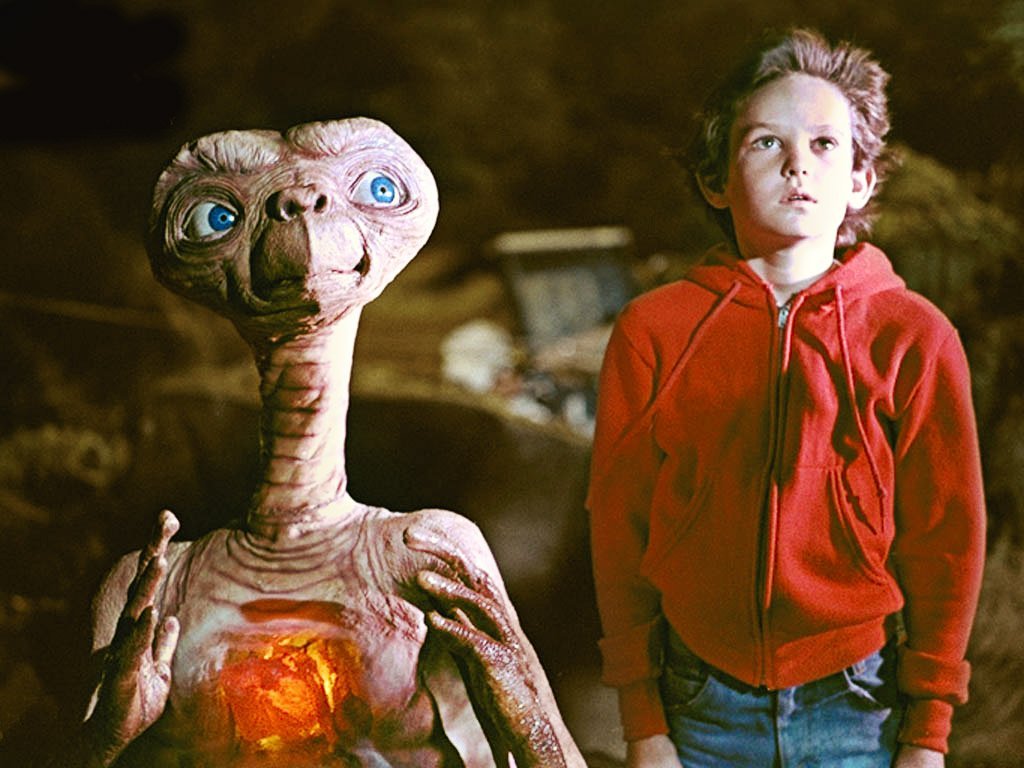
5. E.T. (1982)

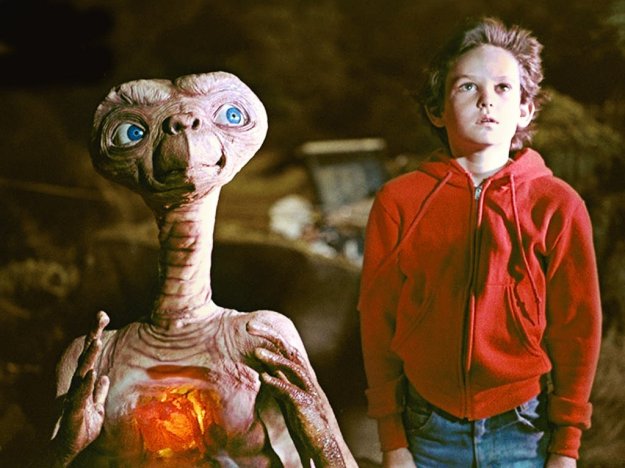
I know I was pretty small when I first saw this one, and I’m sure I didn’t quite grasp what if was about until later. But I remember Drew Barrymore as Gertie, and I remember being so sad when E.T. was sick. The scary chase with the government guys and the awesome bicycle flight definitely made this movie stand out to me from childhood.

I must also give an honorable mention to Return of the Jedi (I mean, really the Trilogy, but yes, I was one of those children to whom the Ewoks were really the most important part (I know, I know.) Also, The Little Mermaid (we named our dog Ariel), The Secret of NIMH, and Return to Oz.
61rIgVaCBHL._SL1024_

Photos: Asher Grimm; My Little Pony tails, Ellen Grimm; E.T The Extraterrestrial, http://www.amazon.com.

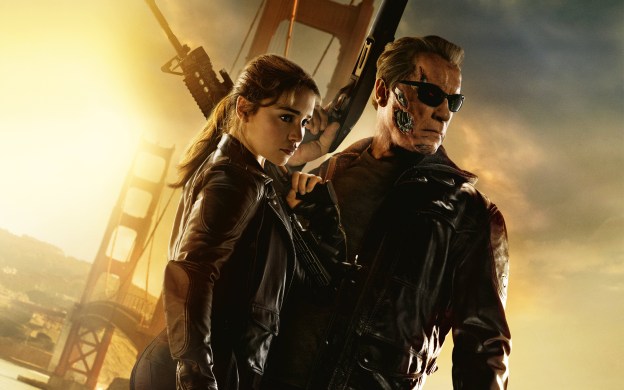
In An Alternate Reality, ‘Terminator Genisys’ Would Be Fun

Terminator Genisys
One and a half stars (out of four)
PG-13 (intense sequences of sci-fi violence and gunplay throughout, partial nudity, brief strong language)
126 minutes
You’re probably wondering why “Genisys” is spelled like the name of some boy band. It makes a little more sense after you’ve seen the movie, but it’s still kind of dumb.

“I’m old, not obsolete.”

That’s Arnold Schwarzenegger’s new catchphrase in “Terminator Genisys.”

The same cannot be said of the film, but you probably didn’t need me to tell you that considering many of you didn’t bother to see it. This resulted in the worst box office debut for the franchise in 30 years.

“Terminator Genisys” is the sixth installment of the now classic sci-fi property introduced by James Cameron in 1984, if you count “The Sarah Connor Chronicles” TV series.

By my count, the franchise has been rebooted twice before. In 2003’s “Terminator 3: Rise of the Machines,” Nick Stahl replaced Edward Furlong as John Connor, alongside Claire Danes as Connor’s future wife. In 2009, “Terminator Salvation” — directed by McG of all people — starred Christian Bale as Connor and Anton Yelchin as Kyle Reese.

Neither of these films were outright flops, but they weren’t exactly celebrated either. We’ve been told the same story over and over again: evil cyber villain Skynet becomes self aware and wipes out most of the Earth’s population, only to be beaten at its own game by a scrappy human resistance group. Hooray!

It was amazing the first couple of times, you know, back when Linda Hamilton was still around, but really … does anyone gives a T-1000’s patootie anymore?

Not that “Terminator Genisys” works very hard to make us care.

Writers Laeta Kalogridis and Patrick Lussier basically take familiar elements and iconic characters from past episodes in the franchise, chop them up and put them in a blender. It’s a similar approach to this summer’s earlier reboot, “Jurassic World,” but at least that Tyrannosaurus-sized hit was fun.

“Genisys” was directed by Alan Taylor, who also somehow managed to turn Marvel’s “Thor: The Dark World” into a murky, monotonous slog. What he fails to deliver now is even one new thing, one original, inventive element to renew our excitement in the universe of the Terminator.

In a franchise built on time travel paradoxes and alternate realities, “Terminator Genisys” concocts yet another confusing ripple/loophole to expound upon sci-fi’s most epic one-night stand: the romance between Sarah Connor, mother of future resistance hero John, and the time traveling Kyle Reese, who also happens to be future John’s dad.

“Genisys” presents us with a seasoned, battle-scarred John Connor (Jason Clarke) on the verge of reversing the cataclysmic event known as Judgement Day and restoring Earth to the few remaining survivors of Skynet’s human holocaust.

Connor’s first concern, though, is to stop Skynet from sending Schwarzenegger’s Terminator back in time to kill Sarah Connor (Emilia Clarke), thus nipping the human resistance in the bud.

Unfortunately, John and his soldiers break through Skynet’s security just moments too late, so John’s BFF and righthand man, Kyle (Jai Courtney), volunteers to hijack Skynet’s time travel device and follow the Terminator back to 1984 to stop the machine from offing Sarah.

The reason Kyle’s so keen to perform this mission? He’s got a little crush on John’s mom, even though he’s only ever seen one photograph of her.

Is your brain hurting? I know mine is.

Here’s the bad news: That’s only the first couple scenes of this ridiculously convoluted plot.

Upon arriving in 1984 Los Angeles — where Kalogridis and Lussier throw in some amusing homages to Cameron’s “Terminator” — Reese discovers Sarah isn’t the terrified, uninitiated damsel in distress he’s come to save. In fact, she’s been prepping for his arrival for more than a decade with the help of a very unlikely and formidable ally.

While the meeting of two of sci-fi’s most famous star-crossed lovers should crackle with sexy urgency, there isn’t a spark to be found between Emilia Clarke and Courtney. This isn’t the fault of the actors. With a script that favors pages of dull, unnecessarily complicated exposition over the building of three-dimensional relationships, they’re given little to work with.

Instead of introducing us to a victorious John Connor and vividly illustrating his skills and strategy on the battlefield, “Genisys” is content to assign Jason Clarke several long, tedious speeches. Instead of seeing the band-of-brothers bond between John and Kyle, we get to listen to Clarke and Courtney yammer on about how great their friendship is.

Emilia Clarke is marvelous on “Game of Thrones” as imperious yet lovable “Mother of Dragons” Daenerys, but she struggles to tap into Hamilton’s awesome brand of slightly crazed ruggedness and resiliency. Even lugging around huge automatic weapons, she’s mostly just cute.

While we’re all pretty sick of Schwarzenegger’s cinematic attempts to prove he’s not an action has-been, it is surprisingly the former governor of California who injects some life into the movie with his deadpan line delivery in a variety of computer-generated incarnations.

The special effects in “Genisys” are top-notch. The requisite spectacular set pieces unfold, including one in which a bus goes flying, end over end, on San Francisco’s Golden Gate Bridge.

There are many different types of Terminators featured, from the metallic, beady-eyed T-600s, to the deceptively humanoid T-1000s, to a new human-machine crossbreed that doesn’t make a whole lot of sense.

Thing is, these dudes were genuinely terrifying in 1991, but in a world where cellphones can be worn on the wrist and an Internet search engine knows every detail of a person’s existence, we’re in need of new monsters to embody our technological anxieties.

You won’t find those monsters here.


The Big Emotions of Pixar’s ‘Inside Out’

Inside Out
Four stars (out of four)
PG (mild thematic elements, some action)
94 minutes

I have a confession to make.

I cry watching most Pixar movies.

And not the ones everyone cries at, like “Up” and “Toy Story 3.”

I wept for joy during “Ratatouille,” and teared up during the scene in which jaded critic Anton Ego melts as Remy’s signature dish calls back warm childhood memories.

I cried at the site of WALL-E, that perky, little, good-hearted robot, all alone on a desolate wasteland of a planet.

I sniffled when I saw the short film “Feast,” because I’m a dog lover and it was just so darn sweet.

So of course I cried what felt like buckets during Pixar’s newest, “Inside Out,” but I was relieved to discover I wasn’t the only one.

My husband was sobbing quietly next to me. The teenage girl to my right was blubbering. And the boy across the aisle, just a wee thing on his daddy’s lap, cried out at a pivotal moment: “Bing Bong gone!”

We were all feeling it.

“Inside Out” doesn’t rival the first 20 minutes of “Up” in terms of emotional impact, but it is Pixar’s most heart-rending film yet, especially if you happen to be a parent (bonus points if you’re the parent of a girl) or a grown-up grappling with the inevitable diminishing of delight that seems to accompany adulthood.

(Like “Feast” and the prologue to “Up,” the Hawaiian-themed short film that precedes “Inside Out,” titled “Lava,” is a charming love story in miniature. You just might cry some more.)

I suppose it was only a matter of time before the animation studio that loves to make us weep like babies created an entire film about emotions.

“Inside Out” is, improbably, an adventure inside a young girl’s mercurial brain. As strange as this concept seems, it’s incredibly clever, inventive, original, bordering on experimental even. It’s like nothing Pixar has done before.

It may sound cheesy, but the film contains profound insights into feelings, about the way humans are wired, about the death of joy and the hope that it can be resurrected.

But it’s not just a psychology lesson. Did I mention it’s incredibly entertaining with a superb voice cast that bounces lines off each other in sly, hilarious rhythms?

The movie takes place largely inside the head of Riley (voiced by Kaitlyn Dias), a contented young girl from Minnesota with a nurturing mom (Diane Lane) and dad (Kyle MachLachlan), a best friend, and a passion for hockey.

At the controls of her burgeoning mind are a quintet of emotions, including Sadness (Phyllis Smith of “The Office”), Fear (Bill Hader), Anger (Lewis Black), and Disgust (Mindy Kaling).

Chief among them, though, is Joy, an ephemeral, blue-haired, barefoot pixie, voiced by the excellent Amy Poehler, who has loved Riley since birth and wants only happiness for her young charge.

Joy, who is a bit of a well-meaning control freak, and her colleagues are tasked with regulating Riley’s responses to various situations and safekeeping the core memories that shape her personality, depicted as gleaming marbles racing through the cog-and-wheel clockwork of her mental synapses.

Everything’s running smoothly until Riley’s parents abruptly pick up and move to San Francisco, uprooting their daughter from the home, friends and hobbies she adores. Joy and the team are flummoxed by the challenge of helping the girl adapt to a gloomy Victorian, a stressed out dad, a missing moving truck and an intimidating new school.

While other animation studios might have been content to scratch the surface of Riley’s emotional upheaval, writer-directors Pete Docter (“Up”) and Ronnie del Carmen (a storyboard artist on “Up” and “Ratatouille”) dive deep into a vibrant world of the mind, replete with hilarious archetypes and familiar symbols.

We travel into abstract thought, the subconscious, the imagination and the Hollywood-like headquarters of Dream Production, encountering rainbow unicorns, imaginary friends, scary birthday clowns and faded memories.

It’s all so marvelous, so relatable, so recognizable, a brilliantly realized showcase for Pixar’s sharp writing, buoyant, beautiful animation, and bittersweet brand of intensely personal, authentic storytelling.

In a cynical Hollywood, these filmmakers are among the very few who remain genuinely in touch with their sense of wonder.

Photo: pixelpixies.dk

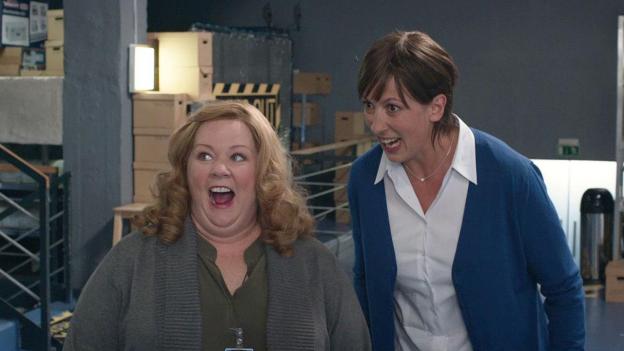
Melissa McCarthy: The ‘Spy’ Who Loved (To Make) Me (Laugh)

Spy
Two and a half stars (out of four)
R (language, violence, sexual content, brief graphic nudity)
120 minutes

In just five years, writer-director Paul Feig and leading lady Melissa McCarthy have become an unstoppable force in the world of R-rated comedy, conspiring to create sly, ribald girl-power laugh fests audiences can’t resist.

In 2011’s “Bridesmaids,” they blissfully upended the tired tradition of the wedding rom-com. Two years later, they put a fresh, feminist twist on the buddy-cop comedy with “The Heat.”
Their latest joint effort, “Spy,” tackles another male-dominated genre, the ripe-for-mockery field made famous by James Bond and Jason Bourne, not to mention the Pink Panther and Austin Powers.

“Spy” doesn’t achieve the gut-busting excellence of Feig and McCarthy’s hilariously sublime first outing but it’s almost certainly funnier than “The Heat” and it blossoms into an entertaining approximation of the very espionage flicks it parodies.

This is Feig’s most complicated project so far. “Spy” has a large cast, a goofily convoluted plot, exotic locations and stunts that could pass in a straight-up action blockbuster.
However, the main attraction, as always, is McCarthy, whose appeal mingles shameless self-deprecation with a strange and admirable dignity. Melissa may be taking most of the pratfalls, but she’s never the butt of the joke.

In “Spy,” she plays Susan Cooper, a CIA analyst who has never set foot out from behind a desk, content instead to function as the reliable voice in the ear of flashy agent Bradley Fine (Jude Law, spoofing Bondian buffoonery with suavely silly style).

In the movie’s fantastic opening sequence, we see Susan expertly guide the preening Agent Fine through one perilous scenario after another as he infiltrates a fancy dinner party at the lakeside home of notorious arms dealer Boyanov (Raad Rawi).

Fine has been sent to retrieve an alarmingly compact nuclear bomb, but ends up bungling the assignment at the last minute. Susan may be blind in her sweet, decidedly-more-than-just-professional devotion to Fine, but she’s not stupid and, as we later discover, isn’t necessarily as meek or inexperienced as everyone assumes.

When Fine’s mission takes a lethal turn and the identities of the Agency’s top operatives are compromised, Susan volunteers to finish what her partner started, following Boyanov’s daughter, Rayna (McCarthy’s “Bridesmaids” star, Rose Byrne), to Paris on an assignment that’s strictly “track and report.”

Susan’s illusions of cool spy names, sexy gadgets and slinky disguises are shattered when her boss (Allison Janney) forces her to embody a series of frumpy, new identities — housewives, cat ladies and Mary Kay saleswomen, instead of vixens with enigmatic names like Amber Valentine.

It takes awhile for mild-mannered Susan to hit her stride as a spy, and it takes the movie awhile to find its comedic stride as well. If I have one complaint about Feig’s films, it’s that they always seem to last a good half-hour too long, the humor decreasing in proportion to the running time.

I also wish there weren’t so many gags in “Spy” that revolve around McCarthy or other women being groped. And is it just me or are the obligatory projectile vomiting and penis jokes getting stale?

McCarthy is always right on target, though. Few comedians bother to work this hard, and manage to make it look this fun. She’s especially entertaining when one of the script’s more outrageous plot twists gives her the opportunity to trade quick-witted, foul-mouthed barbs with Byrne’s pampered villainess, who has the hair of a Disney princess and the vocabulary of a bitter, old hag.

When it comes to parodying Bond and other cloak-and-dagger classics, Feig goes all out, from a cheesy 007-style animated opening credits sequence that could almost be the real thing, to a moped chase through the streets of Budapest, to an impressively choreographed kitchen knife fight. McCarthy gets to do all the things James Bond does, albeit with a lot less grace.

The director contrives to pair her with many unlikely but amusing co-stars, including Peter Serafinowicz as a lecherous Italian contact, and Jason Statham, sending up his tough-guy reputation as a grizzled veteran agent who’s a bit off his rocker.

Best of all is a generous appearance by cheery, inhumanly tall British comedian Miranda Hart (she plays Chummy on the BBC’s “Call the Midwife”).

In her American film debut, Hart cheekily steals scenes as Susan’s awkward but loyal office mate. Here’s hoping we see more of her on the big screen.

Perhaps in “Spy 2”?

Photo: uk.yahoo.com

‘Slow West’ Holds Big Payoff for Patient Moviegoers

Slow West
Three stars (out of four)
R (violence, brief language)
84 minutes
Antelope Valley moviegoers can catch this film at the BLVD Cinemas in Lancaster, where it continues to play through next week. It’s also available On Demand. 

The Western genre shows no signs of dying — with its boots on or off — thanks to “Slow West,” John Maclean’s aptly named but striking deconstruction of the romance of the American frontier.

Shot in New Zealand (which isn’t quite convincing as Colorado to American eyes, but is epically wild and gorgeous, nonetheless), the film stars Kodi Smit-McPhee as a 16-year-old Scottish lad clumsily traversing the Rockies in search of his long lost lass.

That premise is about as cliche as it gets, but nothing about this story of a young knight in shining armor riding forth to rescue his damsel in distress transpires in the way you’d expect.

Jay Cavendish is traveling solo through Colorado territory — with an over-burdened pony and a laughably optimistic how-to guide to the West — in hope of reuniting with his girl, Rose Ross (Caren Pistorius), whose hearty beauty we glimpse in flashback.

The boy is delivered from his own naivete, not to mention a band of Army deserters, by Silas (Michael Fassbender), one of those tall, mysterious, silent types who tend to populate the movie Western.

Silas demands Jay fork over what cash he has in exchange for his services as a guide. He’ll ferry Jay safely to his beloved Rose, but his real motivation for this good deed is unclear, at least initially.

To say more would potentially spoil the surprises in store. “Slow West” meanders along at an occasionally trying pace, but if you’re patient, a little delayed gratification pays off in a big way during the film’s violent finale, so full of irony and tragedy, it’s downright Shakespearean.

This is one of those films in which it’s all about the journey, not the destination, and the relationship between the two main characters, simmering with a subtle tension.

In his feature film debut, Maclean reveals himself as a talent to keep tabs on. The director studied drawing and painting in Edinburgh and London and has an artist’s eye for landscapes and human tableau, honed while making videos for his music groups, The Beta Band and The Aliens, as well as a couple of short films with Fassbender.

Maclean has crafted a revisionist Western that feels fresh, modern, almost post-apocalyptic, punctuated by absurd, comical (sometimes sad) twists of fate — a flash flood creeps up on a pair of sleeping travelers, a desperate couple with the worst case of bad luck ever attempts to hold up a trading post.

Eccentric characters wander in and out of the frame, including that guy who plays The Hound on “Game of Thrones” (Rory McCann), Australian actor Ben Mendelsohn, clad in an outrageous fur coat, and a German anthropologist named Werner who is uncannily similar to a certain German documentarian.

As a child actor, Smit-McPhee racked up an impressive body of work (“The Road,” “Let Me In”). Older and a little ganglier here, he continues to show uncommon maturity, smoothly capitalizing on his innocent, naturally awkward appearance.

Fassbender also plays to his strengths. He’s always been attracted to morally ambiguous characters, although Silas is a little less ambiguous and a little more likable than the dark misfits he tends to specialize in.

Still, it’s a treat to see him doing something different in a movie that’s not like anything we’ve seen before.

Photo: http://www.youtube.com

‘Madding Crowd’ the Costume Drama You’ve Been Waiting For

Far From the Madding Crowd
Two and a half stars (out of four)
PG-13 (sexuality, violence)
119 minutes
You may also want to check out the celebrated 1967 version of Thomas Hardy’s novel, starring Julie Christie, Terence Stamp, Peter Finch and Alan Bates. 

Ladies — and gentlemen, too, if you’re so inclined — I know it’s been awhile since you’ve enjoyed the frothy pleasures of a truly sumptuous costume drama.

Thank heavens, your wait is over.

Danish director Thomas Vinterberg’s adaptation of Thomas Hardy’s “Far From the Madding Crowd” is a gorgeous film, worshiping at the altar of the English countryside in all its crisp, hearty beauty.

Dappled in sunlight, dripping with sensuality, and featuring a delicious performance by Carey Mulligan, it’s not a perfect specimen of the genre, but it will do nicely.

In fact, “Madding Crowd” is reminiscent of that pinnacle of British period pieces, Jane Austen’s “Pride and Prejudice.” The story centers around a pair of potential lovers who are ideally suited for each other but are too stubborn to admit it. There are also shades of Austen’s “Emma” in a flawed heroine whose impetuous missteps bring unintended heartbreak for her circle of friends and acquaintances.

This is Hardy, though, not Austen, so while “Madding Crowd” begins with a light, almost playful vibe akin to a romantic comedy, the movie evolves into something darker and more distressing, thanks to the novelist’s tendency to harshly punish his characters for their moral failings.

You’d think Mulligan would be content to embody one of the most famous female characters in the history of literature after playing Daisy Buchanan in Baz Luhrmann’s frenetic take on “The Great Gatsby.”

In “Madding Crowd,” she notches up another passionate literary performance as one of Hardy’s most vivid creations, Bathsheba Everdene. (It’s no coincidence that Katniss, the strong- willed, romantically ambivalent heroine of “The Hunger Games,” shares her last name.)

Thanks to the luminous Mulligan, we have no trouble believing Bathsheba could steal the heart of every eligible bachelor to cross her path. We’re also willing to continue pulling for her when she proceeds to wreak emotional, and sometimes physical, havoc on several unsuspecting would-be suitors.

Bathsheba is educated but orphaned and penniless when she catches the eye of Gabriel Oak (Belgian hottie Matthias Schoenaerts), a neighboring shepherd who promptly proposes marriage.

Unwilling to surrender her independence, Bathsheba rejects his offer, though she feels some affection for the stalwart, good-humored friend who stands by her even when she’s at her worst.

A dramatic reversal of fortune finds Bathsheba inheriting her uncle’s farm, suddenly dependent on no man, while Gabriel loses everything and is forced to go in search of work. Fate brings the pair together again via a fiery cataclysm. Bathsheba hires Gabriel to oversee her livestock and the two renew their friendship, only now as employer and hired hand.

A girlish prank targeting the village’s most eligible but inaccessible bachelor, Lord Boldwood (Michael Sheen), triggers a second proposal. Despite his wealth and status, Bathsheba rejects him. As a financially independent women, she has no incentive to wed.

Lord Boldwood proves so persistent that Bathsheba reluctantly continues to entertain his advances, until she happens upon the dashing, young Sergeant Francis Troy (Tom Sturridge).

With his ostentatious, red uniform and over-sized mustache, Sgt. Troy is obviously bad news, but can you blame Bathsheba for being dazzled by him when her previous suitors’ proposals were more inventories of property than declarations of love?

Whether Hardy’s heroine is a shameless hussy who must suffer for her wildness or a victim of the social constraints placed upon women in Victorian times has long been the subject of debate.

Vinterberg and British screenwriter David Nicholls take a decidedly modern approach to this dilemma.

“It is difficult for a woman to define her feelings in a language chiefly made by men to define theirs,” Bathsheba protests in one scene. The movie’s themes are largely summed up in this one line, taken directly from the Hardy novel.

Nicholls knows the author well. He adapted “Tess of the D’Urbervilles” into a 2008 miniseries starring Gemma Arterton. For whatever reason, though, the screenwriter has a tendency to omit small but telling details from the novel, so it’s occasionally difficult to get a grasp on the various characters and their individual catastrophes.

For instance, we’re left to wonder how many years have passed between events, why the arrival of a bride at the wrong church on her wedding day could yield so much tragedy, and when the enmity between two men erupts in violence near the film’s end, it comes entirely out of the blue.

Still, “Far From the Madding Crowd” has everything you’d want in a costume drama. This includes the actual costumes, most notably Mulligan’s smart but swoon-worthy wardrobe; a lot of good, old-fashioned, repressed romance; and a sexy, self-sacrificing leading man to (almost) rival the ultimate in sexy, self-sacrificing leading men.

I’m speaking, of course, of Mr. Darcy.

Vinterberg is one of the founders of the strict Dogme 95 school of filmmaking, which emphasized, among other things, the use of natural sound and light.

That experience serves him well here as he conjures up a rugged, tantalizing idyll of rural living in which the simplest, most unlikely image, the unraveling of a braid, the care of sheep or, in one almost comically Freudian scene, the twirling of a sword, is unspeakably erotic.

Oh, yes. Bosoms will heave.

Photo: http://www.bbc.co.uk


‘Mad Max’: Insane, Intense, Inventive, and Runs on Girl Power

Mad Max: Fury Road
Three and a half stars (out of four)
R (intense sequences of violence, disturbing images)
120 minutes
The film is playing in 3-D, but due to a terrible conversion, it’s best to opt for crisp, clear 2-D.

The mad vision of “Mad Max: Fury Road” is so insane-intense-inventive, it demands to be seen. If you only take in one action movie this summer, this has to be it.

Fans of the original trilogy, which starred a young, crazy-eyed up-and-comer named Mel Gibson, will be pleased to note that “Fury Road” maintains the grotesquely mutated genetic material of its predecessors: parched post-apocalyptic setting, weirdly descriptive slang, colorful, carnie-like characters, hurtling camera angles, a certain Ford Falcon Interceptor and a villainous warlord, played with deranged relish by “Mad Max” villain Hugh Keays-Byrne.

The film functions handily as either a sequel or reboot and boldly announces the return of director George Miller, who conjured up the phantasmagorical world introduced in 1979’s “Mad Max” as only an Australian medical doctor turned film student could.

Miller was 69 during the making of “Fury Road” and his singular perspective comes to the screen undiminished, even enhanced. The movie is part environmental fable, part feminist fever dream and 150% high-octane action extravaganza.

“Fury Road” was intended to be realized a decade ago with Gibson reprising his role as dystopian cop Max Rockatansky. Middle Eastern wars, freak rains in the Australian desert and Gibson’s eventual public meltdown scuttled those plans, paving the way for Tom Hardy to inherit the Road Warrior’s extremely distressed leather jacket.

Hardy dons this mantle as comfortably as if he’d been born to play it. Miller introduces the always fascinating actor’s even wilder-eyed, more desperate, more silent Max on the run.

He never really stops running.

“Fury Road” is essentially one long, ingenious action sequence. In the film’s first hour alone, Max is pursued, captured, tattooed, caged and strapped to the front of a moving car as a human “blood bag” to an ailing “War Boy.”

And that’s before he meets Charlize Theron’s Furiosa, the bad-ass, bald driver of a massive custom truck, aka War Rig, belonging to Immortan Joe (Keays-Byrne) the theatrical, oxygen-mask-wearing dictator of Miller’s toxic wasteland.

Joe presides over The Citadel, pacifying the half-dead survivors who reluctantly serve as his subjects with the prospect of clean, cool, gushing water. He sends Furiosa on a mission to Gas Town to load up on the Earth’s second most critical remaining resource, but she has other ideas.

As she and Max are chased by Joe’s entourage, a freak-show caravan of Valhalla-obsessed, albino War Boys and jury-rigged junkyard cars that’s at once terrifying and hilarious (watch out for Electric Guitar Guy), they become unwitting allies in delivering the “treasures” hidden in the hold of Furiosa’s rig to a mythical paradise known as the “Green Place.”

Filmed in the eerily unspoiled deserts of Namibia, “Fury Road” feels remarkably real — tactile, scruffy, dirty — as surreal and strange as its world may be. Miller opted for physical props and old-fashioned, practical stunt work instead of computer-generated imagery. It’s a difference that sets the film above the sometimes soulless CGI of this summer’s blockbuster fare, movies like “Avengers: Age of Ultron,” “San Andreas” and “Jurassic World.”

The tribal-punk-rock-scrapyard-demolition derby aesthetic of “Fury Road” is amplified by the film’s minimalist dialogue. The audiences pieces together just what it needs to and infers the rest with an efficiency that imbues the movie with a primitive, streamlined power.

“Fury Road” is ferociously bleak and violent and, yet, it has these small, unexpected human moments that make it almost … lovely?

To say that Miller has done something groundbreaking with the sheer number of strong women included in its bizarre menagerie of characters isn’t an exaggeration. There’s not a useless damsel in distress to be found among the resourceful female fighters who occupy virtually every frame of the film.

Theron’s angry, hopeful Furiosa is an action heroine for the ages — psst, don’t tell anyone, but she’s more the star of the film than Max is — right up there with Ripley and Sarah Connor.

Miller, who conceived the story with comic book artist Brendan McCarthy and actor Nick Lathouris, clearly has serious issues on the brain: the environment, religious fanaticism, oil wars, poverty, the enslavement of women. And, yes, it’s true that playwright and feminist activist Eve Ensler consulted on the film.

If any of this makes “Fury Road” sound like a drag, don’t believe it for a minute.

Mostly, the movie is a mad, mad, mad, mad rush.